


AQA GCSE Chemistry - Elements, Compounds & Mixtures (Topic 1, Workbook 2)
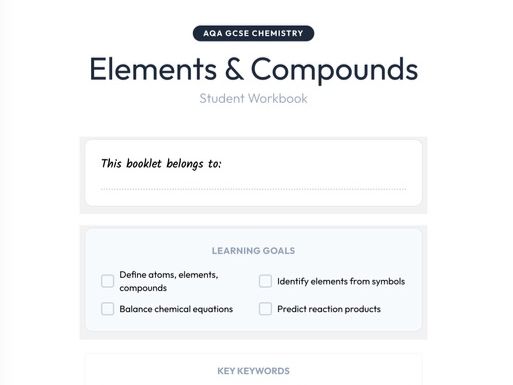
This is a complete workbook pack for the second part of Topic 1 (4.1.1.1). It is designed to follow on from my free Atomic Structure resource. It includes a printable student workbook and a simulation tool to help visualise chemical bonding.
What is in the Student Workbook (13 Pages):
Page 1: Learning goals and keyword checklist.
Page 2: “Hierarchy of Matter.” Defines Atom, Element, Compound, and Mixture with a visual identification drill.
Page 3: Symbols & Formulae. A table of the top 10 elements to learn and a guide on counting atoms in formulas (e.g., H2SO4).
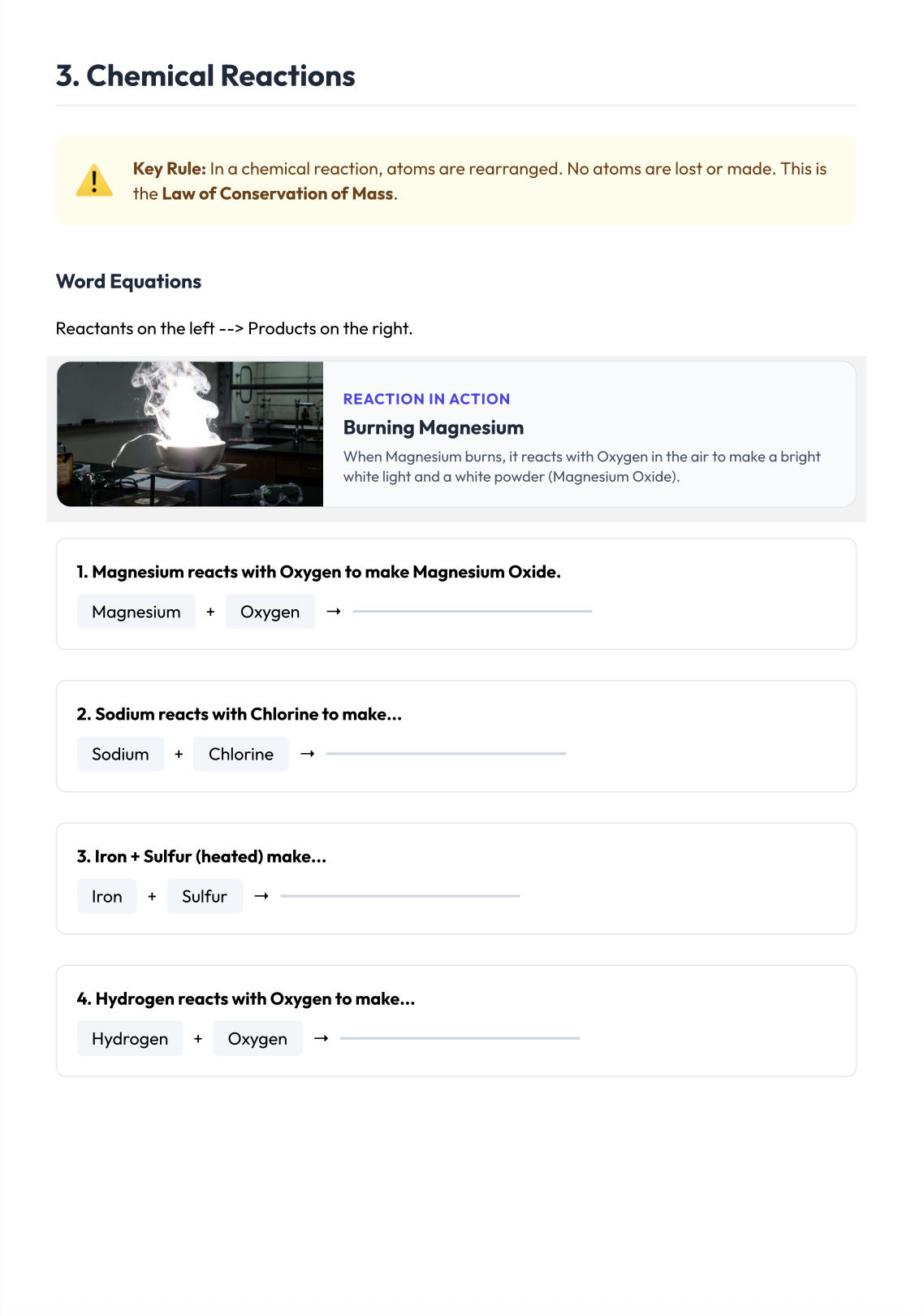
Page 4: Chemical Reactions. Explains word equations and the Law of Conservation of Mass.
Page 5: Balancing Equations Tutorial. A step-by-step guide and worked example (“The Golden Rule”) on how to balance H2+O2→H2O.
Page 6: Formula Challenge. Practice writing formulas for compounds like Magnesium Chloride and Calcium Carbonate.
Page 7: Balancing Practice. Tiered questions (Easy, Medium, Hard) on balancing equations for ammonia, chlorine gas, and methane combustion.
Page 8: Real World Chemistry. Context on Air (mixture), Sea Water, and Alloys (Steel), plus a discussion on “Pure” juice vs. chemically pure substances.
Page 9: Visualising Matter. Particle diagrams (“Spot the difference”) to distinguish between compounds and mixtures.
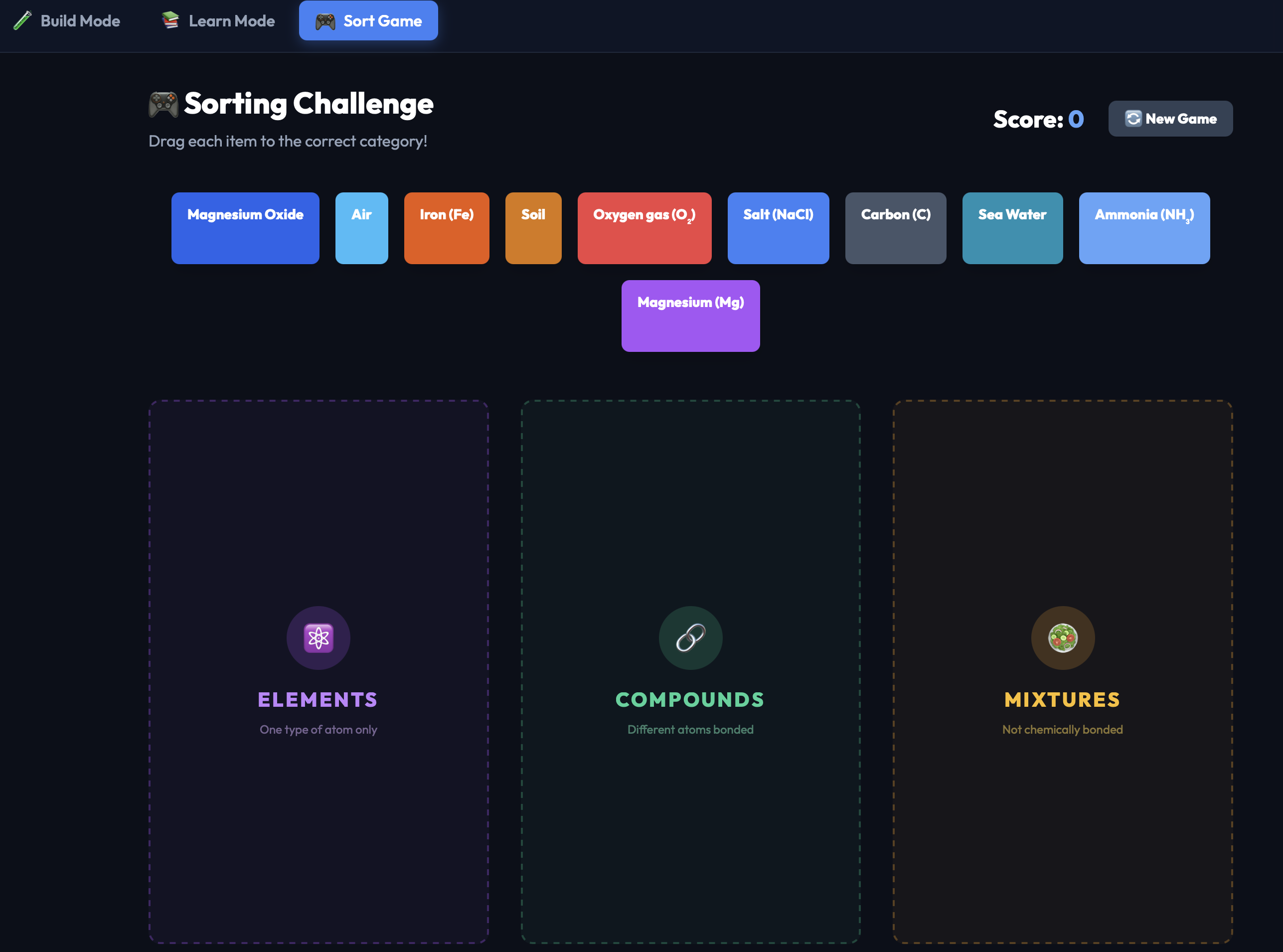
Page 10: Classification Challenge. A “match up” activity sorting Oxygen, Air, Gold, etc. into elements, compounds, and mixtures.
Page 11: Separation & Symbols. A summary table of separation techniques (Filtration, Crystallisation, Distillation, Chromatography) and a quick quiz on tricky Latin symbols (Na, K, Fe, Pb).
Page 12: Exam Practice. Short answer questions defining “element” and distinguishing compounds from mixtures.
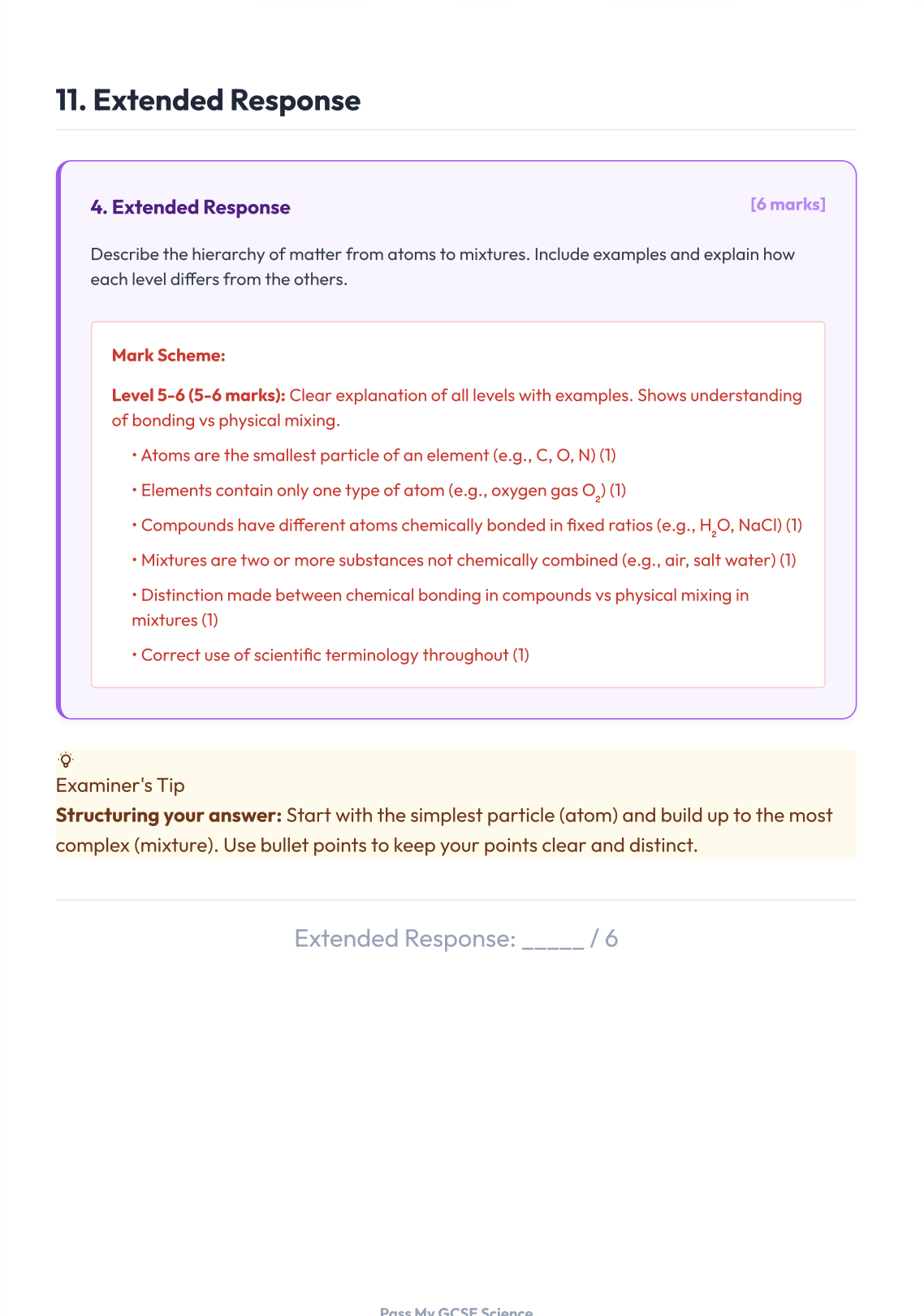
Page 13: Extended Response. A structured 6-mark question: “Describe the hierarchy of matter from atoms to mixtures”.
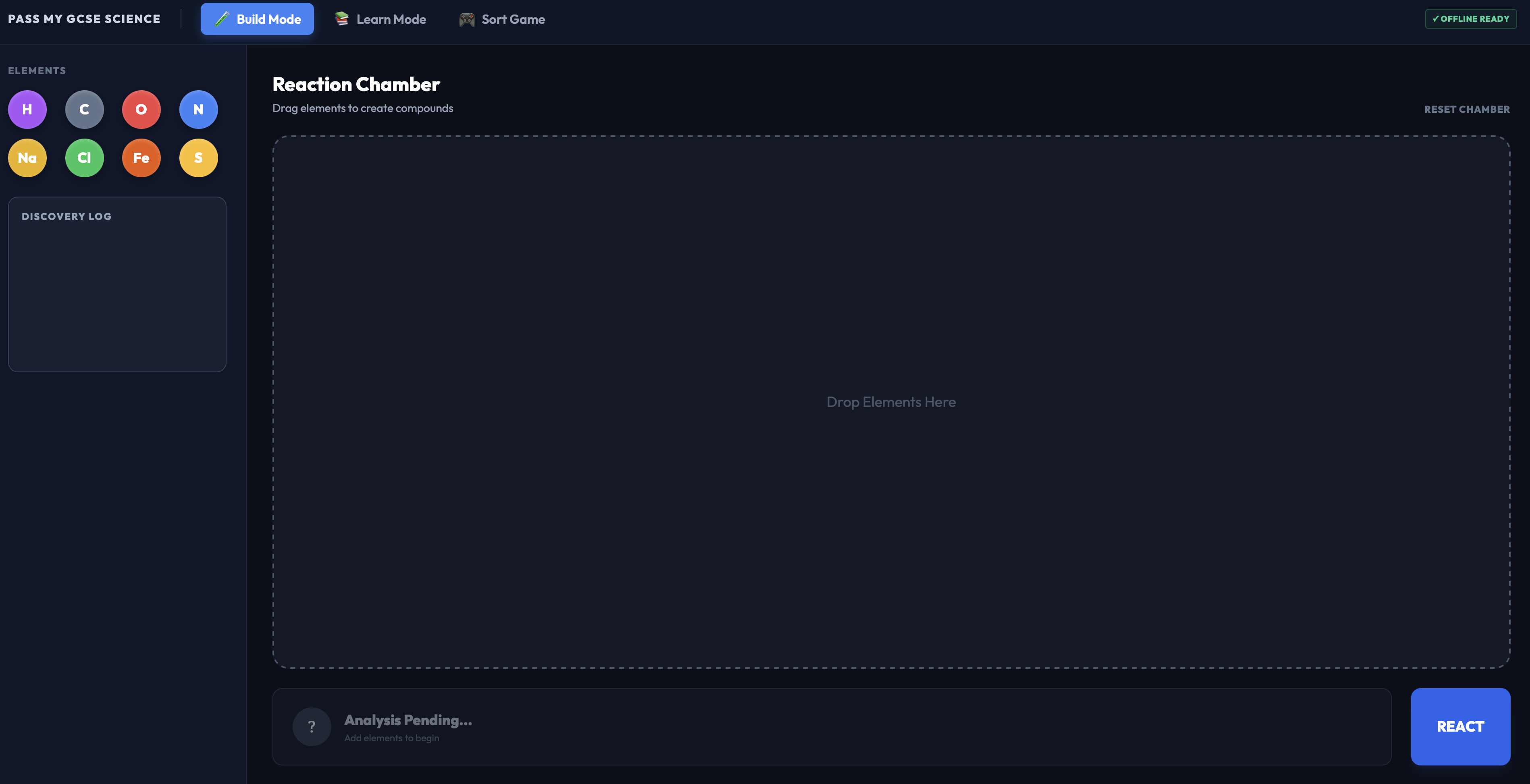
What is the “Reaction Chamber” Simulation? I built this HTML tool to accompany the workbook. It runs in any web browser (no installation needed).
Build Compounds: Students drag element beads (Hydrogen, Oxygen, Carbon, etc.) into a chamber to see if they react.
Visualise Bonding: If a compound forms (e.g., Water, Carbon Dioxide, Sodium Chloride), it shows the molecular structure and explains if the bond is Ionic or Covalent.
Discovery Log: Tracks progress as students find all 14+ hidden compounds.
Challenge Mode: A timed game where students must create specific compounds against the clock.
Files Included:
Student Workbook (PDF) - 13 pages, ready to print.
Teacher Answers (PDF) - Mark schemes.
Reaction_Simulation_Online.html - The interactive tool (requires internet connection).
Reaction_Simulation_Offline.html - The interactive tool (No internet required).
I have priced this resource at £1 to cover the time spent coding the simulation and designing the booklet.
Something went wrong, please try again later.
This resource hasn't been reviewed yet
To ensure quality for our reviews, only customers who have purchased this resource can review it
Report this resourceto let us know if it violates our terms and conditions.
Our customer service team will review your report and will be in touch.
£1.00