


Equilibrium constant expression and equilibrium constant value for A level Chemistry, for homogeneous and heterogeneous reactions. The ICE method for calculating Kc value. All this and more covered in this comprehensive lesson with questions and answers! This is a Year 13 A level lesson for Edexcel International Unit 4 – WCH14, but it can also be used for all UK exam boards. All the slides in this lesson are fully animated and include answers to every mini plenary question and exam question. The breakdown of the slides (which are best opened on Microsoft PowerPoint) is as follows:
Slide 1 - Title and 5-minute starter. The starter is a grid of four questions entitled ‘last week, last lesson, today’s learning and future learning’. Use this generic slide for all your lessons by simply changing the questions and the answers each time.
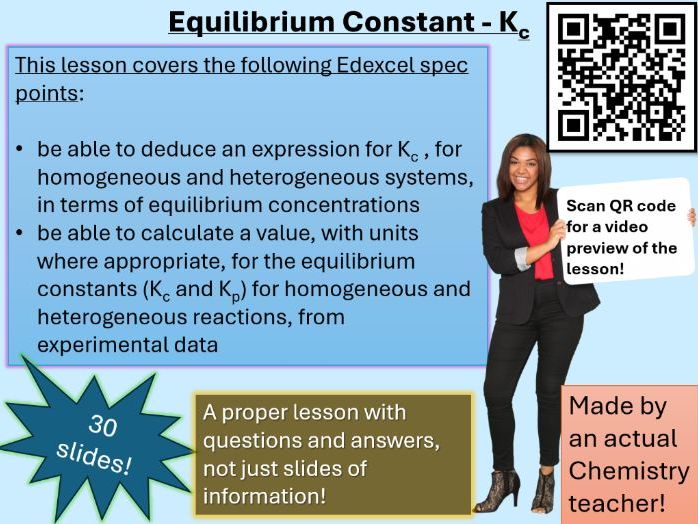
Slide 2 - Lesson objectives (see thumbnail image)
Slide 3 – A short Y12 recap quiz on equilibria. Answers appear on the screen as you click
Slide 4 – A short Y11 recap quiz on equilibria. Answers appear on the screen as you click
Slide 5 – an introduction to what equilibrium constant is
Slide 6 – implications of what it means when Kc is equal to, greater than and smaller than 1
Slide 7 – introductory slide of the different ways that Kc can be calculated
Slides 8 – 9: this section explains how the equilibrium constant remains constant at the same temperature when concentration is altered
Slide 10 – Learning pit stop: a series of questions of increasing difficulty. Answers appear on the screen as you click
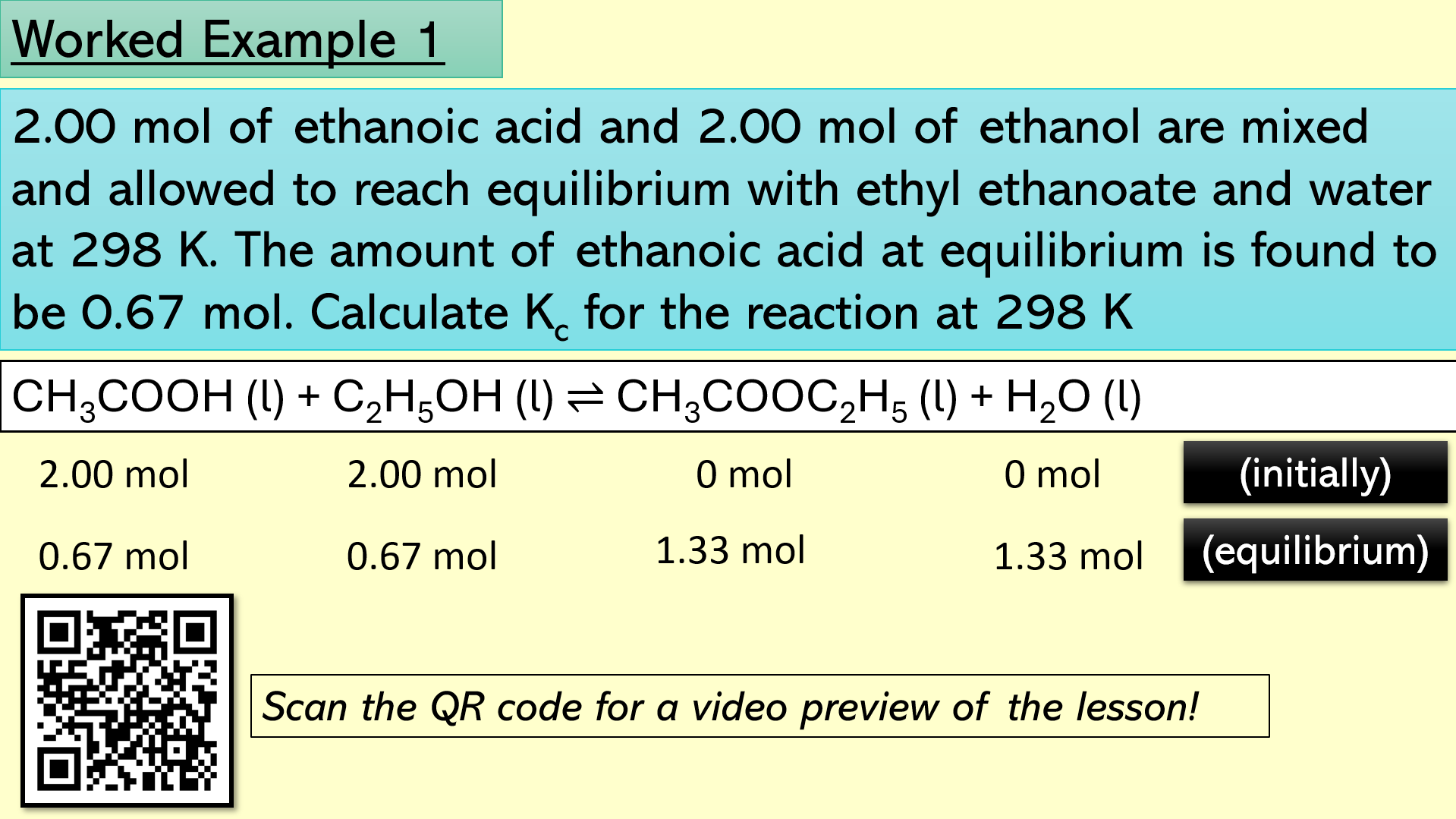
Slides 11 – 19: this section uses two worked examples to teach students how to calculate equilibrium constants of homogenous reactions. The worked examples include varying stoichiometry to give students the full band width of practice. Answers with explanations animate on the screen as you click
Slides 20 – 24: this section uses one worked example to teach students how to calculate equilibrium constants of heterogenous reactions. It also explains what a heterogenous reaction is
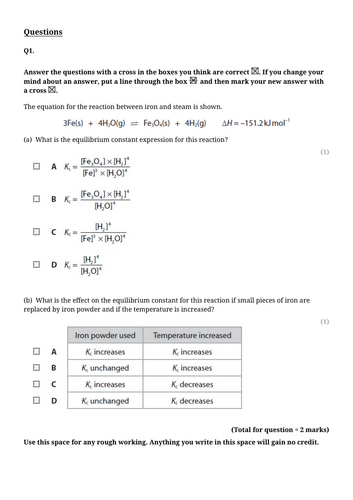
Slides 25 – 30: Exam questions with mark scheme answers (included with the resource)
Please consider leaving a review! This really helps promote our store! Thanks!
Something went wrong, please try again later.
This resource hasn't been reviewed yet
To ensure quality for our reviews, only customers who have purchased this resource can review it
Report this resourceto let us know if it violates our terms and conditions.
Our customer service team will review your report and will be in touch.
£3.50