


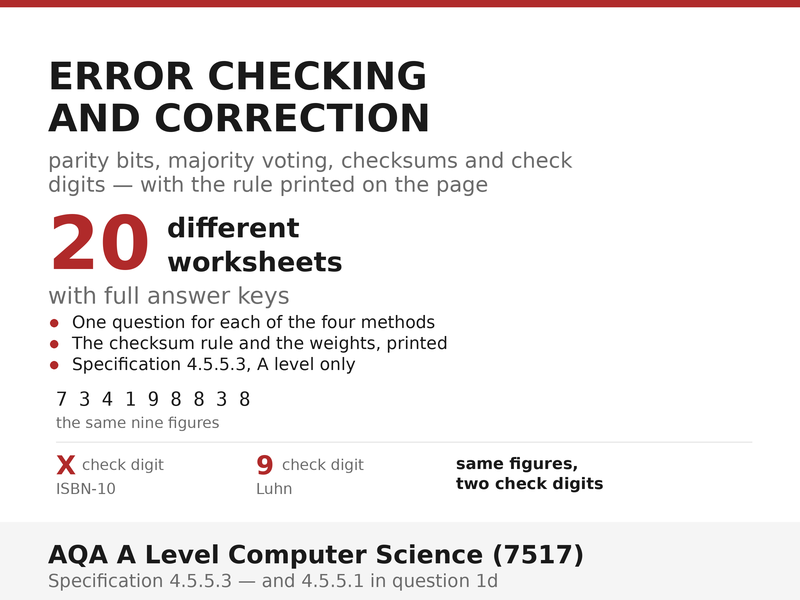
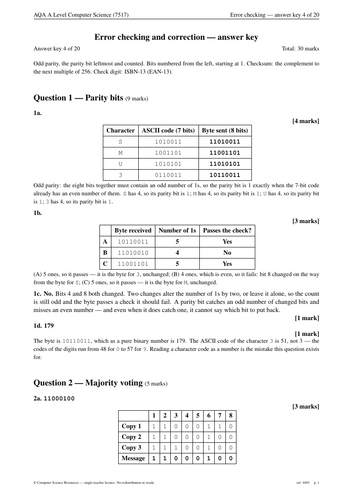
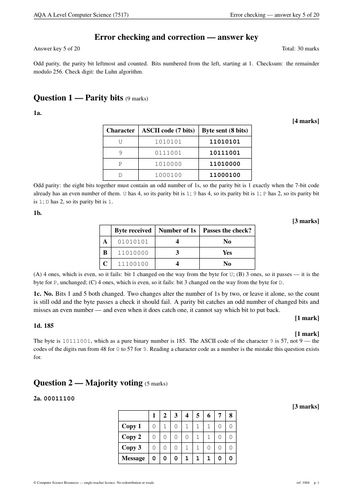
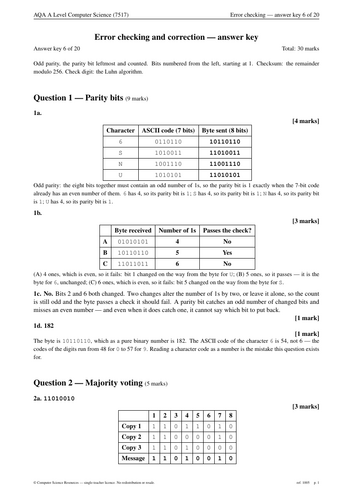
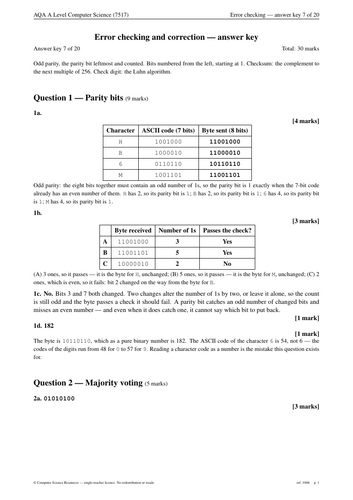
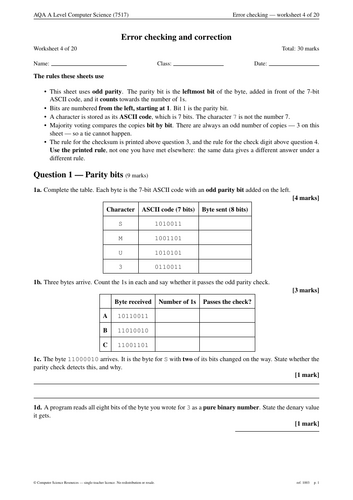
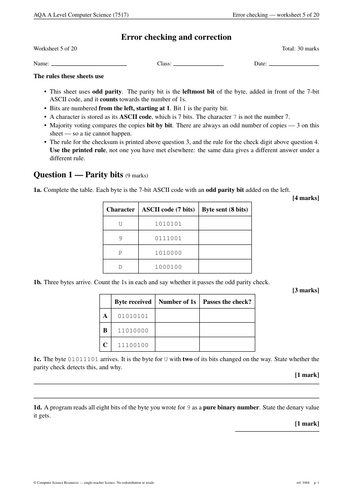
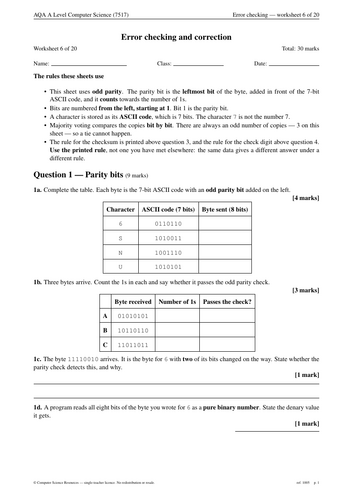
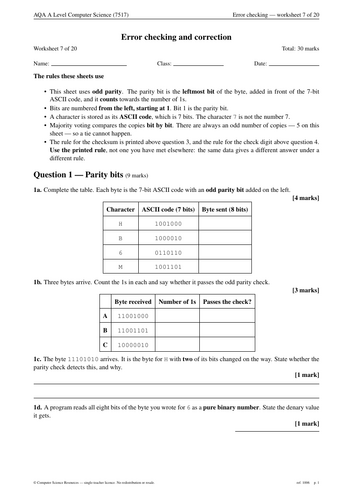
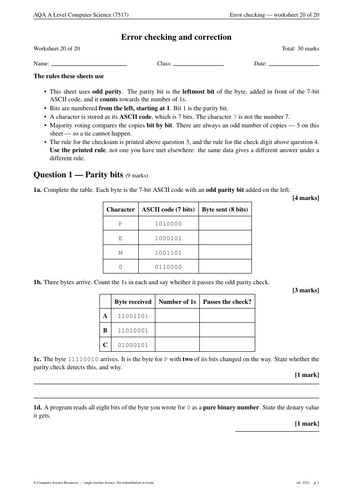

Parity bits, majority voting, checksums and check digits for AQA A Level
Computer Science (7517): twenty different sheets, each worked all the way
through, and each with a complete answer key.
Specification 4.5.5.3 names four methods. There are four questions, one for
each. The AS version of the same bullet names only three - it leaves out
checksums - so question 3 is A level content and A level only.
WHAT YOU GET
- 20 worksheets, 3 pages each, numbered 01 to 20
- 20 matching answer keys, 3 pages each
- A contents table giving each sheet’s parity, number of copies and
check-digit scheme, so you can pick one without opening all twenty
WHAT IS ON EVERY SHEET
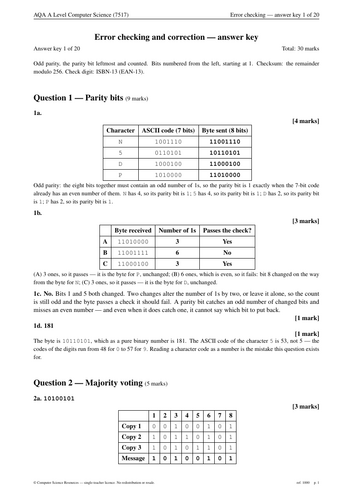
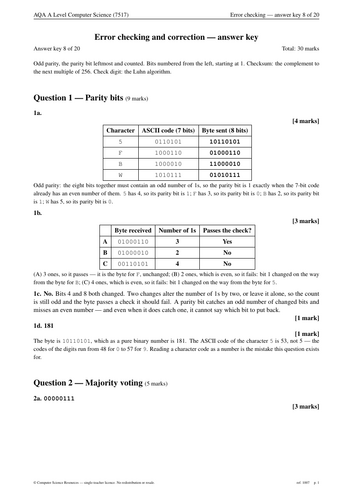
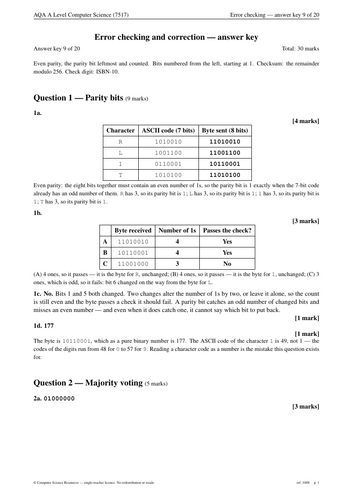
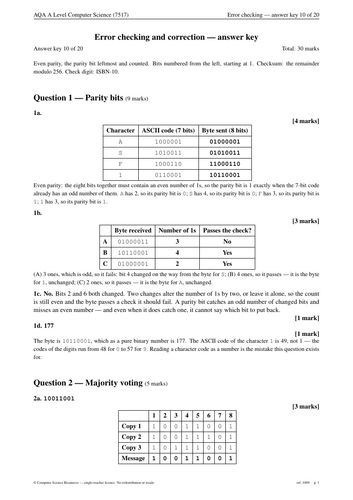
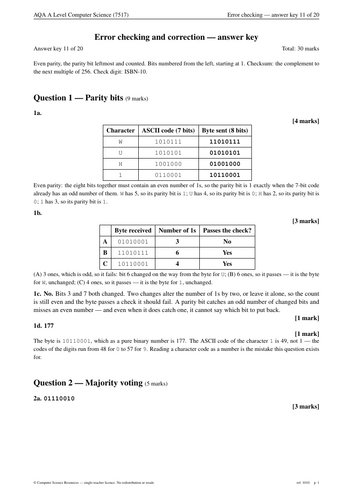
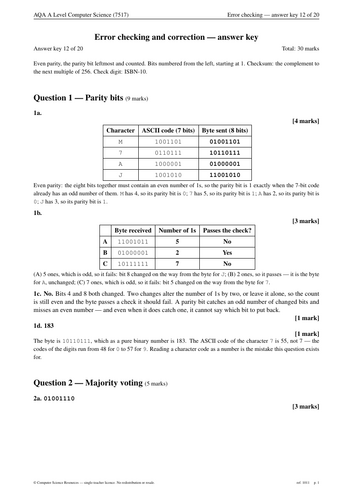
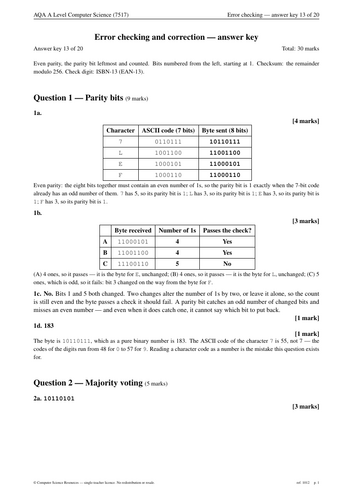
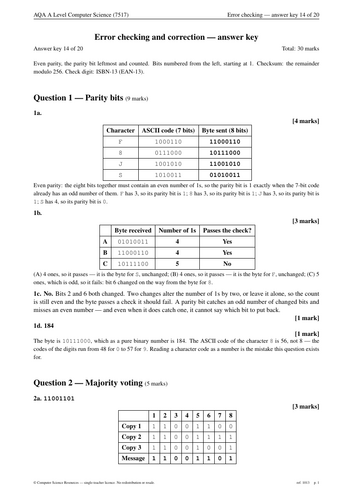
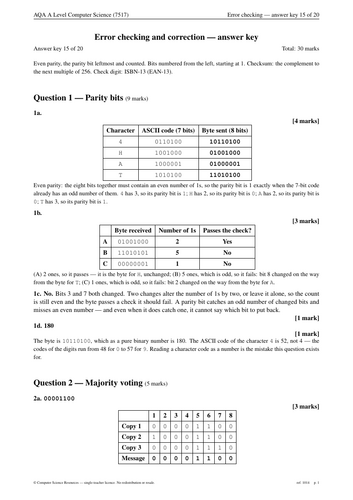
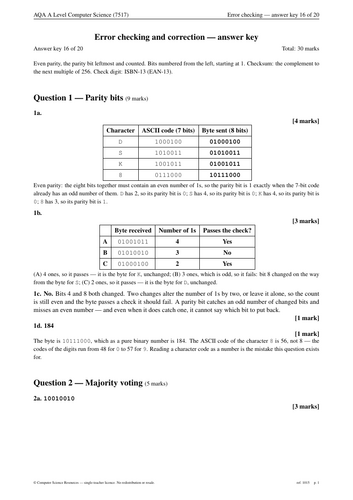
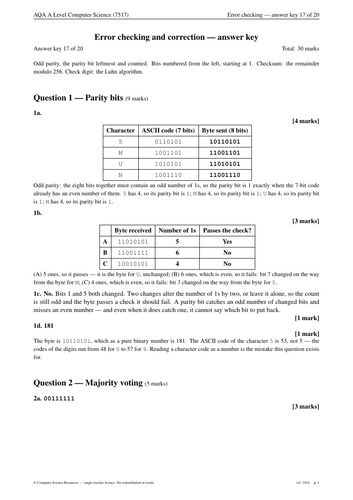
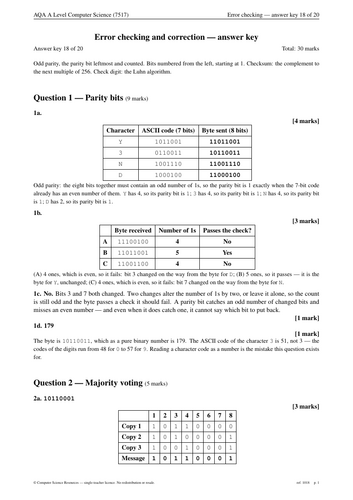
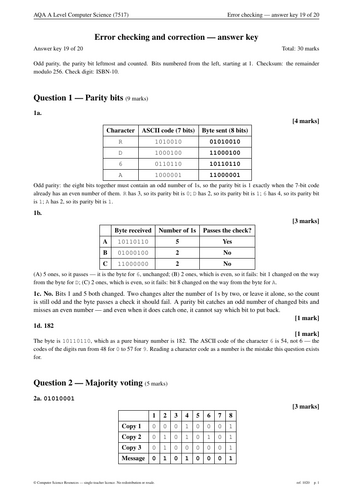
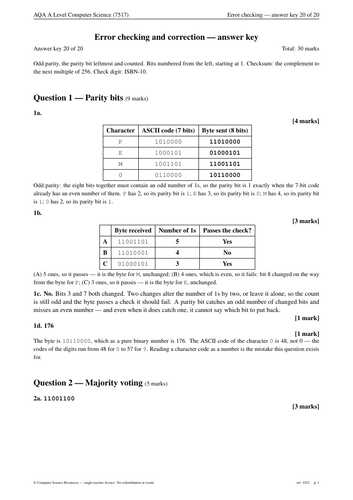
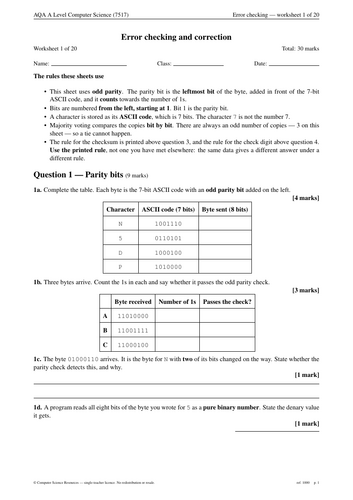
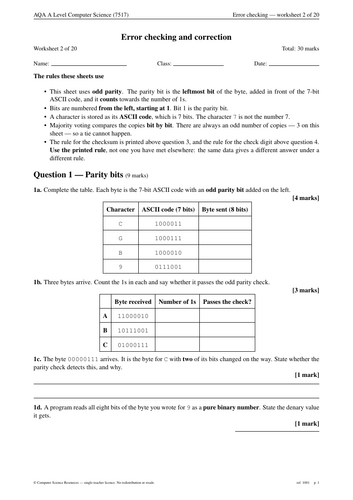
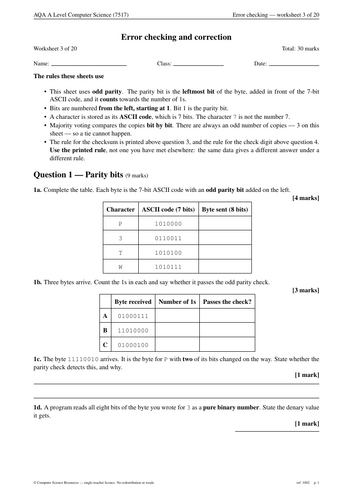
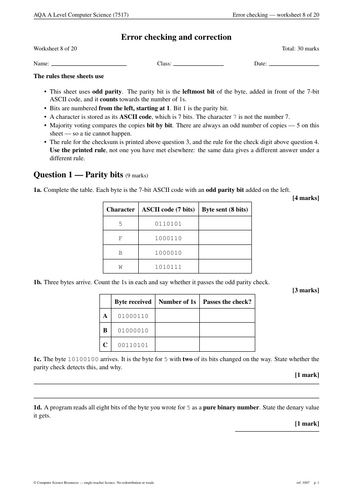
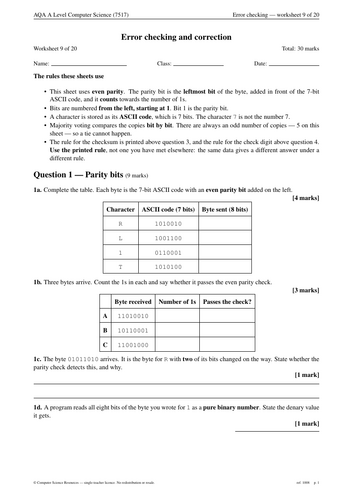
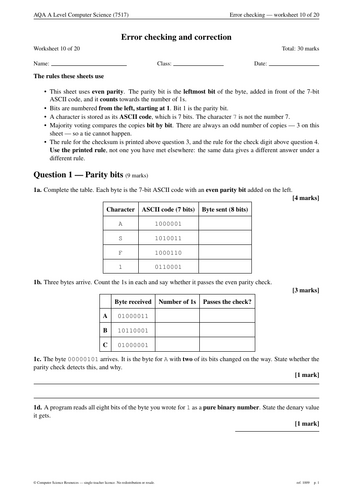
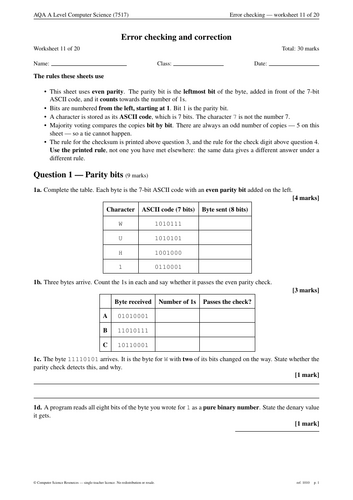
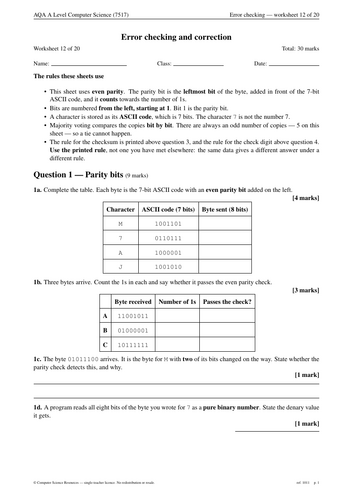
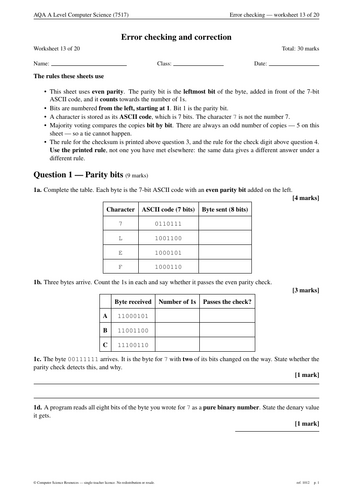
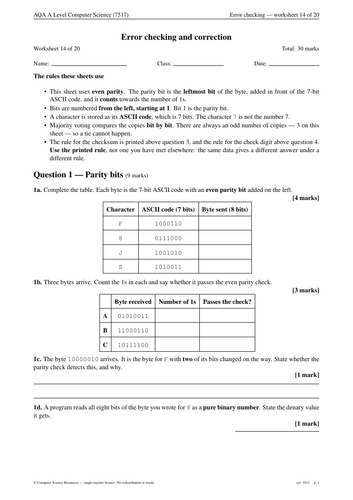
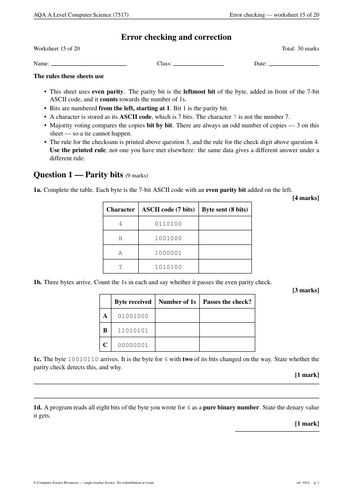
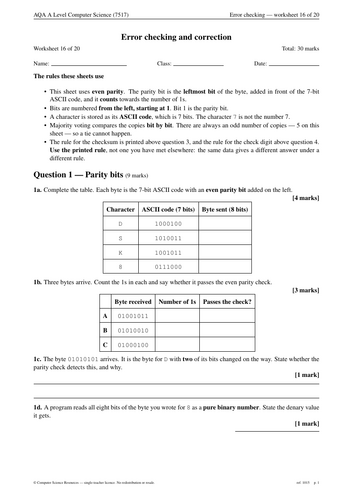
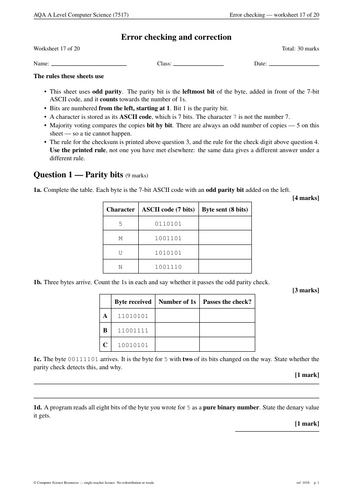
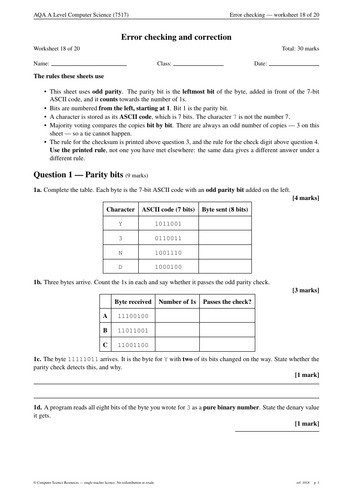
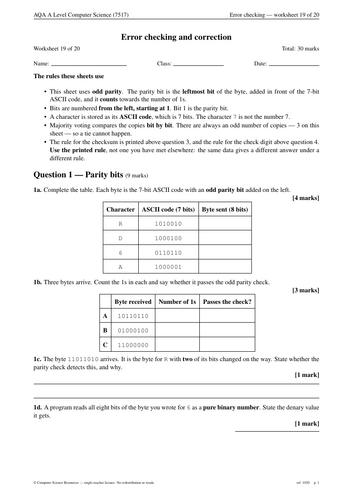
Question 1 is parity: add the parity bit to the ASCII codes of four
characters, check three received bytes, and then the byte with two bits
changed that the parity check cannot see. The four characters include a
digit, and the last part asks what a program gets if it reads all eight bits
as a pure binary number - the character 5, its ASCII code 53, and the byte
181 are three different numbers.
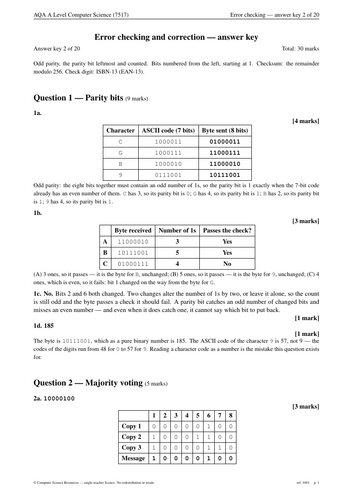
Question 2 is majority voting: an odd number of copies of an 8-bit message
arrive, some corrupted. Recover the message bit by bit, name the positions
that were corrected, and say how many copies may be wrong at once before the
vote itself goes wrong.
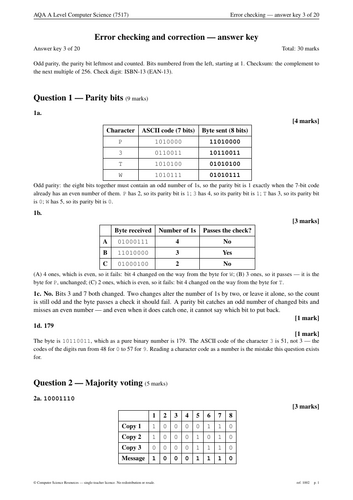
Question 3 is a checksum: the total of a block of five bytes, the checksum
that goes with it, whether a received block is accepted, and the pair of
errors - one byte up, another down by the same amount - that the checksum
cannot see.
Question 4 is a check digit: work one out from the weights, validate a
different number, and then a transposition. Sometimes the scheme catches it.
Sometimes it does not, and the answer key says why.
Question 5 is written: what a parity bit can and cannot do, when majority
voting is worth its cost, checksums against check digits, why the digits are
weighted, or character codes and the eighth bit.
Every sheet is 30 marks.
Something went wrong, please try again later.
This resource hasn't been reviewed yet
To ensure quality for our reviews, only customers who have purchased this resource can review it
Report this resourceto let us know if it violates our terms and conditions.
Our customer service team will review your report and will be in touch.
£6.00