


Ester functional group? Ester hydrolysis? Naming branched esters? What is saponification? Animal fats are natural esters? Ester linkage? All this and more covered in this comprehensive lesson with questions and answers! This is a Year 13 A level lesson for Edexcel International Unit 4 – WCH14, but it can also be used for all UK exam boards. All the slides in this lesson are fully animated and include answers to every mini plenary question and exam question. The breakdown of the slides (which are best opened on Microsoft PowerPoint) is as follows:
Slide 1 - Title and 5-minute starter. The starter is a grid of four questions entitled ‘last week, last lesson, today’s learning and future learning’. Use this generic slide for all your lessons by simply changing the questions and the answers each time.
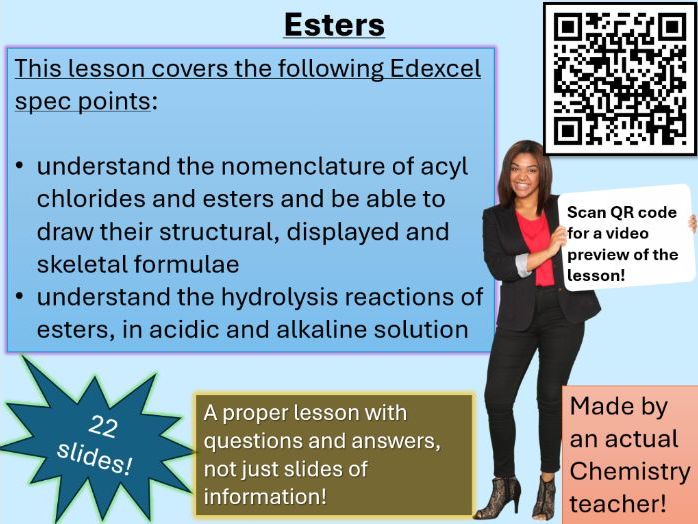
Slide 2 - Lesson objectives (see thumbnail image)
Slide 3 – introduction to carboxylic acid derivatives just to help students link esters to previous topics
Slide 4 – use this slide to teach students to recognise the ester functional group
Slide 5 – use this slide to show students how to name branched esters and draw their skeletal formulae
Slide 6 – physical properties of esters covered on this slide
Slide 7 – mini plenary learning pit stop to help students practise naming and drawing esters
Slide 8 – a reminder to students that esterification is reversible. The reverse reaction is hydrolysis. This leads nicely into the next section: ester hydrolysis
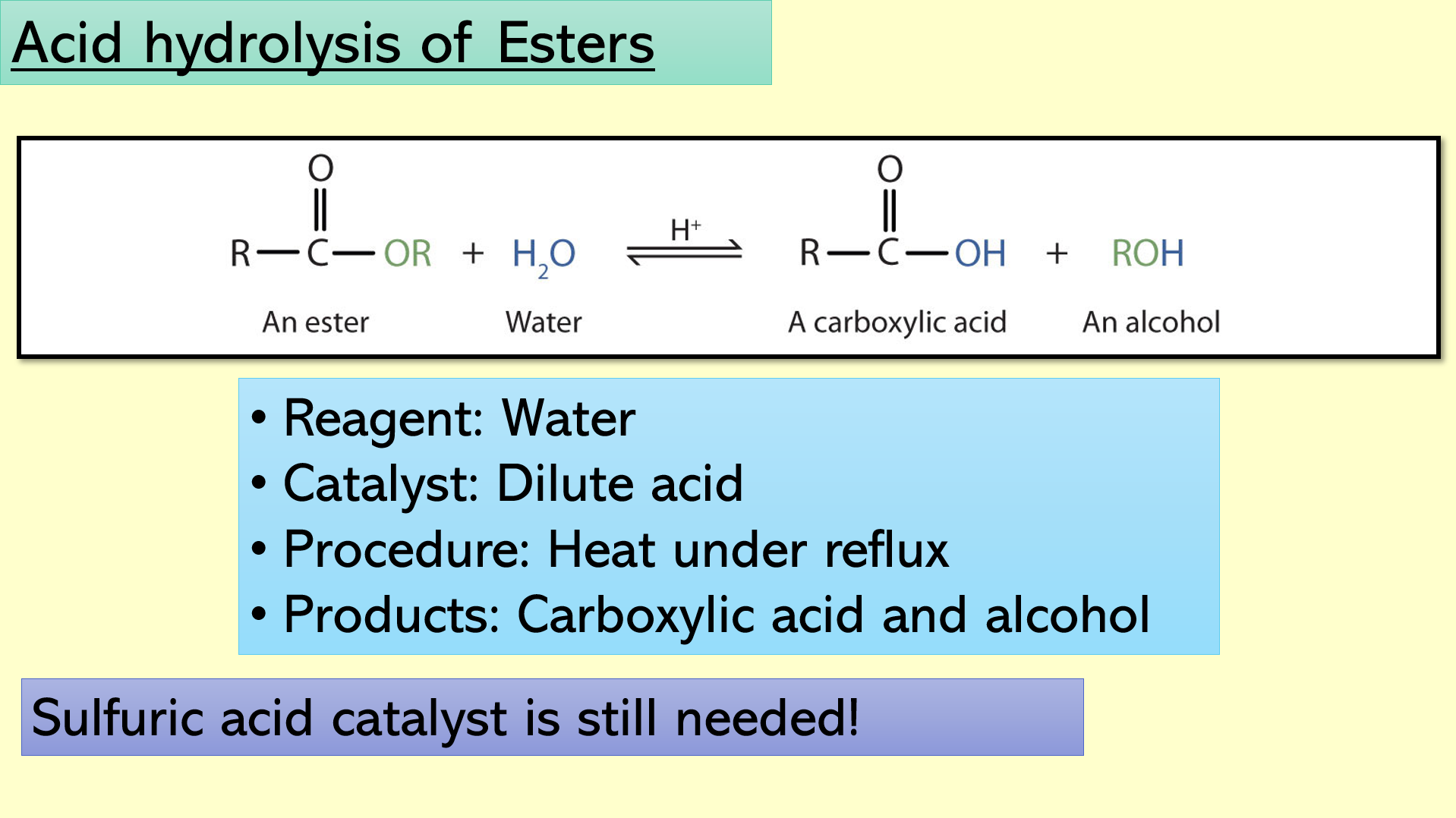
Slide 9 – use this slide to teach students about acid hydrolysis of esters. The slide includes the conditions and an example equation
Slide 10 - use this slide to teach students about alkaline hydrolysis of esters. The slide includes the conditions and an example equation. The subtle difference between acid and alkaline hydrolysis of ester is underlined, i.e. alkaline hydrolysis is irreversible
Slides 11 – 13: use these slides to present a new fact to students: most fats are esters formed from propane-1,2,3-triol (also known as glycerol)
Slides 14 – 15: this section how alkaline hydrolysis of fats (esters) can produce soap. This reaction is known as saponification
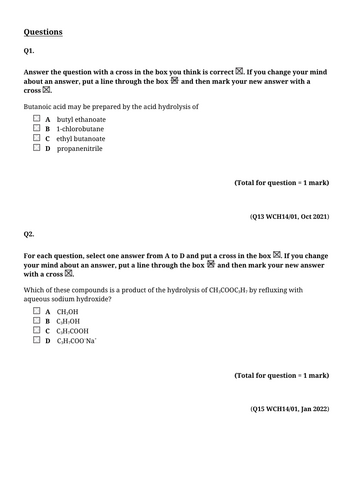
Slides 16 – 22: exam questions with mark scheme answers included with this resource
Please consider leaving a review! This really helps promote our store! Thanks!
Something went wrong, please try again later.
Very helpful, excellent resource
Report this resourceto let us know if it violates our terms and conditions.
Our customer service team will review your report and will be in touch.
£3.00