


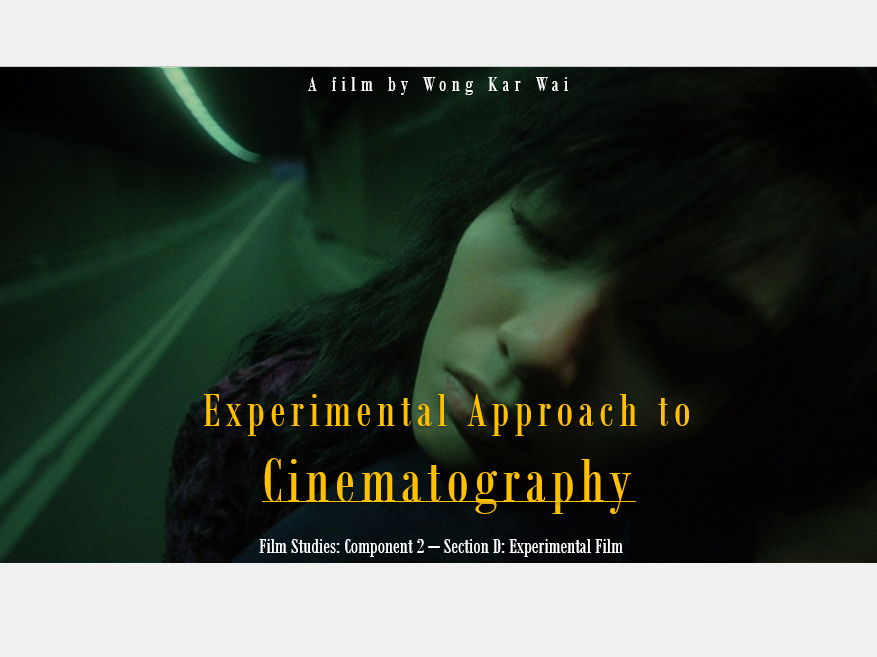
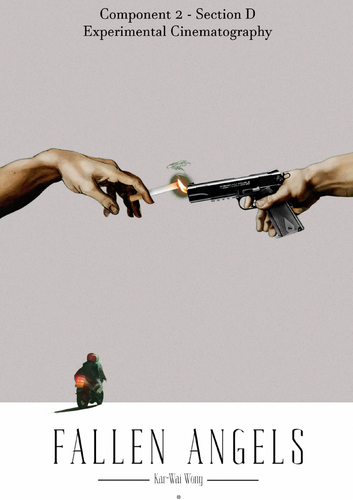
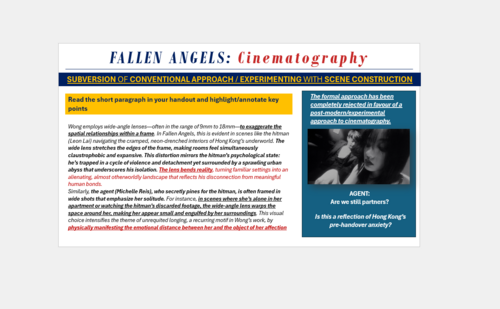
This pack contains a 37 slide PowerPoint and accompanying 18=page student booklet
All resources are human made - description below is an AI summary of the lesson:
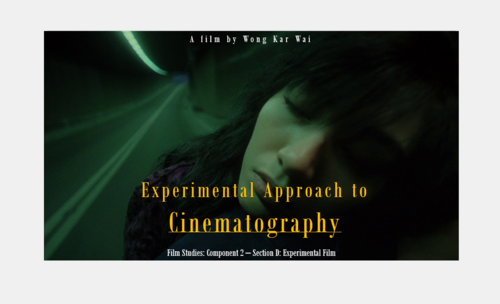
Focuses on Wong Kar Wai’s Fallen Angels and its experimental cinematography.
Encourages students to contrast conventional Hollywood techniques with Wong’s subversive, expressive style.
Conventional Cinematography Recap
Hollywood norms: invisible camera, narrative-driven visuals.
Techniques include:
Establishing shots
Shot/reverse shot
Over-the-shoulder (OTS)
Long shots progressing to close-ups
Purpose: support narrative, not distract from it.
Experimental Cinematography in Fallen Angels
Wong Kar Wai (WKW) rejects conventional norms to create a visually expressive, character-driven experience.
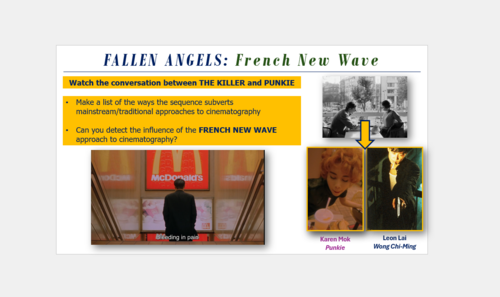
Inspired by the French New Wave (Godard, Truffaut, Varda).
Key Techniques Used
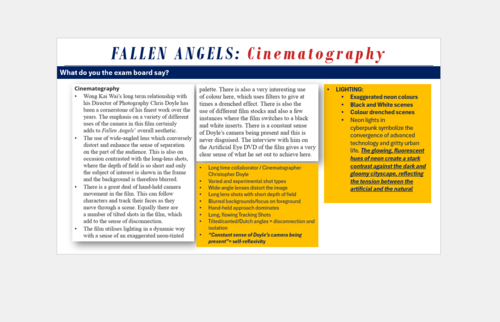
Wide-Angle Lenses:
Distort space, exaggerate isolation.
Make cramped spaces feel expansive yet claustrophobic.
Canted/Dutch Angles:
Create unease, disorientation, and tension.
Reflect psychological imbalance and urban alienation.
Foreground Focus / Depth of Field:
Emphasizes emotional distance.
Often isolates characters visually within the same frame.
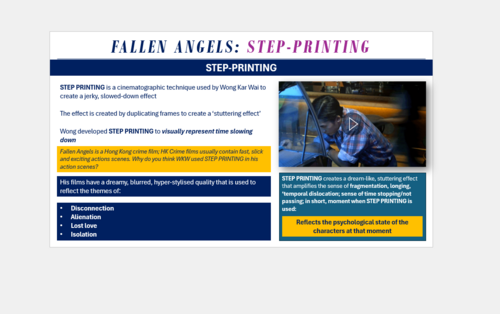
Step-Printing:
Creates a stuttering, dreamlike effect.
Represents temporal dislocation, fragmentation, and emotional detachment.
Subverts Hong Kong action cinema’s fluidity.
Visible Light Sources & Handheld Camera:
Adds realism and self-reflexivity.
Camera responds to character emotion rather than narrative.
Themes Explored Through Cinematography
Disconnection, loneliness, alienation, and unrequited love.
Reflects Hong Kong’s pre-1997 handover anxiety.
Camera becomes a tool for psychological exploration, not just storytelling.
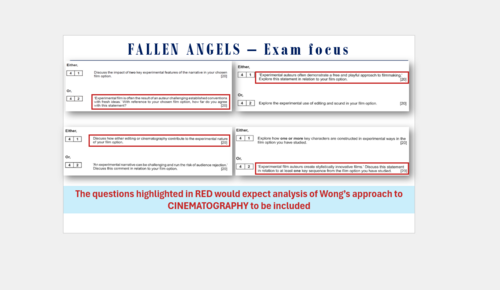
Essay Preparation
Students are guided to:
Understand and explain conventional techniques.
Analyse how and why WKW subverts them.
Use examples to support claims about experimental style.
Link visual style to contextual and thematic meaning.
Something went wrong, please try again later.
This resource hasn't been reviewed yet
To ensure quality for our reviews, only customers who have purchased this resource can review it
Report this resourceto let us know if it violates our terms and conditions.
Our customer service team will review your report and will be in touch.
£15.00