


How influential were the first settlers in Britain, and what impact can still be seen today?
This lesson explores the lives of Britain’s earliest settlers and challenges students to assess their significance and lasting legacy.
Through a range of interactive activities, students investigate why Britain was an attractive place to settle and how early communities helped shape the development of the country.
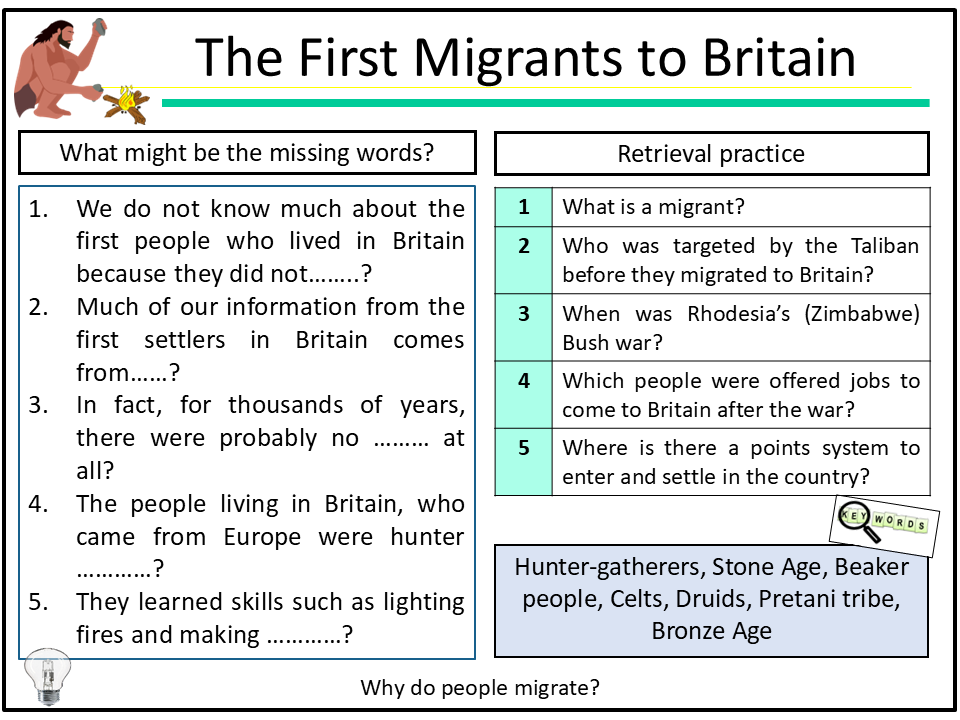
Students begin by examining the geographical and environmental features that made Britain an appealing place for settlement. They consider factors such as access to resources, climate, food supplies and natural protection before evaluating why people chose to make Britain their home.
Using evidence from archaeological discoveries, students then investigate a range of prehistoric tools and artefacts, deciding what they were used for and what they can reveal about the lives of early settlers. This encourages students to think like historians and archaeologists as they interpret evidence from the past.
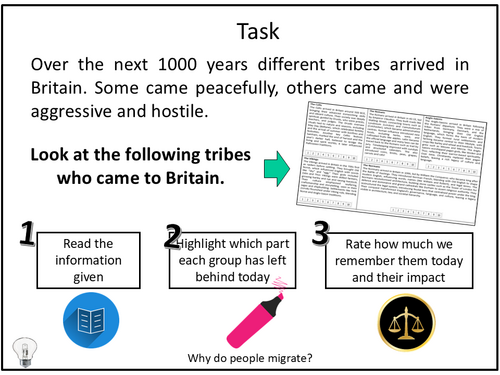
The main focus of the lesson is an exploration of the different groups and tribes who settled in Britain. Students assess what these settlers brought with them, how they influenced daily life, and which aspects of their culture, skills and innovations continue to have an impact today. They are encouraged to evaluate the significance of these contributions and consider which legacies have been the most enduring.
A differentiated extended writing task provides students with the opportunity to consolidate their learning and develop their historical explanation and judgement skills. Video links are included to support understanding and provide additional context throughout the lesson.
The lesson concludes with a fun and engaging Family Fortunes-style quiz in which students must predict the most common responses from a survey of one hundred people. This provides an enjoyable way to revisit key learning points and reinforce understanding.
An overarching enquiry question is introduced at the start of the lesson and revisited throughout, allowing students to reflect on their learning and track their progress as the unit develops. This enquiry-based approach helps students make connections between lessons and build a deeper understanding of Britain’s earliest history on migration.
Included in this lesson:
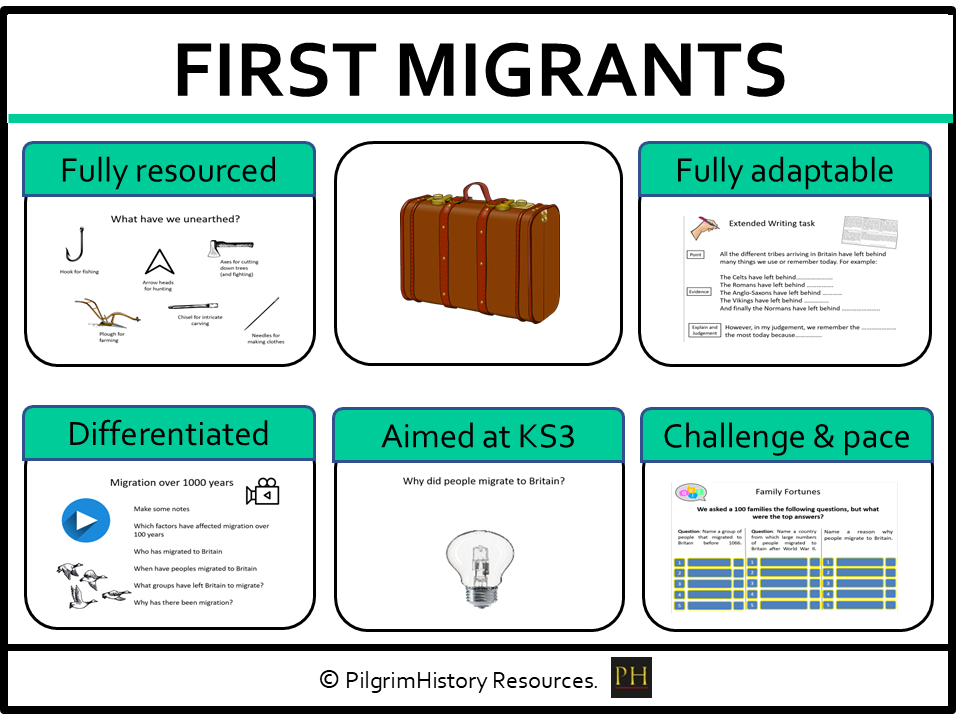
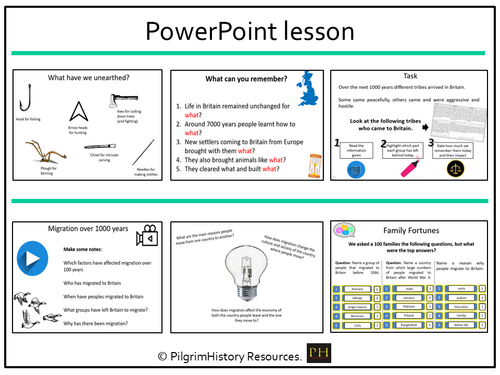
Fully editable PowerPoint lesson
Introduction to why Britain was attractive to settlers
Investigation of prehistoric tools and their uses
Study of the first tribes and settlers in Britain
Activities exploring their influence and legacy
Differentiated extended writing task
Family Fortunes-style plenary quiz
Opportunities for discussion and historical enquiry
Suggested teaching strategies and lesson guidance
Fully differentiated throughout
Fully resourced and ready to teach
Please leave a review if you find this resource useful. Your feedback is greatly appreciated
Something went wrong, please try again later.
This resource hasn't been reviewed yet
To ensure quality for our reviews, only customers who have purchased this resource can review it
Report this resourceto let us know if it violates our terms and conditions.
Our customer service team will review your report and will be in touch.
£3.00