


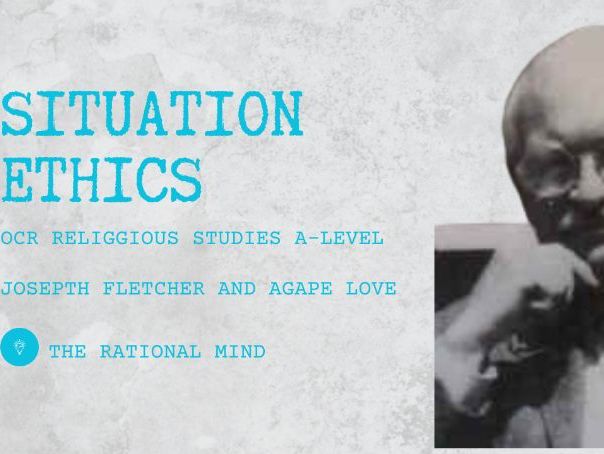
This resource introduces Situation Ethics as a key normative ethical theory within the OCR A Level Religious Studies Ethics specification. It explains that Situation Ethics, developed by Joseph Fletcher, is a relativist and teleological ethical theory, where moral decisions are based on the most loving outcome rather than fixed moral rules. The resource outlines Fletcher’s rejection of legalistic and antinomian approaches, presenting Situation Ethics as a middle way that uses principles flexibly depending on the situation.
The resource explains the central importance of agape, or selfless, unconditional love, as the only intrinsic good and the guiding principle for moral decision making. It introduces the four working principles of pragmatism, relativism, positivism, and personalism, which support practical and person-centred ethical reasoning. The resource also outlines the six fundamental principles, including the belief that love is the only absolute and that moral decisions must aim to produce the most loving outcome.
This resource supports students in understanding how Situation Ethics applies to moral dilemmas and ethical decision making. Exam questions are included at the end of the resource, helping students structure and evaluate Situation Ethics effectively in OCR essay questions.
Something went wrong, please try again later.
This resource hasn't been reviewed yet
To ensure quality for our reviews, only customers who have purchased this resource can review it
Report this resourceto let us know if it violates our terms and conditions.
Our customer service team will review your report and will be in touch.
£5.00