


A fully editable, ready-to-teach lesson on Hard engineering and downdrift effects for Edexcel International A Level (IAL) Geography, Unit 2: Geographical Investigations – Crowded Coasts.
Lesson aim: To explain how hard engineering can increase erosion further along the coast, using Mappleton as an example.
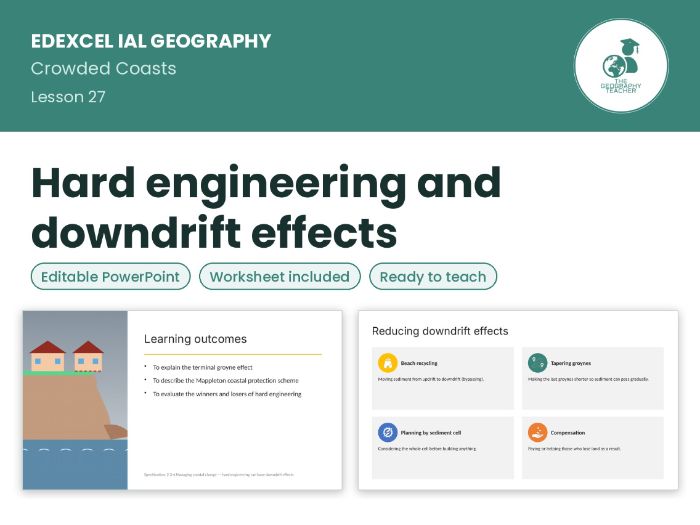
Learning outcomes
- To explain the terminal groyne effect
- To describe the Mappleton coastal protection scheme
- To evaluate the winners and losers of hard engineering
Specification: 2.3.4 Managing coastal change — hard engineering can have downdrift effects
What’s included
- Editable PowerPoint lesson (11 slides)
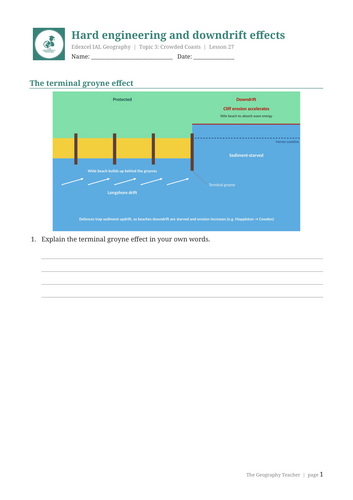
- Word worksheet: The terminal groyne effect
- Teacher notes and suggested answers in the speaker notes
Lesson overview
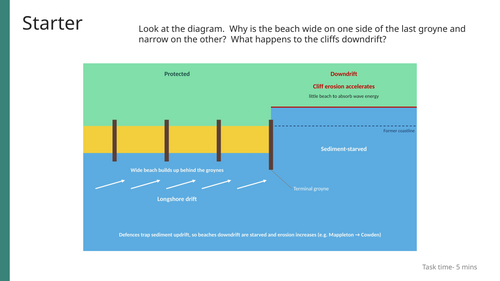
- Starter: Look at the diagram. Why is the beach wide on one side of the last groyne and narrow on the other? What happens to the cliffs downdrift?
- The terminal groyne effect
- Case study: Mappleton, Holderness (1991)
- Mappleton on the Holderness coast
- Winners and losers at Mappleton
- Is it fair to protect one village if it means another loses more land?
- Reducing downdrift effects
- Mappleton case study
- Exam practice: With reference to a named example, explain how hard engineering can cause problems further along the coast. (6)
This lesson is part of my complete Edexcel IAL Geography Crowded Coasts unit, which is also available in my shop if you would like every lesson in the topic.
Want a free sample? Visit The Geography Teacher website.
Something went wrong, please try again later.
This resource hasn't been reviewed yet
To ensure quality for our reviews, only customers who have purchased this resource can review it
Report this resourceto let us know if it violates our terms and conditions.
Our customer service team will review your report and will be in touch.
£3.50