


Why do historians disagree about the past, and how do different interpretations shape our understanding of history?
This fully resourced and engaging Key Stage 3 History lesson introduces students to the concept of historical interpretations and helps them understand that history is not simply a collection of facts, but is shaped by evidence, perspective and the questions historians ask.
It develops critical thinking and source analysis skills while encouraging students to move beyond what happened to explore why historians reach different conclusions.
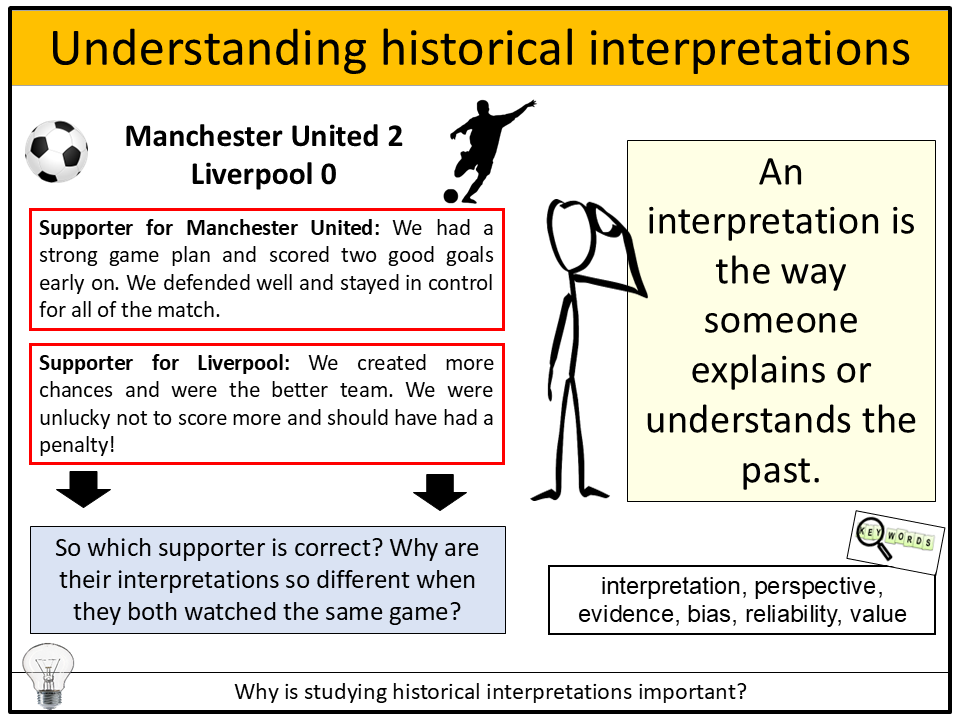
The lesson begins with an engaging starter activity that introduces the idea of historical interpretations before exploring why people can view the same event or individual in different ways. Students are encouraged to consider how evidence, context and personal perspective influence historical accounts.
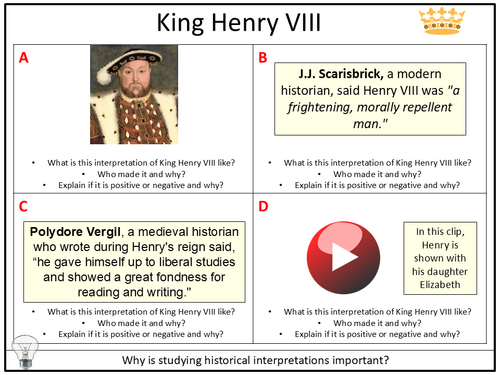
Students then investigate two contrasting case studies. The first examines different interpretations of Henry VIII, evaluating whether he should be remembered as a tyrant or a visionary ruler.
The second explores competing explanations for the fall of the Fall of the Western Roman Empire, comparing interpretations that emphasise barbarian invasions with those that argue internal decline was the more significant cause.
Using a range of carefully selected sources and viewpoints, students analyse evidence, compare historical arguments and justify their own conclusions. The lesson promotes debate, discussion and independent thinking while introducing one of the key historical concepts that underpins both KS3 and GCSE History.
This lesson is ideal as an introduction to historical interpretations, an observation lesson or a ready-to-teach resource requiring minimal preparation.
Included in thislesson:
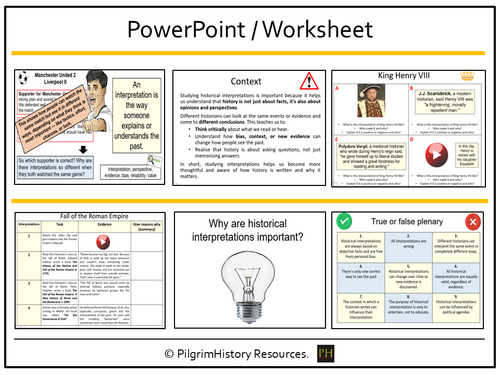
Fully editable PowerPoint
Introduction to historical interpretations and historical thinking
Two detailed case studies: Henry VIII and the fall of the Roman Empire
Source analysis, comparison and evaluation activities
Differentiated resources with suggested teaching strategies
Ideal for KS3, observation lessons and GCSE preparation
Please leave a review if you find this resource useful. Your feedback is greatly appreciated.
Something went wrong, please try again later.
This resource hasn't been reviewed yet
To ensure quality for our reviews, only customers who have purchased this resource can review it
Report this resourceto let us know if it violates our terms and conditions.
Our customer service team will review your report and will be in touch.
£3.50