


Edexcel Superpower Relations and the Cold War, 1941-91
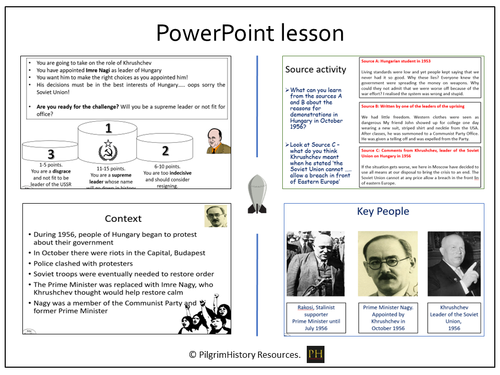
The lesson aims to explore the significance of the Hungarian uprising in the context of the Cold War in 1956.
Students will first learn about the leaders of Hungary, such as Imre Nagy and its importance as a country to the Soviet Union.
There is a source activity to complete to analyse the various viewpoints of the time from ordinary Hungarians to Khrushchev himself.
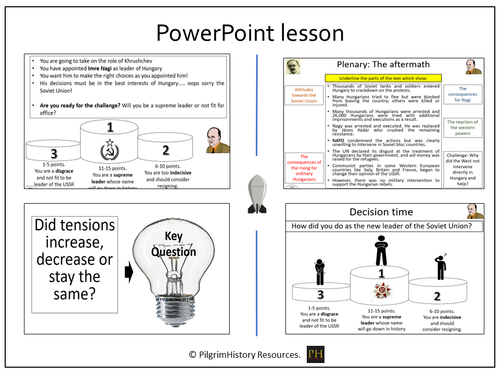
The main task is to take on the role of Khrushchev and make some vital key decisions with regard to the uprising and the impact of Soviet control in Eastern Europe and Hungary. Students will pick up points to cement their totalitarian leadership qualities or waiver and act indecisively.
Students will finally analyse the consequences of the uprising for superpower relations and make judgements and conclusions as to why the west failed to intervene in the Hungarian uprising.
There is some GCSE question practice to complete at the end with help and prompts given if required.
The final task is to complete a road map as students attempt to answer questions correctly to reach the safety of a nuclear bomb shelter.
The lesson is enquiry based with a key question of how close was the world to a nuclear war using a lightbulb posed at the start of the lesson and revisited throughout this and subsequent lessons to show the progress of learning.
The resource includes retrieval practice, suggested teaching strategies, differentiated material and GCSE question practice.
It comes in PowerPoint format if there is a wish to adapt and change.
Something went wrong, please try again later.
This resource hasn't been reviewed yet
To ensure quality for our reviews, only customers who have purchased this resource can review it
Report this resourceto let us know if it violates our terms and conditions.
Our customer service team will review your report and will be in touch.
£3.00