


This resource is a visually engaging economics and business revision pack designed to support students’ understanding of key concepts through clear explanations, mind maps, and real-world examples.
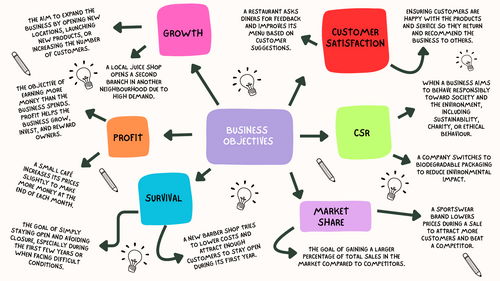
Page 1 – Business Objectives
This page explains the main goals businesses aim to achieve, including survival, profit, growth, market share, customer satisfaction, and corporate social responsibility (CSR), using simple real-world examples.
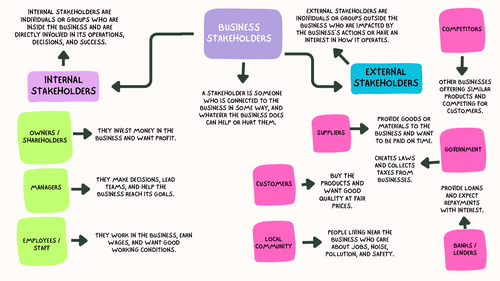
Page 2 – Business Stakeholders
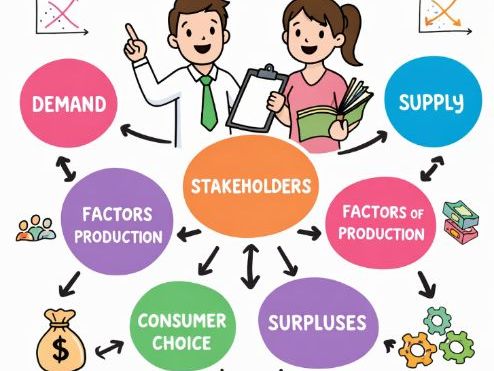
This page introduces stakeholders and explains the difference between internal and external stakeholders, outlining their roles, interests, and how business decisions can affect them.
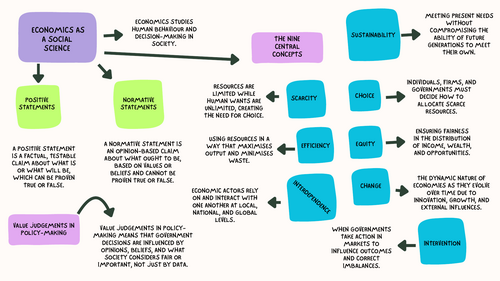
Page 3 – Economics as a Social Science
This page explores economics as the study of human behaviour, covering positive and normative statements, government intervention, value judgements, and the nine central economic concepts.
Page 4 – Factors of Production
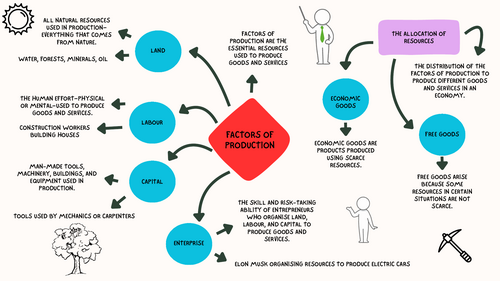
This page explains the four factors of production (land, labour, capital, and enterprise), how resources are allocated, and the difference between economic goods and free goods.
Page 5 – Demand and Consumer Behaviour
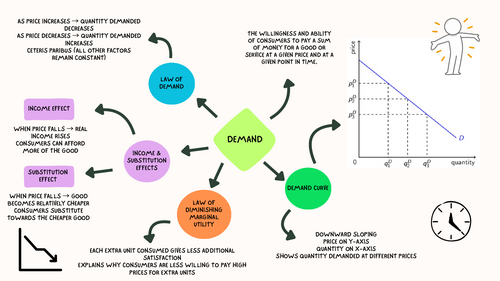
This page outlines demand, the law of demand, the demand curve, income and substitution effects, and the law of diminishing marginal utility.
Page 6 – Non-Price Determinants of Demand
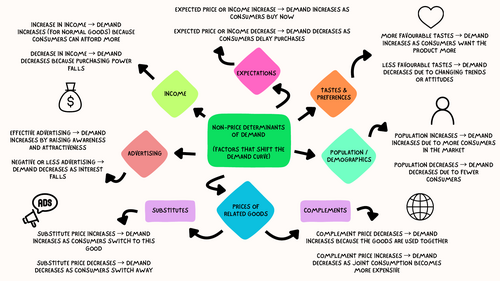
This page explains the factors that shift the demand curve, including income, tastes and preferences, advertising, population, expectations, and prices of related goods.
Page 7 – Supply and the Law of Supply
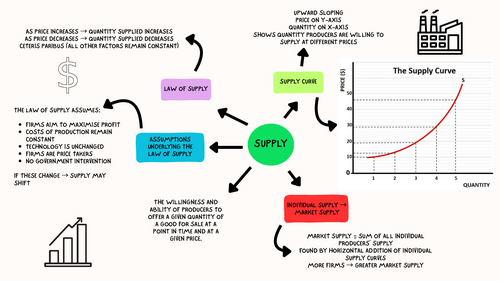
This page introduces supply, the law of supply, assumptions behind the law of supply, the supply curve, and the relationship between individual supply and market supply.
Page 8 – Non-Price Determinants of Supply
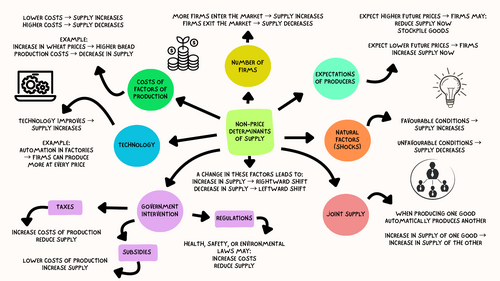
This page explains the factors that shift the supply curve, such as costs of production, technology, government intervention, expectations, number of firms, natural factors, and joint supply.
Page 9 – Price Mechanism and Surplus
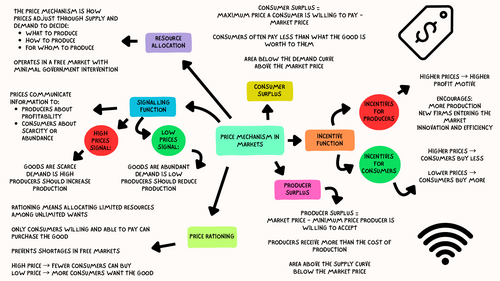
This page explains how the price mechanism allocates resources through signalling, incentives, and rationing, and introduces consumer surplus and producer surplus.
Page 10 – Behavioural Economics and Consumer Choice
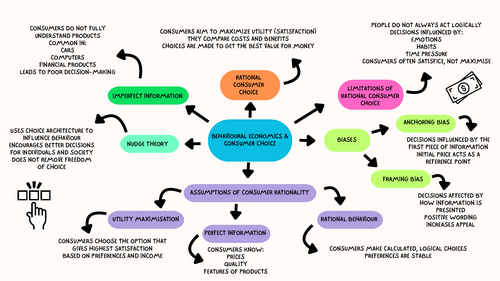
This page explores rational consumer choice, its assumptions and limitations, imperfect information, behavioural biases (anchoring and framing), and the role of nudge theory.
Something went wrong, please try again later.
This resource hasn't been reviewed yet
To ensure quality for our reviews, only customers who have purchased this resource can review it
Report this resourceto let us know if it violates our terms and conditions.
Our customer service team will review your report and will be in touch.
$5.00