IB Geography Mini Bundle Core Part 1 Changing Populations
Resource Bundle


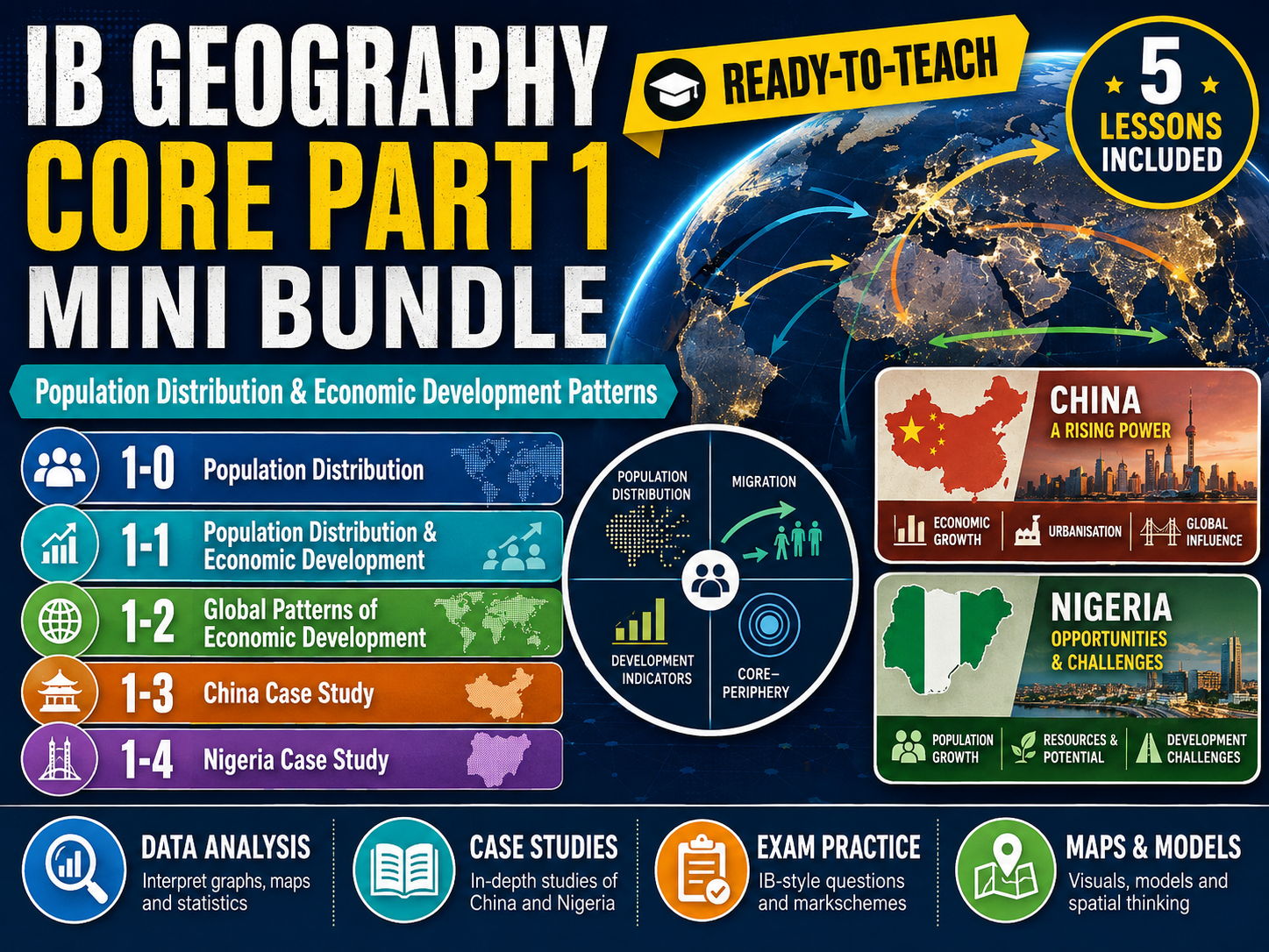

A complete five-lesson IB Geography mini bundle covering the opening section of Core Part 1: Population Distribution and Economic Development Patterns.
This carefully sequenced bundle takes students from understanding global population distribution through to analysing economic development, core–periphery relationships and uneven population patterns, before applying their knowledge to detailed China and Nigeria case studies.
The lessons are designed to build knowledge progressively while developing the analytical, evaluative and data-handling skills required for success in IB Geography.
Included in this bundle:
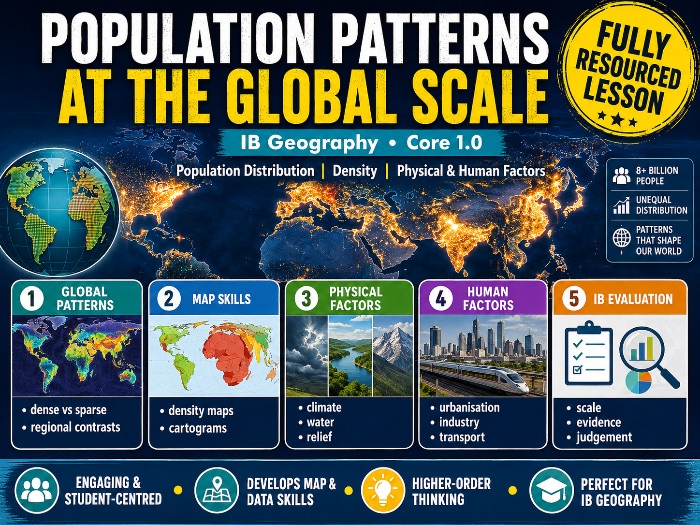
Lesson 1-0 – Population Distribution
Introduces global population distribution, density and the major physical and human factors influencing where people live.
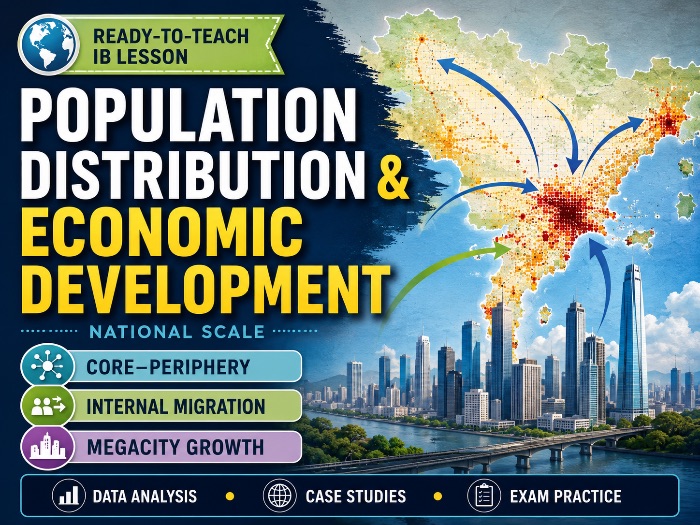
Lesson 1-1 – Population Distribution & Economic Development at the National Scale
Explores core–periphery relationships, internal migration, economic concentration, agglomeration and megacity growth. Students examine how development can reinforce uneven population patterns.
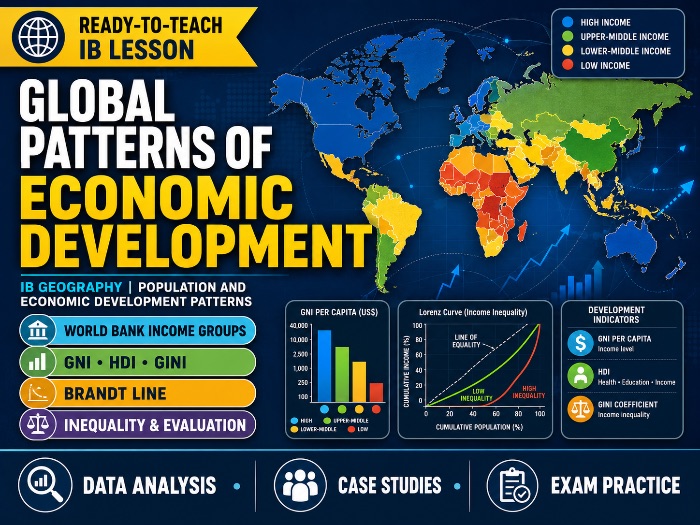
Lesson 1-2 – Global Patterns of Economic Development
Investigates how development is measured and classified through World Bank income groups, GNI per capita, HDI, Gini, inequality and the Brandt Line, while encouraging students to evaluate the limitations of different indicators.
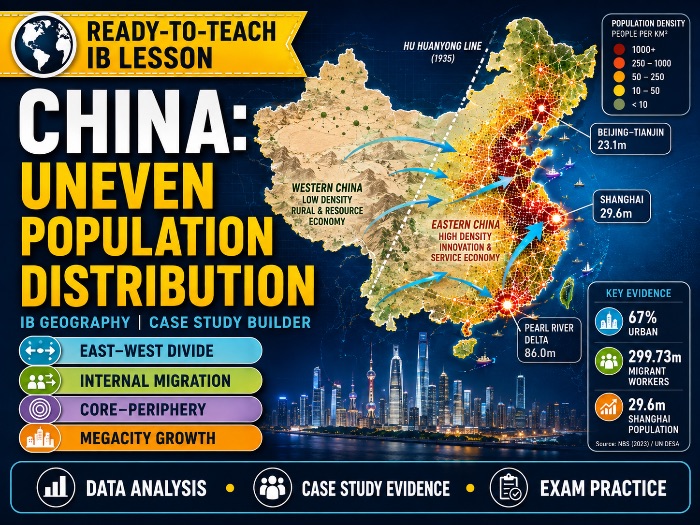
Lesson 1-3 – China: Uneven Population Distribution Case Study
An evidence-rich China case study examining the east–west divide, Hu Huanyong Line, physical factors, economic development, internal migration, core–periphery patterns and megacity growth.
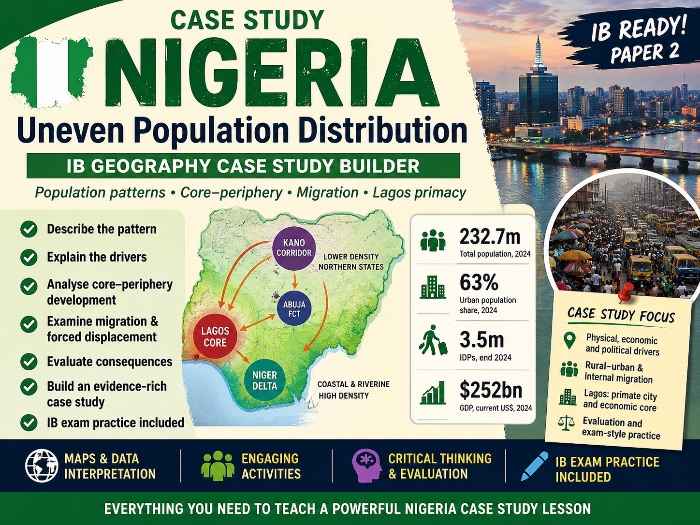
Lesson 1-4 – Nigeria: Uneven Population Distribution Case Study
Explores Nigeria’s contrasting population patterns, regional inequalities, Lagos primacy, internal migration, urbanisation, poverty, insecurity and forced displacement.
Across the five lessons, students develop key IB Geography and ATL skills, including:
The resources combine clear geographical content, contemporary data, visual analysis, collaborative learning, decision-making, case-study building and exam-style practice.
A particular strength of the bundle is the progression from concept to application to case study to evaluation. Students do not simply learn definitions; they repeatedly apply ideas to real places and build the evidence needed for stronger IB responses.
The China and Nigeria lessons also provide contrasting case studies that students can use to compare how physical geography, economic opportunity, government policy, migration and inequality shape population distribution in very different national contexts.
Ideal for teachers beginning IB Geography Core: Population Distribution and Economic Development Patterns, or for departments looking for a coherent sequence of engaging, classroom-ready lessons.
Five complete IB Geography lessons in one convenient mini bundle – saving preparation time while providing students with strong knowledge, current case-study evidence and valuable exam practice.
Something went wrong, please try again later.
This resource hasn't been reviewed yet
To ensure quality for our reviews, only customers who have purchased this resource can review it
Report this resourceto let us know if it violates our terms and conditions.
Our customer service team will review your report and will be in touch.