


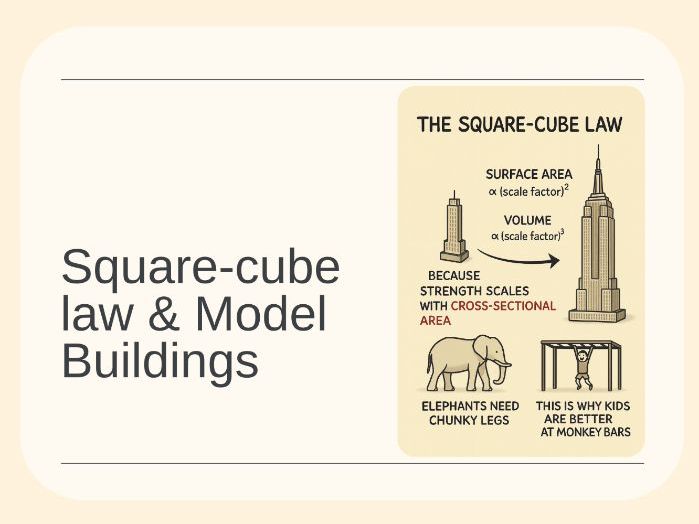
Bring IB Maths AI Unit 3 to life with this engaging Scaled Buildings project exploring scale factors, surface area, volume, mass and the square–cube law.
Students select a real building, approximate it using standard 3D shapes and construct an accurate scale model. They calculate scaled dimensions, surface areas, volumes and predicted mass before comparing their mathematical predictions with physical measurements and calculating percentage error.
The resource includes:
- Structured project instructions
- Student calculation tables
- Scale, density and percentage-error tasks
- Building and measurement guidance
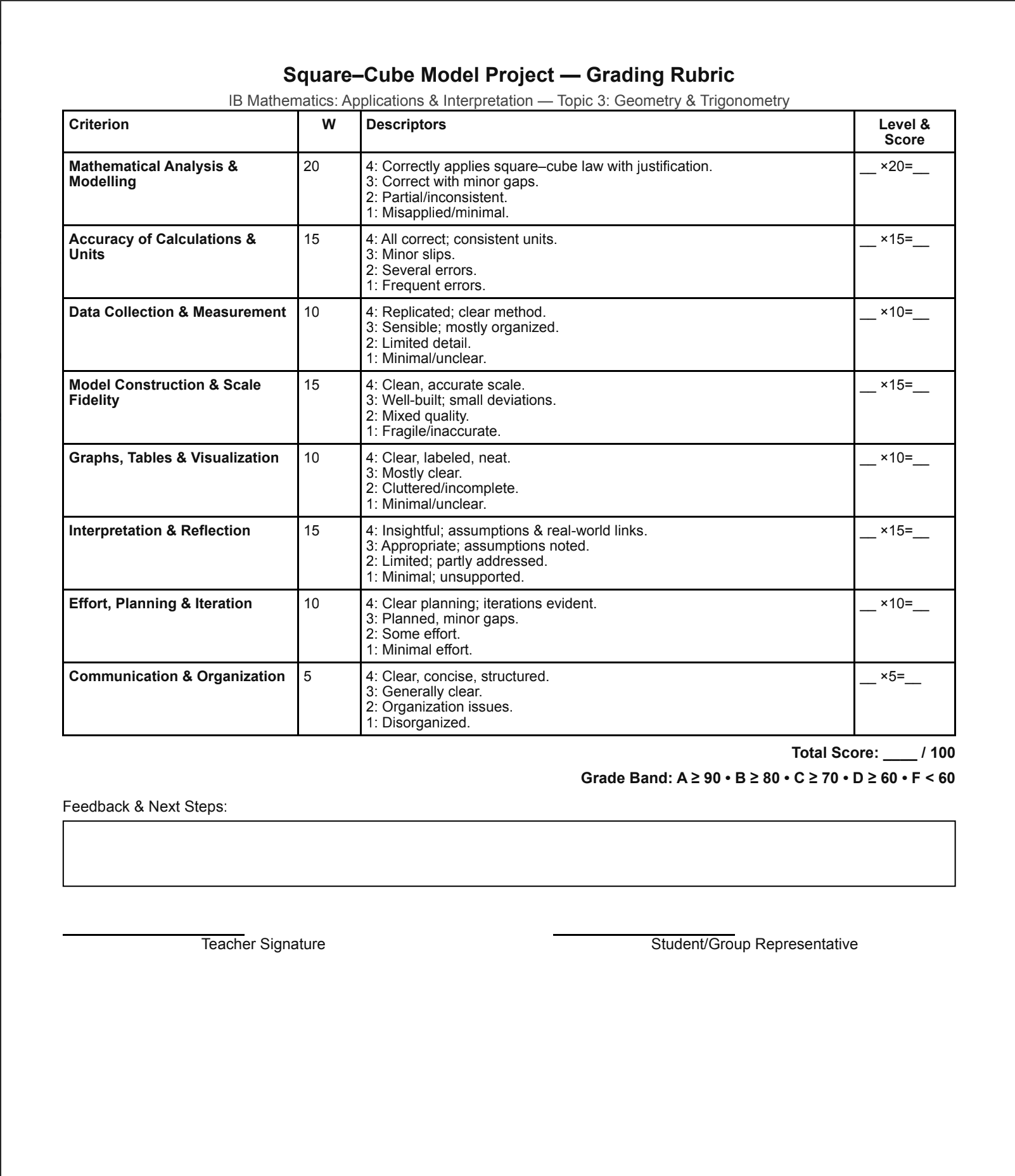
- A detailed 100-point assessment rubric
Ideal for project-based learning, mathematical modelling, group work, STEM enrichment or an IB Maths AI Unit 3 assessment. Students develop practical problem-solving, measurement, communication and reflection skills while connecting geometry to architecture and engineering.
Something went wrong, please try again later.
This resource hasn't been reviewed yet
To ensure quality for our reviews, only customers who have purchased this resource can review it
Report this resourceto let us know if it violates our terms and conditions.
Our customer service team will review your report and will be in touch.
£4.00