


IGCSE Geography – Coastal Processes: Constructive & Destructive Waves, Fetch and Wave Refraction
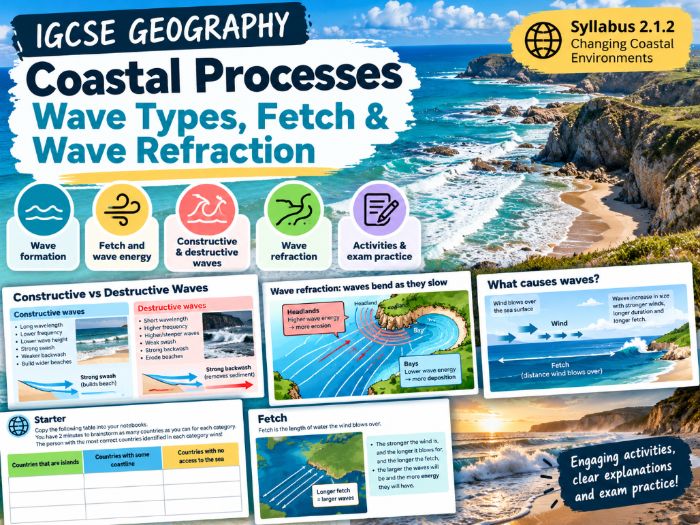
An engaging, visually appealing IGCSE Geography lesson exploring how waves shape our coastlines through erosion and deposition.
Designed for Year 10–11 students studying IGCSE Geography – Changing Coastal Environments, this PowerPoint lesson introduces the key processes responsible for coastal change, including wave formation, constructive and destructive waves, swash, backwash, fetch and wave refraction.
The lesson combines clear geographical explanations, labelled diagrams, striking coastal photographs and interactive activities to help students develop their knowledge, apply geographical terminology and strengthen examination skills.
What’s Included?
- Engaging Starter Activity
Students brainstorm countries that are islands, countries with coastlines and landlocked countries, introducing the geographical significance of coastal environments.
- Understanding Wave Formation
Clear explanations and diagrams introduce:
How wind generates waves
The influence of wind speed, duration and fetch
How waves change as they approach shallow water
Swash, backwash and breaking waves
- Constructive vs Destructive Waves
Students investigate the differences between the two wave types, including wave height, frequency, wavelength, swash and backwash strength.
Visual comparisons help students understand why constructive waves encourage deposition while destructive waves lead to coastal erosion.
- Interactive Wave Court Activity
A collaborative learning challenge in which students become prosecutors, defence representatives and judges!
Working in groups, students analyse coastal evidence and argue whether a beach is being built up or eroded. This encourages geographical reasoning, discussion and the accurate application of key terminology.
- Wave Refraction
Students explore how waves bend as they approach irregular coastlines and why wave energy becomes concentrated around headlands but dispersed within bays.
Labelled diagrams support understanding of the relationship between wave refraction, erosion and deposition.
- Applying Geographical Skills
Students interpret diagrams and coastal photographs, investigate differences in wave energy and use evidence to explain coastal processes.
- Exam Practice and Plenary
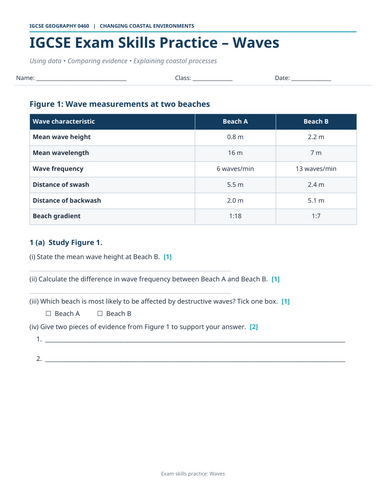
The lesson concludes with examination-style questions requiring students to identify wave characteristics, select supporting evidence and explain how sediment is affected over time.
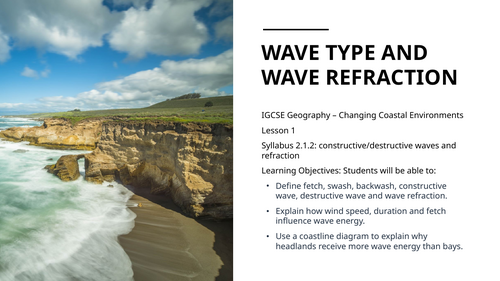
Learning Objectives
By the end of the lesson, students should be able to:
- Define key coastal terminology.
- Explain how wind speed, duration and fetch influence wave energy.
- Distinguish between constructive and destructive waves.
- Explain wave refraction and its effects on headlands and bays.
- Apply geographical knowledge to diagrams, photographs and examination-style questions.
Something went wrong, please try again later.
This resource hasn't been reviewed yet
To ensure quality for our reviews, only customers who have purchased this resource can review it
Report this resourceto let us know if it violates our terms and conditions.
Our customer service team will review your report and will be in touch.
£4.00