


The aim of this lesson is to assess how Josef Mengele escaped justice after the Second World War and evaluate the reasons why he remained at large for so many years.
The lesson is inspired by the work of Gerald Posner, who spent decades investigating Mengele’s escape and disappearance. Students explore the intriguing question of whether Mengele was an exceptionally effective fugitive or whether his escape was made possible by failures within the West German authorities and a lack of determination from governments to bring him to justice.
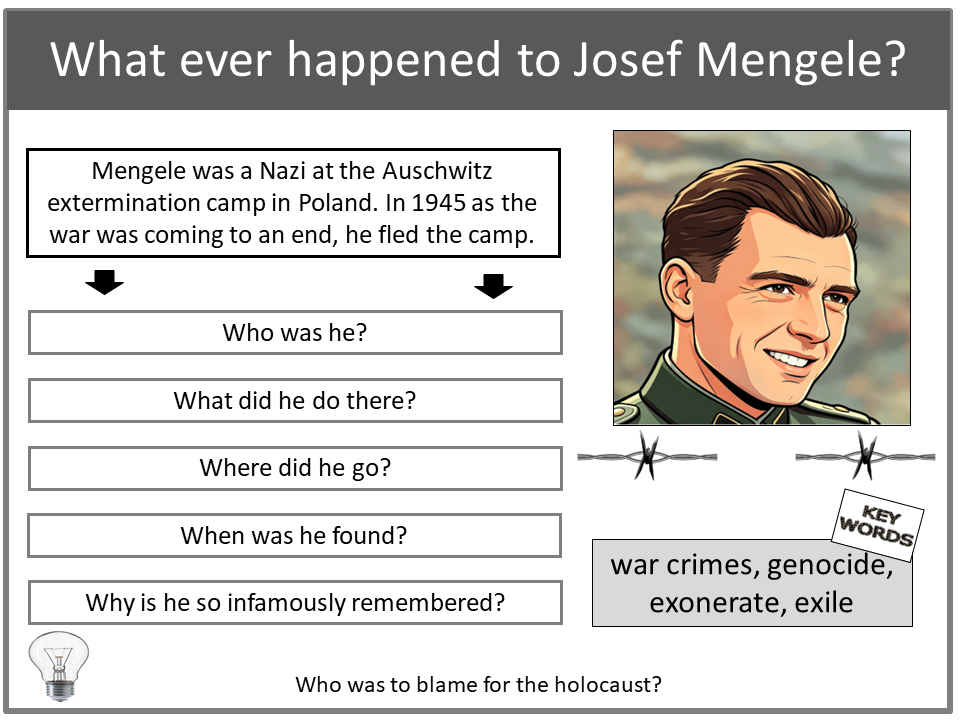
Students are introduced to Mengele’s background and his role at Auschwitz, with the focus kept on the historical context rather than graphic descriptions of his crimes. A missing-word activity helps students establish the key facts before they investigate the methods used to help Mengele escape Europe.
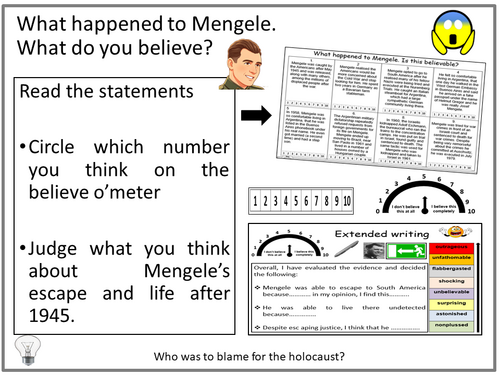
Students then analyse the false passport used by Mengele and investigate the evidence surrounding his journey to South America. The main enquiry challenges students to decide how believable the story of his escape really is, with carefully selected clues and red herrings encouraging them to question the evidence and distinguish fact from speculation.
A range of differentiated questions, an extended writing task and a “believable” words activity enable students to develop and support their interpretations. A thinking quilt helps students consolidate their knowledge and build a clearer picture of Mengele’s post-war double life.
The lesson also includes an excellent link to documentary footage featuring Gerald Posner, providing students with an opportunity to consider how modern investigators have attempted to reconstruct Mengele’s escape.
The lesson concludes by returning to the enquiry question and asking students to use the evidence they have gathered to reach their own supported judgement about why Mengele escaped justice.
This enquiry-based lesson provides an excellent foundation for GCSE History, developing students’ skills in historical enquiry, source analysis, interpretation, evaluation and evidence-based judgement.
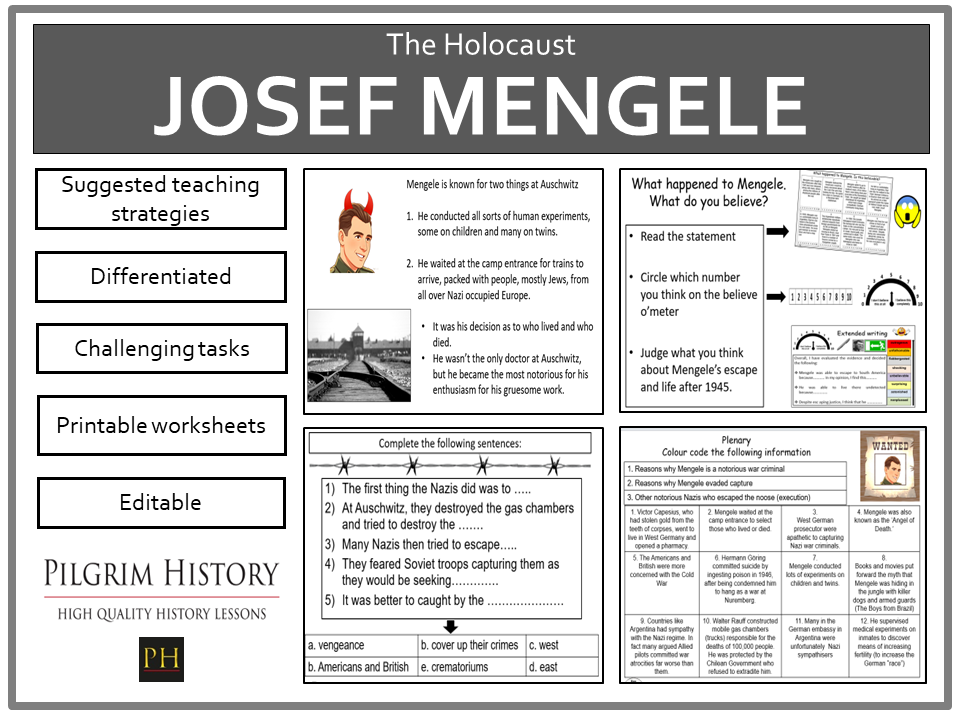
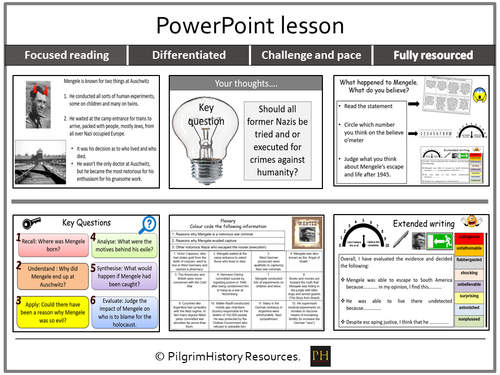
Included in this lesson:
Fully editable PowerPoint
Mengele’s escape from Europe
Investigation of his escape story
Evidence and red-herring activity
Gerald Posner documentary link
Differentiated questions
Extended writing task
Retrieval practice
Suggested teaching strategies
Differentiated resources
Please leave a review if you find this resource useful. Your feedback is greatly appreciated.
Something went wrong, please try again later.
This resource hasn't been reviewed yet
To ensure quality for our reviews, only customers who have purchased this resource can review it
Report this resourceto let us know if it violates our terms and conditions.
Our customer service team will review your report and will be in touch.
£3.50