


L’Étranger – Death and Mortality
A comprehensive French-language study resource examining death and the mortal condition in Albert Camus’s L’Étranger. It explores the death of Meursault’s mother, the murder of the unnamed Arab man, the death sentence imposed on Meursault and the final acceptance of finitude while carefully distinguishing these different forms of death and their ethical significance.
Key features:
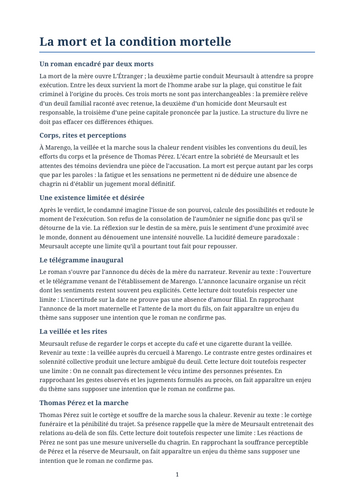
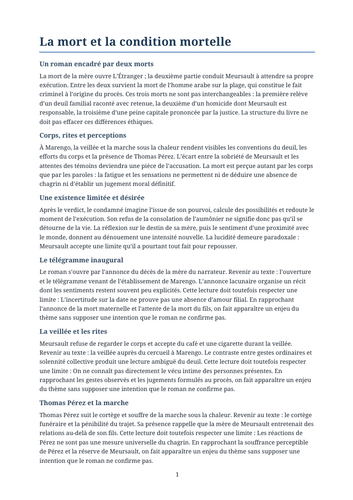
- Clear analysis of the three central forms of death in the novel: maternal bereavement, homicide and the anticipated execution of Meursault
- Detailed study of the opening telegram, the vigil and funeral rites, including the social expectations surrounding grief and visible mourning
- Examination of Thomas Pérez and the funeral procession, showing how bodily suffering, heat and public expressions of grief complicate interpretation
- Focused analysis of the murder on the beach, including the first shot and four additional shots, while preserving the victim’s distinct ethical status
- Detailed treatment of the death sentence and Meursault’s fear of execution, including his hopes for appeal and the changing experience of time in prison
- Exploration of the final memory of Meursault’s mother, linking old age, mortality and the possibility of beginning again without inventing a posthumous reconciliation
- Careful distinction between death as philosophical reflection and death as concrete loss or violence, preventing the murdered victim from becoming merely a symbol
- Ten substantial exercise sections, detailed answers and a developed dissertation plan on how the novel’s three figures of death structure its treatment of social conventions, responsibility and human finitude
Something went wrong, please try again later.
This resource hasn't been reviewed yet
To ensure quality for our reviews, only customers who have purchased this resource can review it
Report this resourceto let us know if it violates our terms and conditions.
Our customer service team will review your report and will be in touch.
£1.50