


L’Étranger – Death and Mortality
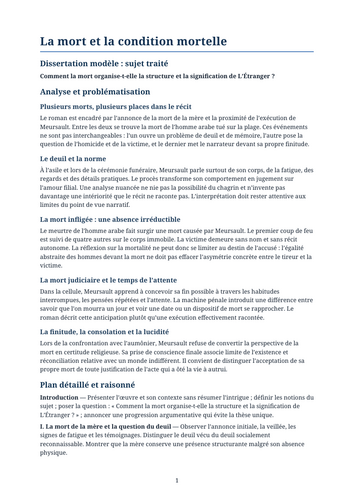
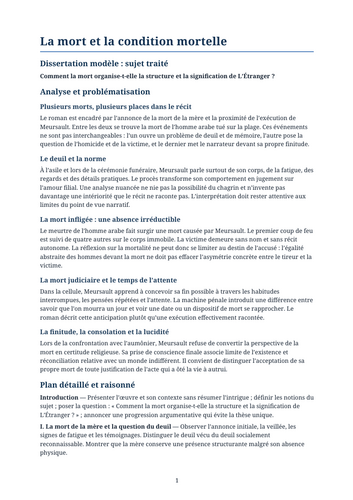
A comprehensive French-language study resource built around a fully developed model essay on death and mortality in Albert Camus’s L’Étranger. It distinguishes the death of Meursault’s mother, the killing of the unnamed Arab man and Meursault’s own anticipated execution, showing how each has a different structural, ethical and philosophical function in the novel.
Key features:
- A complete model response to the question “Comment la mort organise-t-elle la structure et la signification de L’Étranger ?”
- Detailed study of the death of Meursault’s mother, including mourning, social expectations and the limits of inferring inner feeling from outward behaviour
- Focused analysis of the murder of the Arab man, preserving the distinction between sensory description, homicide and responsibility
- Careful examination of the victim’s anonymity and lack of narrative voice, including the ethical and colonial implications of this imbalance
- Exploration of the death sentence and prison, showing how mortality becomes an immediate and institutionalised prospect rather than an abstract fact
- Analysis of anticipation, the guillotine and the experience of waiting, while noting that the execution itself is not narrated
- Detailed treatment of the confrontation with the chaplain and final lucidity, distinguishing acceptance of mortality from religious consolation or moral redemption
- Ten substantial exercise sections, detailed answers, a reasoned essay plan and a further essay task on how condemnation transforms Meursault’s understanding of life
Something went wrong, please try again later.
This resource hasn't been reviewed yet
To ensure quality for our reviews, only customers who have purchased this resource can review it
Report this resourceto let us know if it violates our terms and conditions.
Our customer service team will review your report and will be in touch.
£1.50