


L’Étranger – Freedom and Responsibility
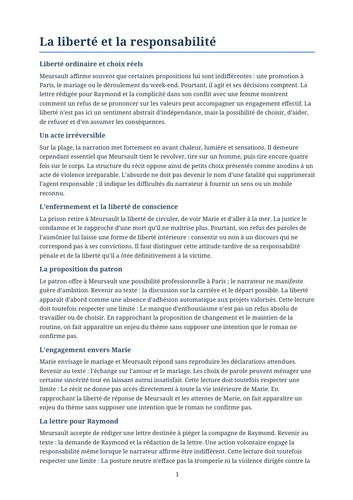
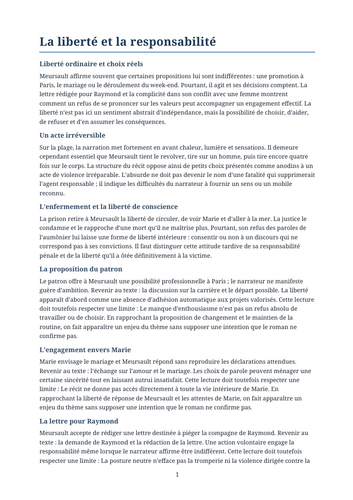
A comprehensive French-language study resource examining freedom and responsibility in Albert Camus’s L’Étranger. It explores personal choice, moral agency, physical constraint, criminal responsibility and freedom of conscience while showing that Meursault’s apparent indifference never removes the consequences of his decisions or the freedom he permanently takes from his victim.
Key features:
- Detailed analysis of Meursault’s everyday choices, including career, marriage and routine, showing that indifference does not mean an absence of agency
- Focused study of the letter written for Raymond, demonstrating how a voluntary action creates responsibility even when the narrator presents himself as detached
- Examination of the murder on the beach, including the first shot and four additional shots, while rejecting heat or circumstance as forces that abolish responsibility
- Analysis of agency and irreversible action, distinguishing narrative explanation from moral or legal exoneration
- Detailed treatment of imprisonment and the loss of physical freedom, including separation from movement, the sea, Marie and ordinary pleasures
- Exploration of Meursault’s continuing desire to live and hope for appeal, showing how constraint alters his understanding of freedom
- Examination of freedom of conscience in the encounter with the chaplain, where Meursault retains the ability to reject beliefs imposed on him
- Ten substantial exercise sections, detailed answers and a developed dissertation plan on how the novel contrasts Meursault’s freedom of conscience with responsibility for his choices and the permanent loss of freedom inflicted on others
Something went wrong, please try again later.
This resource hasn't been reviewed yet
To ensure quality for our reviews, only customers who have purchased this resource can review it
Report this resourceto let us know if it violates our terms and conditions.
Our customer service team will review your report and will be in touch.
£1.50