


L’Étranger – Phrases for Literary Analysis
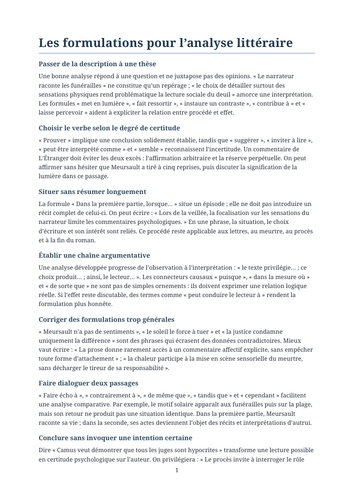
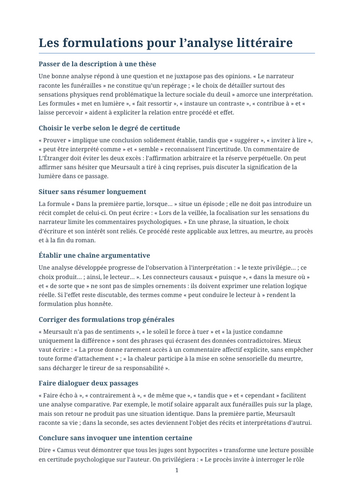
A comprehensive French-language study resource developing the formulations needed to write precise, progressive and nuanced literary analysis of Albert Camus’s L’Étranger. It moves from simple description towards interpretation by modelling analytical verbs, degrees of certainty, logical connections, comparison and qualification while showing how to avoid unsupported claims about characters, symbolism, authorial intention and moral responsibility.
Key features:
- Clear guidance on moving from observation to interpretation, using formulations such as mettre en lumière, faire ressortir, contribuer à and laisser percevoir
- Detailed work on degrees of certainty, distinguishing strong claims from more cautious formulations such as suggérer, peut être interprété comme and semble
- Practical support for situating passages without over-summarising, linking context, technique and effect in concise analytical sentences
- Structured practice in building argumentative chains, moving logically from textual observation to effect and interpretation
- Focused correction of overgeneralised claims about Meursault’s emotions, the sun, the trial and responsibility
- Comparative language for connecting episodes across the novel, including faire écho à, contrairement à, tandis que and cependant
- A substantial bank of reusable analytical expressions including nuancer, mettre en tension, sans pour autant, à rebours de and il serait excessif de
- Ten substantial exercise sections, detailed answers and a developed dissertation plan on how analytical formulations can produce a reading of the novel that is precise, logically developed and appropriately nuanced
Something went wrong, please try again later.
This resource hasn't been reviewed yet
To ensure quality for our reviews, only customers who have purchased this resource can review it
Report this resourceto let us know if it violates our terms and conditions.
Our customer service team will review your report and will be in touch.
£1.50