


AQA GCSE D&T modern materials: PTFE, biodegradable polymers, smart materials, shape memory alloys, flexible MDF, Polymorph. 4-mark exam Qs + model answers.
This ready-to-teach resource covers modern and smart materials for GCSE Design and Technology. It is designed for the AQA GCSE Design and Technology (8552) specification and is pitched at Year 10. It is also useful for Year 11 revision and for other GCSE D&T exam boards that cover new and modern materials.
The resource has 19 slides, supplied as a PDF, so it opens on any computer, tablet or interactive whiteboard. Every slide uses the same clear, visual layout, and each material is taught in three stages: a knowledge slide, a 4-mark exam question, and a model answer.
What’s included
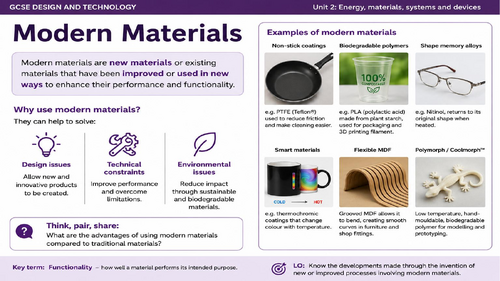
Modern Materials overview: a definition of modern materials and why designers use them to solve design issues, technical constraints and environmental issues. It also gives an introduction to each example material and the key term functionality.
PTFE (polytetrafluoroethylene / Teflon®): key properties (non-stick, low friction, heat resistant, chemically resistant, electrical insulator), common uses (non-stick pans, cable insulation, bearings, seals, lab equipment) and limitations.
Biodegradable polymers: PLA, PHB/Biopol and PCL. Covers renewable plant-based sources such as corn starch, compostability, reduced reliance on oil-based plastics, and why biodegradable plastics may not break down in landfill.
Shape memory alloys: nitinol (nickel–titanium), how SMAs return to a trained shape when heated, and uses in glasses frames, orthodontic braces and medical stents.
Smart materials: shape memory alloys, thermochromic and photochromic pigments, hydrogels and piezoelectric materials, with the key term stimulus.
Flexible MDF: a manufactured board with routed or machined grooves for smooth curves. Includes uses in shop fittings, curved furniture and exhibition stands, plus its limitations.
Polymorph: a low-temperature thermoplastic (polycaprolactone) that softens at about 60°C. Covers its use in rapid prototyping, ergonomic grips and household repairs.
Exam practice
There are six 4-mark “Explain two reasons…” exam questions. Each one comes with:
What the examiner is looking for
Helpful reminders
A mark breakdown
A full model answer
Other valid points
Why the answer gets 4 marks
A challenge question to stretch higher attainers
Something went wrong, please try again later.
This resource hasn't been reviewed yet
To ensure quality for our reviews, only customers who have purchased this resource can review it
Report this resourceto let us know if it violates our terms and conditions.
Our customer service team will review your report and will be in touch.
£3.00