pptx, 1.22 MB
pptx, 1.22 MB
PNG, 276.83 KB
PNG, 276.83 KB
PNG, 209.26 KB
PNG, 209.26 KB

How does migration affect our lives, and why do people choose or feel compelled to move from one country to another?

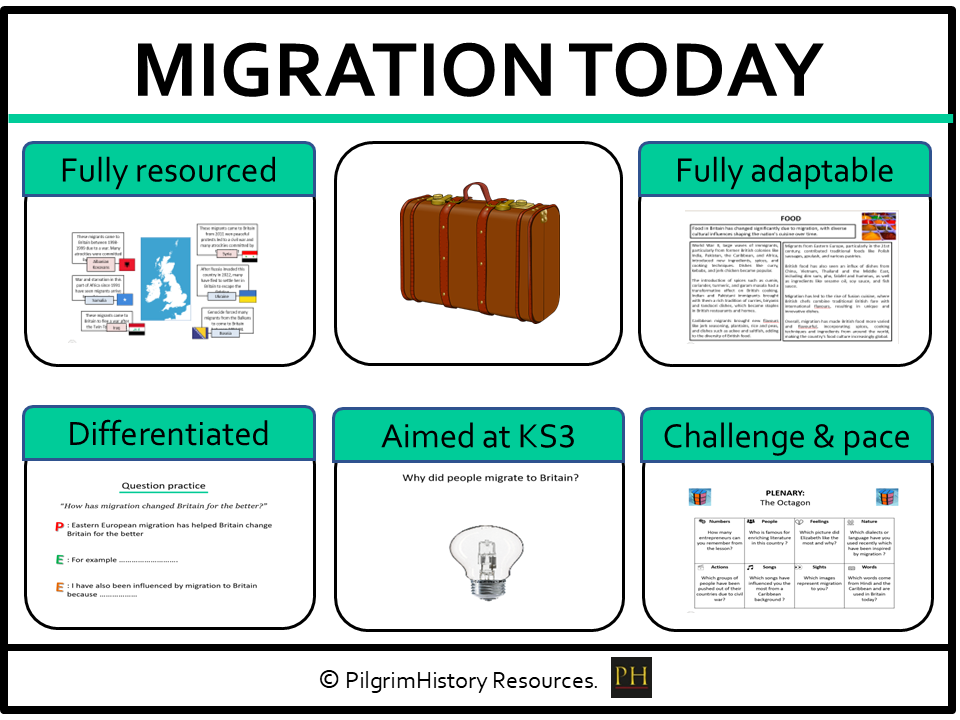
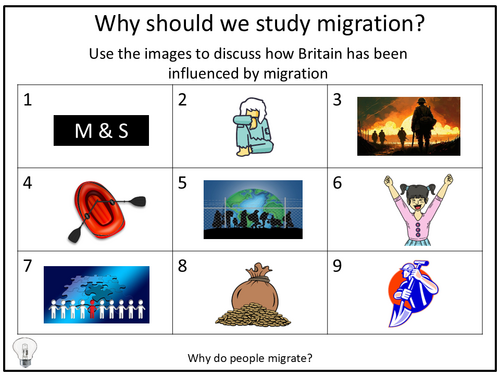
This lesson encourages students to explore the causes and consequences of migration in the modern world. Through a range of interactive activities, students examine how migration shapes societies, economies and communities, whilst challenging common misconceptions and stereotypes associated with migration.

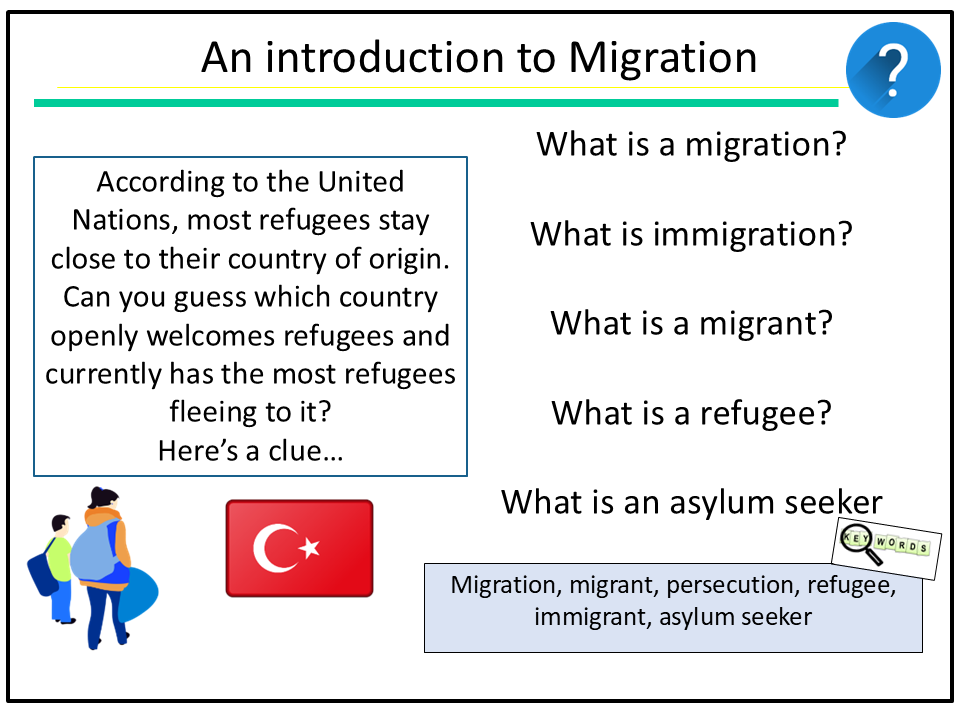
The lesson begins by addressing key questions and misconceptions surrounding migration, encouraging students to think critically about an issue that affects millions of people worldwide. Students then explore and develop their understanding of key migration terminology, using prompts and support where necessary to build confidence and deepen knowledge.

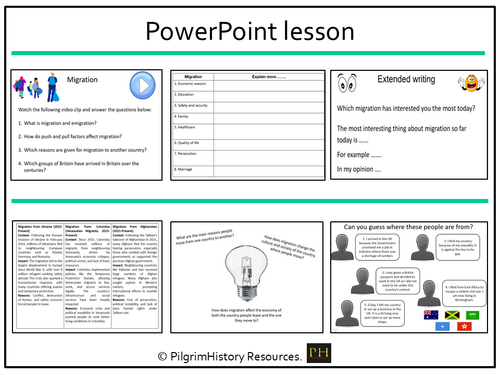
A series of case studies from different countries allows students to investigate a variety of migration experiences and identify the push and pull factors that influence people’s decisions to move. Through analysis and discussion, students consider economic, political, environmental and social reasons for migration and evaluate their significance.

Students are further challenged through an engaging activity in which they use clues, hints and modern-day scenarios to identify where individuals may have originated from. This encourages discussion about identity, culture and assumptions, whilst promoting empathy and understanding.

The lesson also includes opportunities for extended writing, enabling students to apply their knowledge and develop their analytical and communication skills. A range of carefully selected videos and images help to reinforce key concepts and provide real-world context throughout the lesson.

An overarching enquiry question is introduced at the start of the lesson and revisited regularly, allowing students to reflect on their learning and build a deeper understanding of migration as the unit progresses. This enquiry-based approach encourages students to make connections between different topics and develop more sophisticated explanations over time.

Included in this lesson:
Fully editable PowerPoint lesson
Enquiry-based learning approach
Starter activity exploring misconceptions about migration
Differentiated support and challenge tasks
International migration case studies
Push and pull factor investigations
Opportunities for extended writing
Critical thinking and analysis activities
Suggested teaching strategies and guidance
Suitable for KS3 Geography and Humanities
Ready-to-teach with minimal preparation required

Please leave a review if you find this resource useful. Your feedback is greatly appreciated

Get this resource as part of a bundle and save up to 28%

A bundle is a package of resources grouped together to teach a particular topic, or a series of lessons, in one place.

Bundle

KS3 Migration to Britain History Bundle

This fully resourced bundle provides a complete chronological study of migration to Britain from prehistory to the present day. Designed to save teachers hours of planning, the unit explores who has migrated to Britain, why they came, how they were received, and the long‑term impact of migration on British identity. The Bundle includes the following: 11 fully resourced lessons Editable PowerPoints Retrieval practice Differentiated tasks Source analysis Interpretations Extended writing Video links Assessment opportunities Students will investigate key periods including Roman Britain, the Anglo‑Saxons, the Normans, medieval Jewish communities, the Huguenots, Irish migration, the Windrush generation and modern migration. This bundle will also test student skills and historical understanding of migration. It includes significant events such as the docking of the Empire Windrush at Tilbury Docks in 1948. It makes connections between migration to Britain through the ages such as Irish migration as a result of the potato famine and Irish migration today. Students will be introduced to key concepts of change and continuity between Jewish migration as a result of persecution, the Kindertransport as well as the causes and consequences of migration after World War II and the need for workers in Britain. Students will analyse sources, such as for South East Asian migration to Britain and analyse different interpretations of migration through time, particulalry through the media. They will be able to use historical terms and concepts in more sophisticated ways such as assimilation, refugee, scapegoat, colour bar and boycott. Finally they will be able to provide structured responses and substantiated arguments, giving written evidence and context to extended writing tasks throughout this Migration Unit of work. The lessons are broken down into the following: 1) An introduction to migration (Why people move and how migration shapes Britain) 2) First Migrants to Britain (Prehistoric and ancient migration) 3) Jewish migration to Britain (Prehistoric and ancient migration) 4) Irish migration to Britain (Famine, work and Settlement)) 5) Caribbean migration to Britain (From empire to post‑war Britain) 6) Empire WIndrush (Arrival, contribution and challenges) 7) South Asian migration to Britain (Arrival, contribution and challenges) 8) Eastern Migration to Britain (Arrival, contribution and challenges) 9) Fighting discrimination (Bristol Bus Boycott and Stephen Lawrence) 10) Migration today (Contemporary patterns and debates - Free Resource) 11) Migration and the Media (How newspapers and social media shape public opinion) These lessons are ideal as a way of introducing Migration if you are teaching it at GCSE or if you wish to add an interesting unit of work to engage and challenge the students to encourage them to take History further in their studies.

£25.00

Reviews

Something went wrong, please try again later.

This resource hasn't been reviewed yet

To ensure quality for our reviews, only customers who have purchased this resource can review it

Report this resourceto let us know if it violates our terms and conditions.
Our customer service team will review your report and will be in touch.