


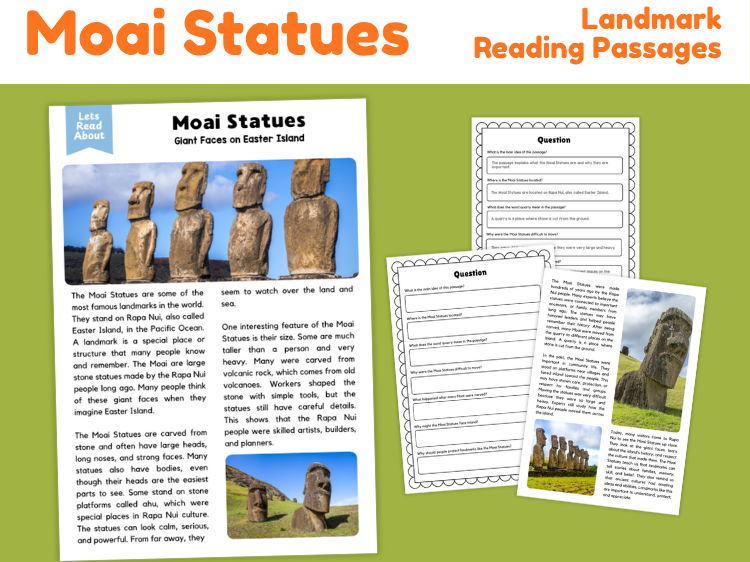
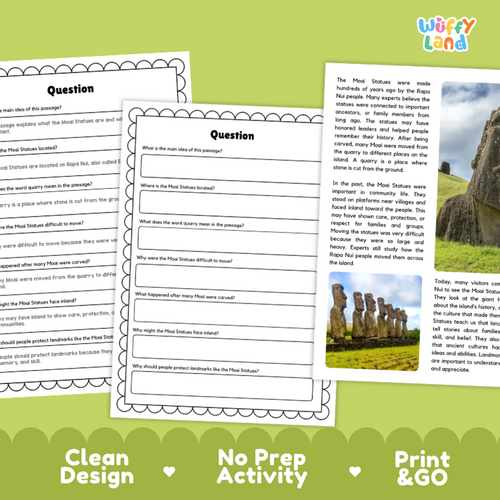
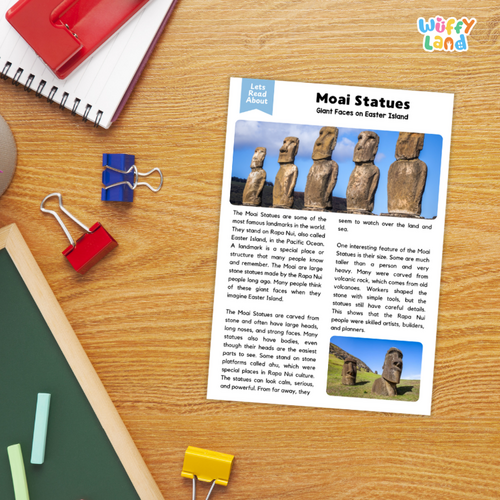
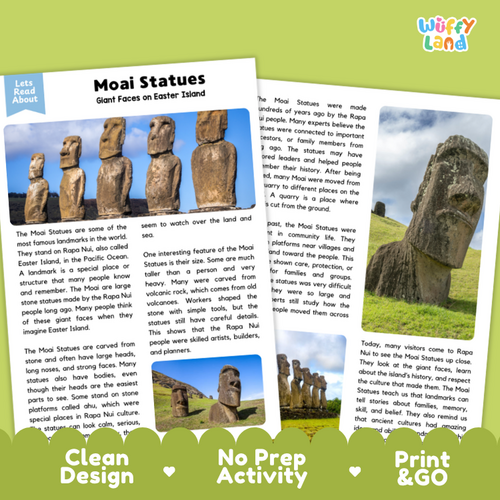
Explore one of the world’s most fascinating cultural landmarks with this engaging Moai Statues reading comprehension resource.
Students will learn about the famous moai of Rapa Nui, also known as Easter Island, a remote Pacific island that is part of Chile. The reading passages introduce the enormous stone statues created by the ancestors of the Rapa Nui people hundreds of years ago.
Students will discover that the moai are more than giant stone heads. They are full-body statues believed to represent important ancestors and were often placed on ceremonial stone platforms called ahu.
The resource explores how most moai were carved from volcanic tuff at Rano Raraku using hard stone tools. Students will learn that unfinished statues can still be seen at the quarry and that researchers continue to study how the Rapa Nui people transported these enormous sculptures across the island.
Students will also discover that many moai standing on coastal platforms face inland toward former communities rather than out to sea, challenging a common misconception about the statues.
The passages introduce important features such as Rano Raraku, ahu platforms, volcanic stone and the cultural meaning of the moai. Students will also learn how many important archaeological sites are protected within Rapa Nui National Park, a UNESCO World Heritage Site.
The included comprehension questions encourage students to identify key information, recall historical facts, understand vocabulary and think about why the moai remain such an important part of Rapa Nui culture.
What’s included:
- Moai Statues reading passages
- Landmark facts and history
- Rapa Nui / Easter Island location
- Rapa Nui people and culture
- Meaning and purpose of the moai
- Ancestor representations
- Full-body stone statues
- Rano Raraku quarry
- Volcanic tuff and stone carving
- Toki carving tools
- Ahu ceremonial platforms
- How the moai may have been transported
- Direction and placement of the statues
- UNESCO Rapa Nui National Park connection
- Landmark vocabulary
- Reading comprehension questions
- Written response activities
- Print-and-go worksheets
Perfect for geography lessons, famous landmarks, Chile studies, Polynesian culture, Pacific Islands geography, ancient cultures, archaeology, reading comprehension, social studies, homeschool learning, literacy centres and independent work.
Students can build reading comprehension, vocabulary and informational reading skills while discovering the remarkable history, craftsmanship and cultural meaning behind the moai of Rapa Nui.
File type: Printable PDF
Preparation: Print and use
Something went wrong, please try again later.
This resource hasn't been reviewed yet
To ensure quality for our reviews, only customers who have purchased this resource can review it
Report this resourceto let us know if it violates our terms and conditions.
Our customer service team will review your report and will be in touch.
£3.00