


This lesson is designed for the NEW AQA Physics GCSE, particularly the ‘Motion’ SoW.
For more lessons designed to meet specification points for the NEW AQA Trilogy specifications for Biology, Chemistry and Physics please see my shop: https://www.tes.com/teaching-resources/shop/SWiftScience
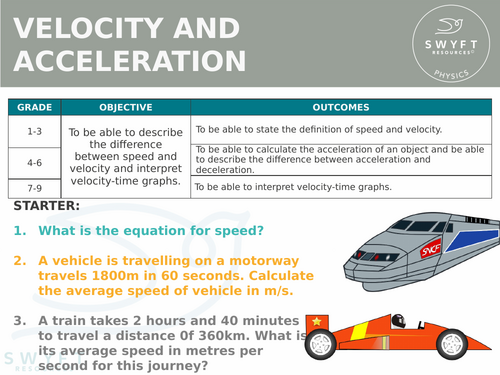
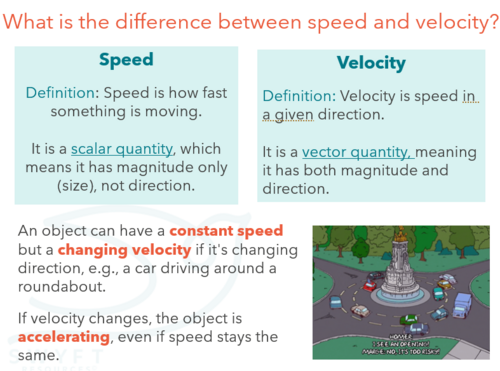
The lesson begins with a description of the difference between speed and velocity, a definition for each is given, as well as an example which exemplifies the difference between the two quantities.
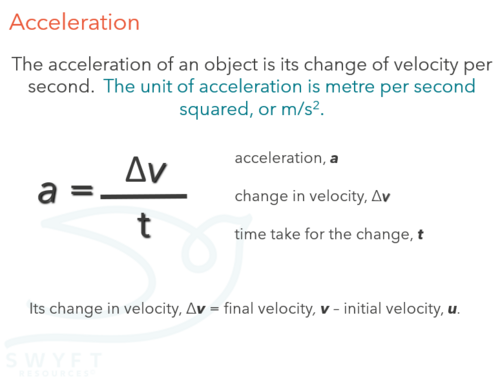
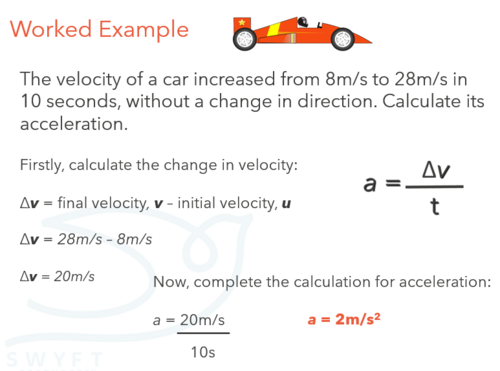
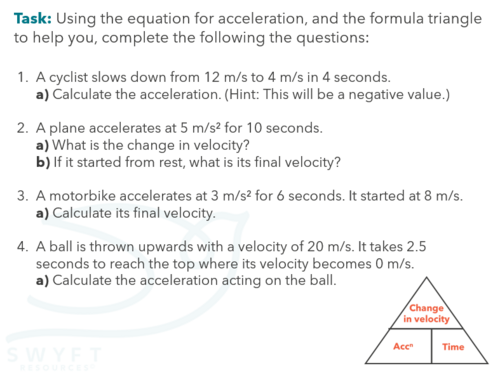
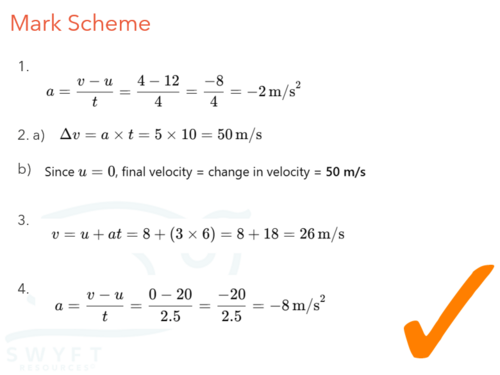
Next, students are introduced the definition of, and calculation for, acceleration and are shown a worked example to demonstrate how to use velocity and time taken to calculate acceleration. They will then complete a set of questions using the formula for acceleration, the answers for this task are included in the PowerPoint so students can self-assess their work once it is complete.
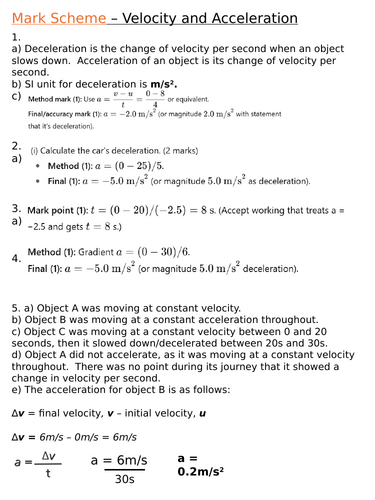
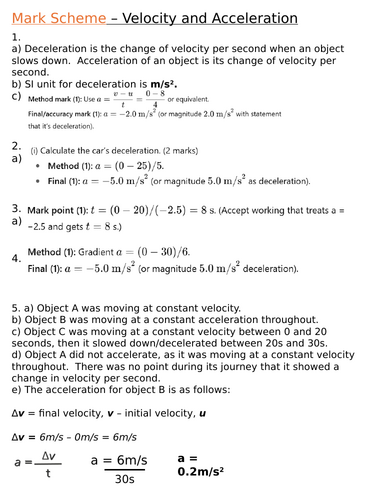
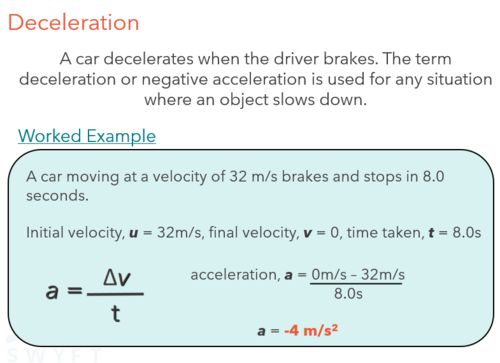
Next, the concept of deceleration is explained to students, and another worked example is shown which demonstrates how a change in velocity when an object slows down will lead to a negative acceleration. Students will now complete a set of questions on acceleration and deceleration in their books, the mark scheme for this task is provided so students/teachers can assess the work once it is complete.
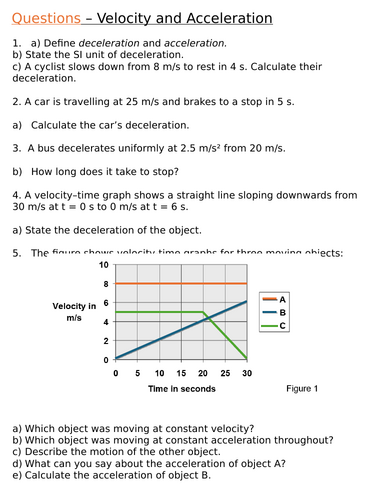
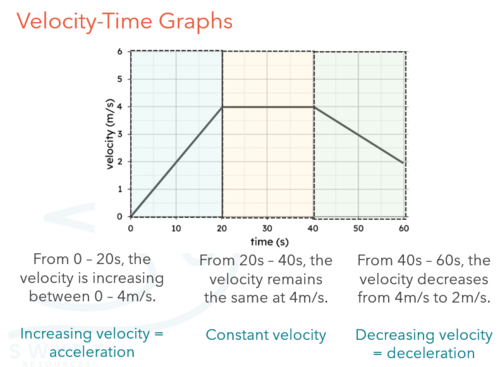
The last part of the lesson is on Velocity-Time graphs, students will be shown an example graph with three different sections of the graph highlighted. In the first section, the positive gradient indicates acceleration, in the second section the horizontal gradient represents a constant velocity, and in the last section the negative gradient indicates deceleration. Students will now complete the rest of the questions on the worksheet, the answers are provided so students can check their work once complete.
The plenary task requires students to summarise what they have learned in three facts, three key words and one question to their peer.
All resources are included. Thanks for looking, if you have any questions please let me know in the comments section and any feedback would be appreciated :)
Get this resource as part of a bundle and save up to 38%
A bundle is a package of resources grouped together to teach a particular topic, or a series of lessons, in one place.
Something went wrong, please try again later.
This resource hasn't been reviewed yet
To ensure quality for our reviews, only customers who have purchased this resource can review it
Report this resourceto let us know if it violates our terms and conditions.
Our customer service team will review your report and will be in touch.
£3.00