


This lesson is designed for the NEW AQA Physics GCSE, particularly the ‘Motion’ SoW.
For more lessons designed to meet specification points for the NEW AQA Trilogy specifications for Biology, Chemistry and Physics please see my shop: https://www.tes.com/teaching-resources/shop/SWiftScience
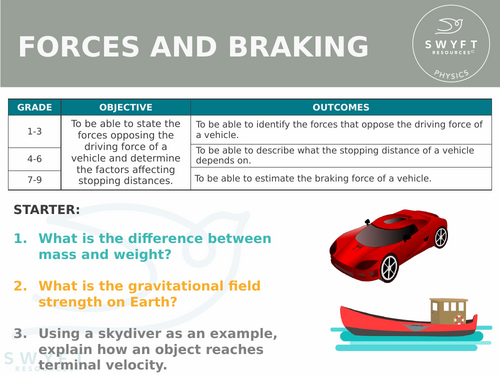
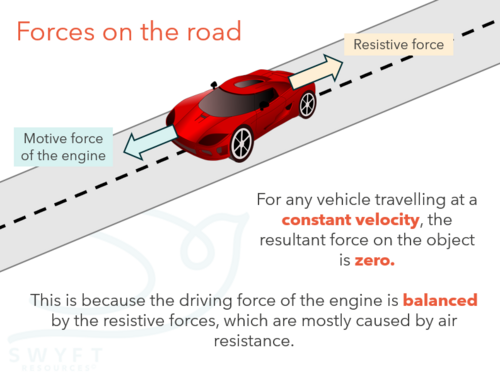
The lesson begins with a diagram which demonstrates the forces acting on a moving vehicle. For any vehicle travelling at a constant velocity, the resultant force on the object is zero. Students will be introduced to the idea of braking force, and be asked to ‘Think > Pair > Share’ How do you think these two factors will affect the braking force needed?’ The next slide reveals the answers - the speed of a vehicle and mass of a vehicle.
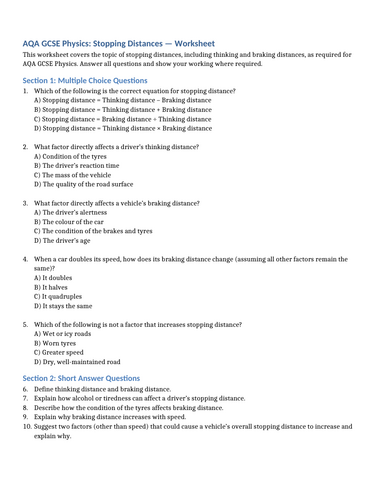
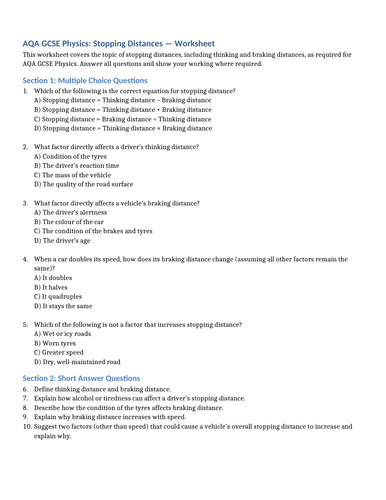
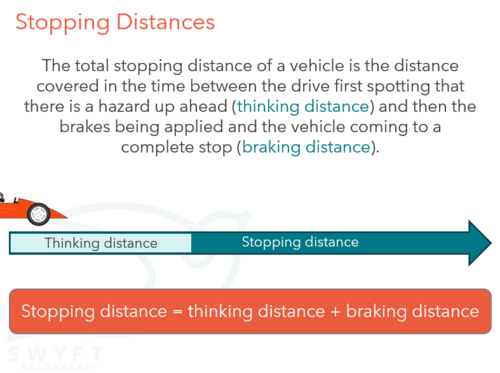
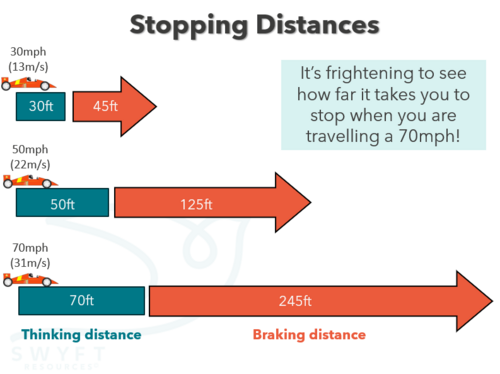
Next, students will be introduced to stopping distances. The total stopping distance of a vehicle is the distance covered in the time between the drive first spotting that there is a hazard up ahead (thinking distance) and then the brakes being applied and the vehicle coming to a complete stop (braking distance).
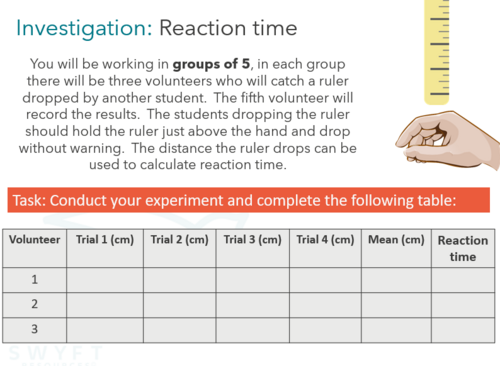
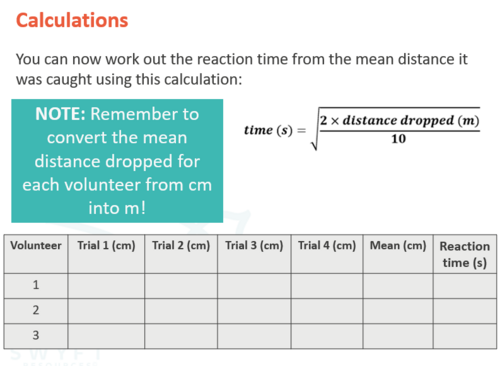
Students will now complete an investigation into reaction time. Students will be working in groups of 5, in each group there will be three volunteers who will catch a ruler dropped by another student. The fifth volunteer will record the results. The students dropping the ruler should hold the ruler just above the hand and drop without warning. The distance the ruler drops can be used to calculate reaction time.
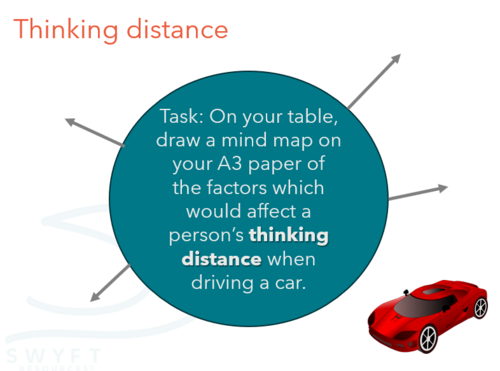
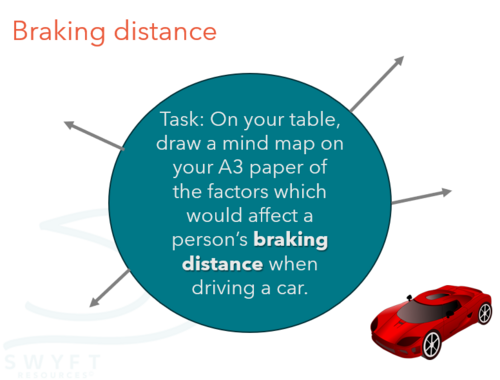
The next part of the lesson is on the factors affecting thinking & stopping distances. On their table, students will need to draw a mind map on A3 paper of the factors which would affect a persons thinking distance when driving a car. The answers to this task are on the next slide so students can assess their work. Next, students will complete the same task but will complete a mind map on factors affecting stopping distance. The answers to this task are on the next slide.
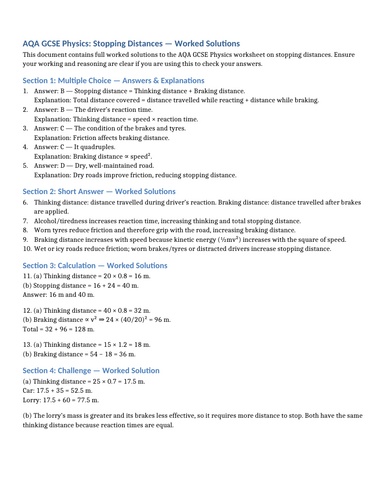
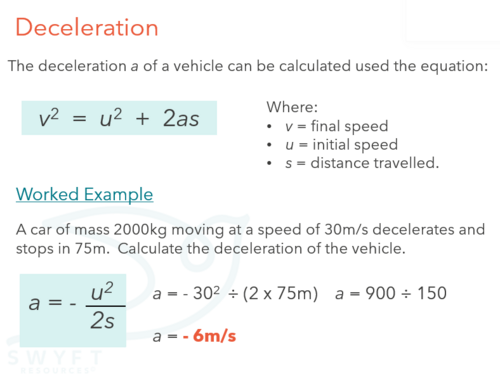
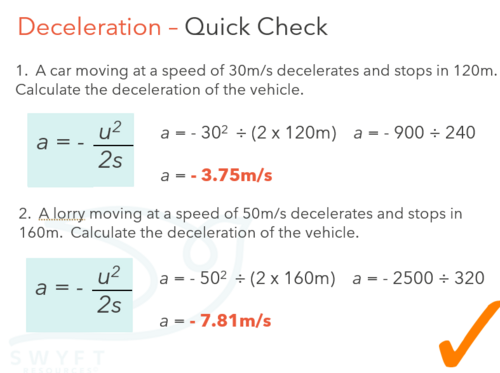
The final part of the lesson is on deceleration. Students will be given an equation and a worked example to show how deceleration can be calculated. Students will then complete a worksheet of questions based upon what they have learned in the lesson today.
The plenary task asks students to summarise what you have learnt this lesson in 3 sentences!
All resources are included. Thanks for looking, if you have any questions please let me know in the comments section and any feedback would be appreciated.
Get this resource as part of a bundle and save up to 33%
A bundle is a package of resources grouped together to teach a particular topic, or a series of lessons, in one place.
Something went wrong, please try again later.
This resource hasn't been reviewed yet
To ensure quality for our reviews, only customers who have purchased this resource can review it
Report this resourceto let us know if it violates our terms and conditions.
Our customer service team will review your report and will be in touch.
£3.00