


This lesson is designed for the NEW AQA Physics GCSE, particularly the ‘Motion’ SoW.
For more lessons designed to meet specification points for the NEW AQA Trilogy specifications for Biology, Chemistry and Physics please see my shop: https://www.tes.com/teaching-resources/shop/SWiftScience
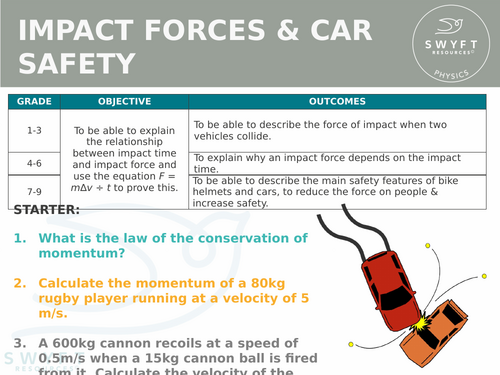
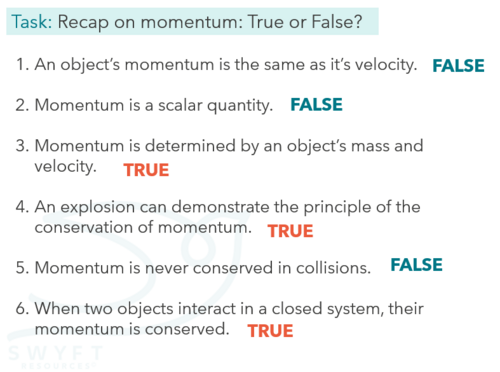
The lesson begins with a recap on momentum, students will be presented with a set of ‘True or False’ statements to assess their understanding of the previous topic. This will hopefully give you some time to address any misconceptions.
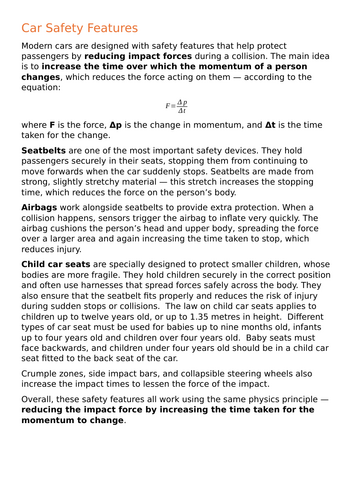
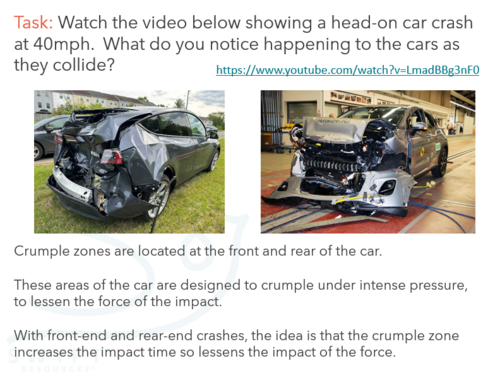
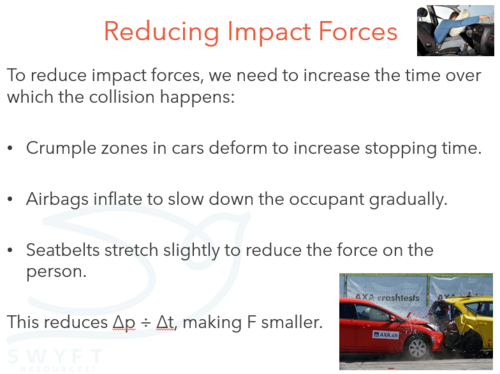
Next, students will be shown a video of a crash test, where two cars collide at 40mph. Students will be asked to consider what happens to the cars as they collide. Hopefully they will observe that there are certain areas of the car which crumple on impact, these are the designated ‘crumple zones’ of a car. The purpose of these areas of the car are to increase the impact time, which lessens the impact of the force.
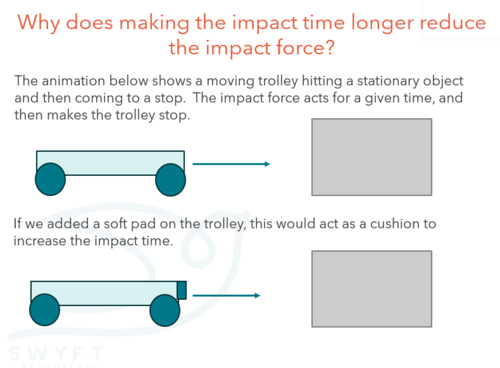
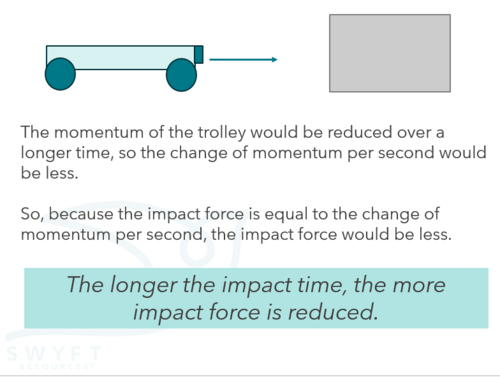
This concept is explained more clearly in the next slide, by using two trolleys to demonstrate why increasing the impact time is beneficial to reduce the impact force. This is an especially important safety feature of cars.
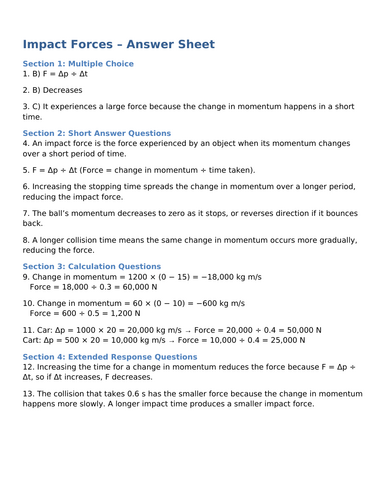
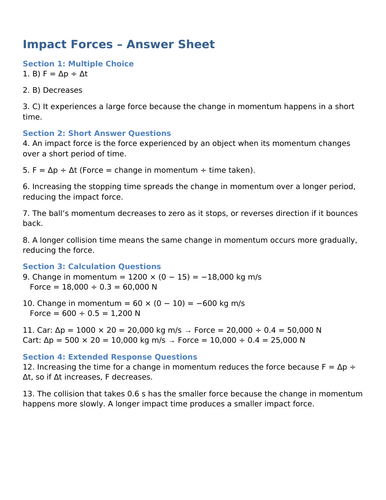
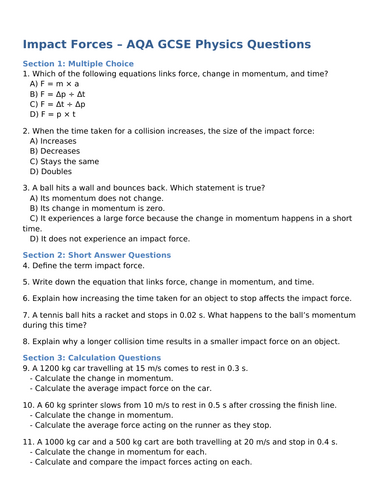
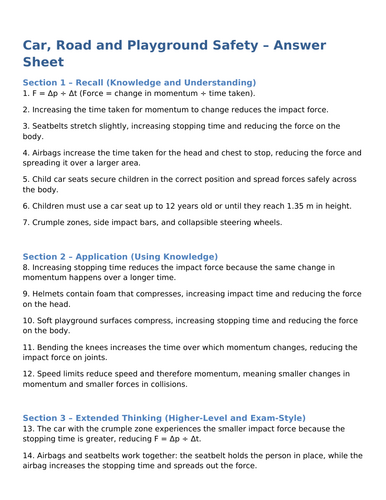
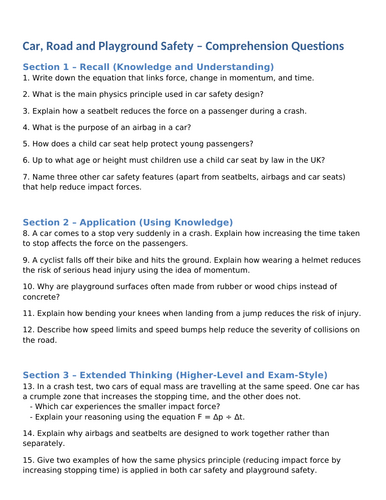
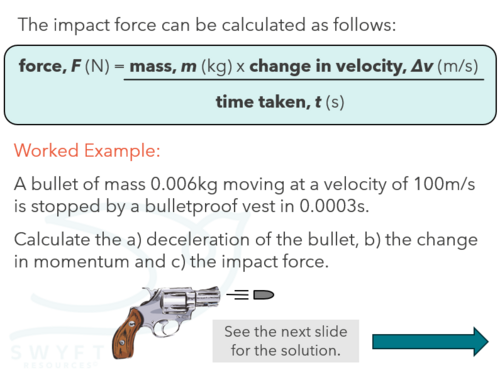
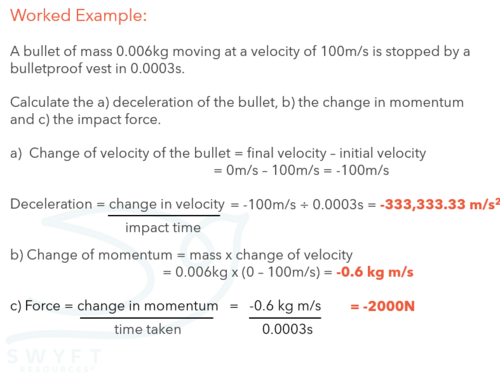
The next part of the lesson focuses on impact forces, students will be shown the calculation used to work out impact force, based on mass of an object, the change in velocity and time taken. A worked example is demonstrated to pupils, and then they will be asked to complete a set of questions using the same calculation. Once complete, students can either self-assess or peer-assess their work.
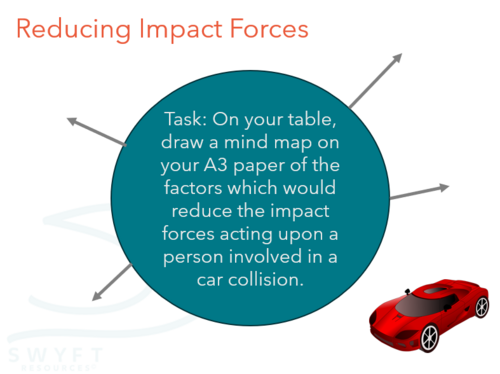
Next, students will be given a large A3 piece of paper and in groups will be asked to come up with a list/mind map of ways in which to reduce the impact forces acting on a person in car collision. Once students have discussed this in groups, and come up with some ideas. The answers can be revealed on the board, which students can make a note of.
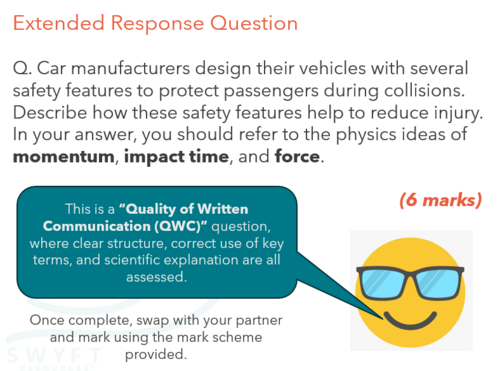
The penultimate task of the lesson is an extended response question:* Car manufacturers design their vehicles with several safety features to protect passengers during collisions. Describe how these safety features help to reduce injury. In your answer, you should refer to the physics ideas of momentum, impact time, and force.* Once students have completed this task, they can mark their own work or their partner’s work using the mark scheme.
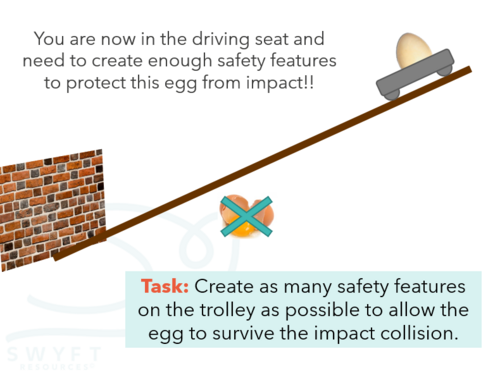
The final task requires students to create as many safety features on a trolley containing an egg, which is positioned at the top of a ramp sloping towards a wall. The idea is that the egg survives the collision, based upon the students’ improvements! This could be a simple design task, or you could extend it so students physically adapt their trolley to test their designs out.
The plenary is a 3-2-1 task where students will need to write three facts, two ke
All resources are included. Thanks for looking, if you have any questions please let me know in the comments section and any feedback would be appreciated.
Get this resource as part of a bundle and save up to 33%
A bundle is a package of resources grouped together to teach a particular topic, or a series of lessons, in one place.
Something went wrong, please try again later.
This resource hasn't been reviewed yet
To ensure quality for our reviews, only customers who have purchased this resource can review it
Report this resourceto let us know if it violates our terms and conditions.
Our customer service team will review your report and will be in touch.
£3.00