


This lesson is designed for the NEW AQA Physics GCSE, particularly the ‘The properties of waves’ SoW.
For more lessons designed to meet specification points for the NEW AQA Trilogy specifications for Biology, Chemistry and Physics please see my shop: https://www.tes.com/teaching-resources/shop/SWiftScience
Lesson sequence
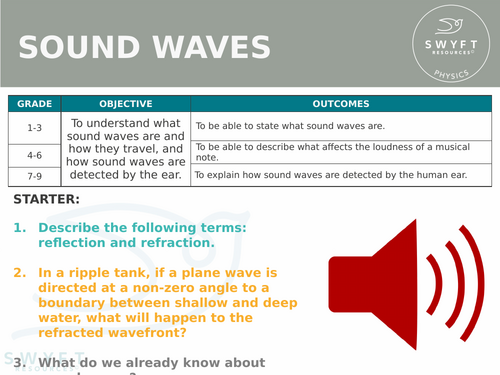
- Introduction – What is sound?
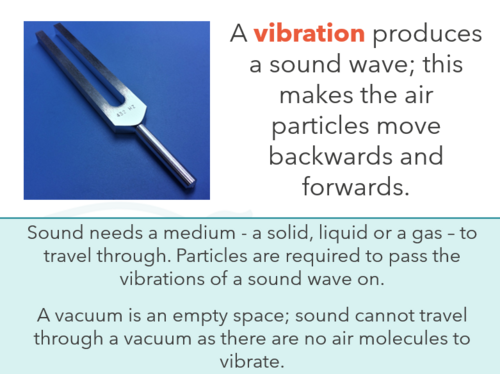
- Begin with a description of sound waves as longitudinal waves that require a medium to travel.
- Discuss examples of mediums (solids, liquids, gases).
- Introduce the idea that sound cannot travel through a vacuum.
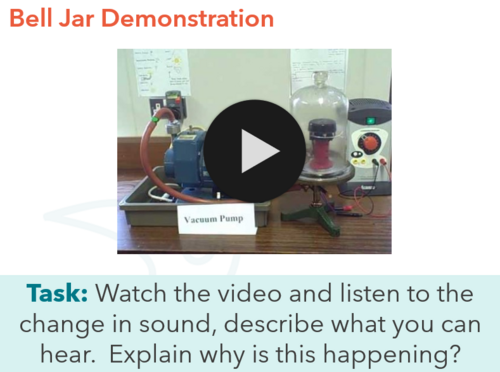
- Demonstration – Bell jar experiment
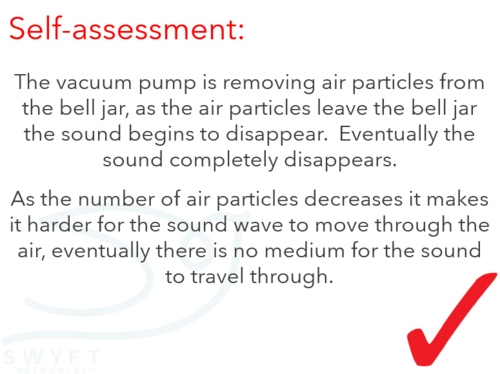
- Show a video of the bell jar demonstration to illustrate that when air is removed, sound cannot be heard.
- Emphasise the need for particles to transmit vibrations.
- Exploring sound wave properties
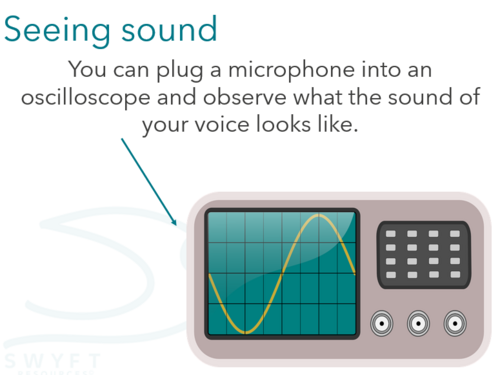
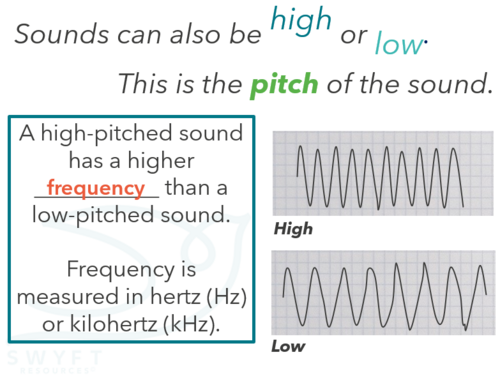
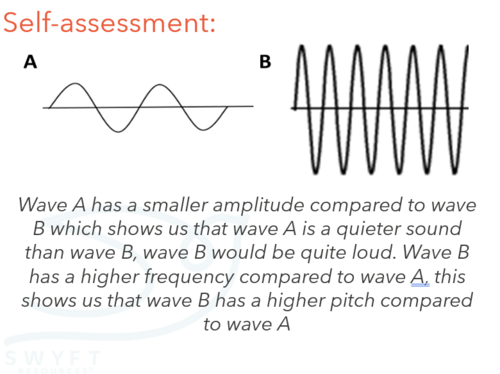
- Display oscilloscope traces showing:
- How amplitude affects loudness (greater amplitude = louder sound).
- How frequency affects pitch (higher frequency = higher pitch).
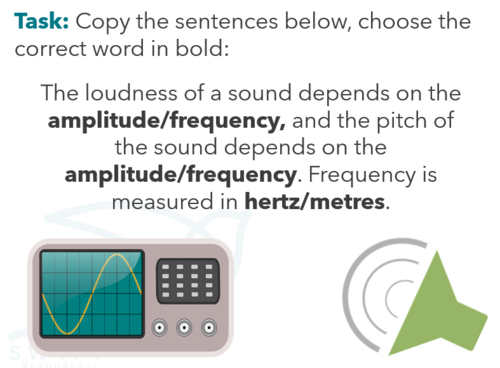
- Students complete a ‘copy and complete’ task to check understanding.
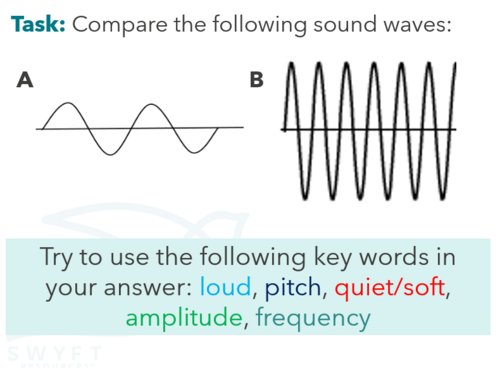
- Show two different waveforms and ask students to compare amplitude, intensity, frequency and pitch.
- Provide a model answer for peer or self-assessment.
- How we hear sound
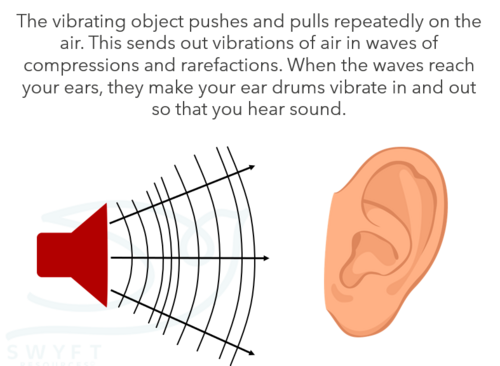
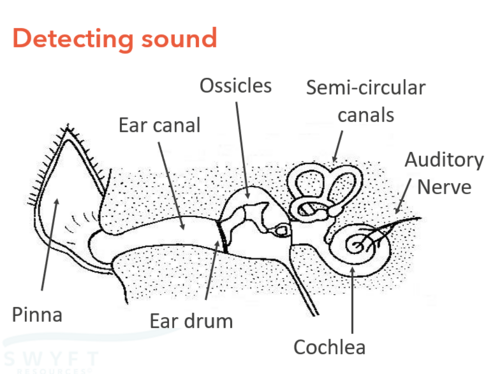
- Display a labelled diagram of the ear.
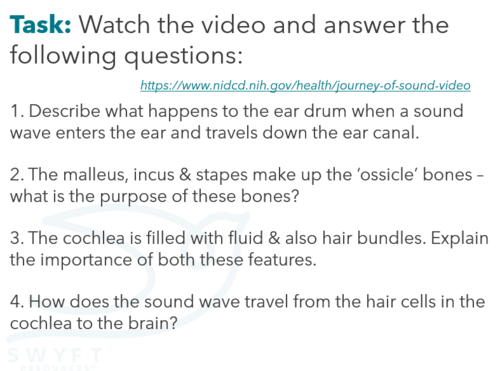
- Play a short video explaining how the ear detects sound.
- Students answer questions whilst watching video, this can be marked once complete.
- Activity – Range of hearing
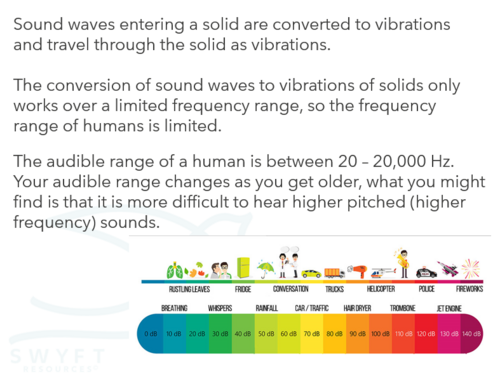
- Play a frequency sweep video emitting sounds of increasing pitch.
- Students raise their hands when they can no longer hear the sound.
- Discuss the typical human hearing range (20 Hz – 20 kHz) and why it varies between individuals.
- Echoes and ultrasound
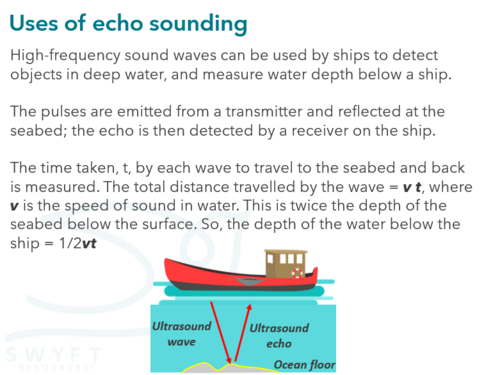
- Explain what an echo is and how ultrasound can be used for detection and imaging.
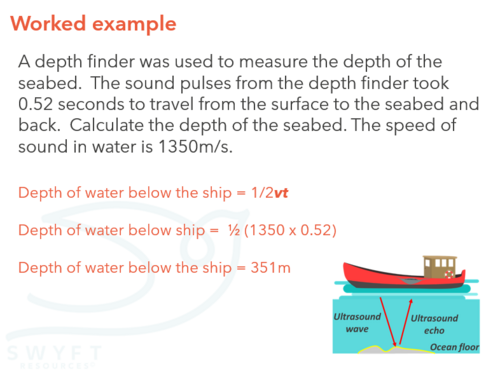
- Work through a calculation example: finding the depth of water below a ship using the equation
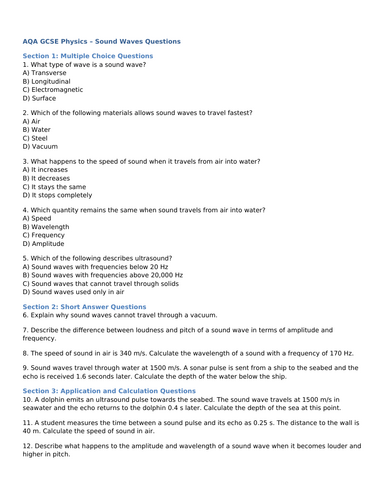
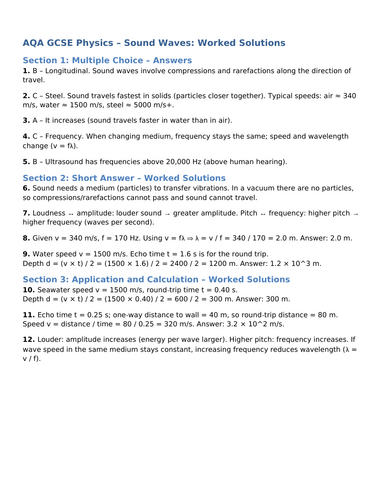
- Students complete a worksheet of exam-style questions, then self- or peer-mark using the provided mark scheme.
- Plenary – 3-3-1 Summary
Students write:
- 3 facts they learned,
- 3 key words,
- 1 question they still have about sound.
All resources are included. Thanks for looking, if you have any questions please let me know in the comments section and any feedback would be appreciated.
Get this resource as part of a bundle and save up to 33%
A bundle is a package of resources grouped together to teach a particular topic, or a series of lessons, in one place.
Something went wrong, please try again later.
This resource hasn't been reviewed yet
To ensure quality for our reviews, only customers who have purchased this resource can review it
Report this resourceto let us know if it violates our terms and conditions.
Our customer service team will review your report and will be in touch.
£3.00