


This lesson is designed for the NEW AQA Physics GCSE, particularly the ‘Electromagnetism’ SoW.
For more lessons designed to meet specification points for the NEW AQA Trilogy specifications for Biology, Chemistry and Physics please see my shop: https://www.tes.com/teaching-resources/shop/SWiftScience
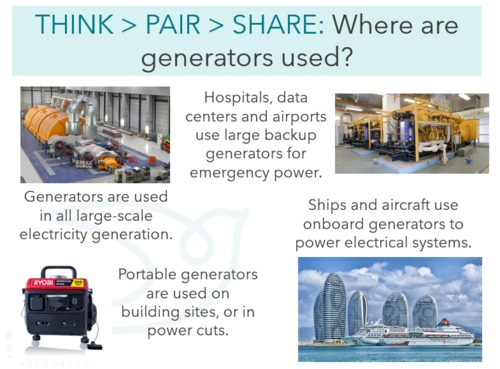
The lesson begins with a ‘Think > Pair > Share’ task, asking students to consider where generators are needed and used. After a short class discussion with students, reveal the images on the PowerPoint which shows the different places where generators are useful. This includes hospitals, airport, building sites, ships and aircraft.
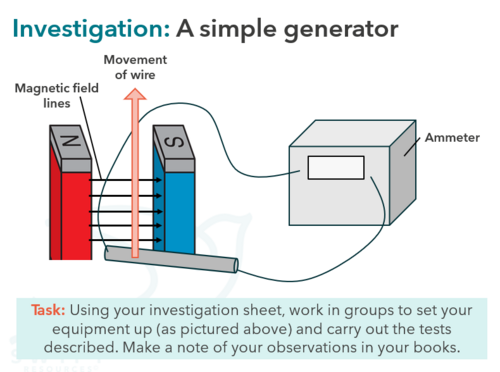
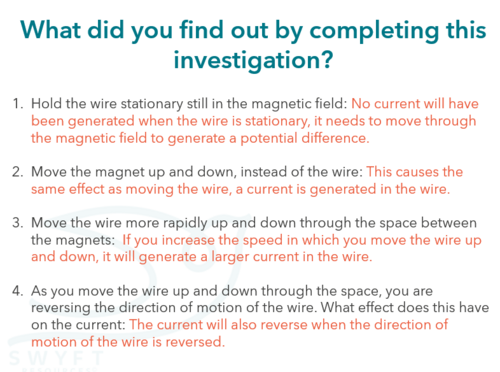
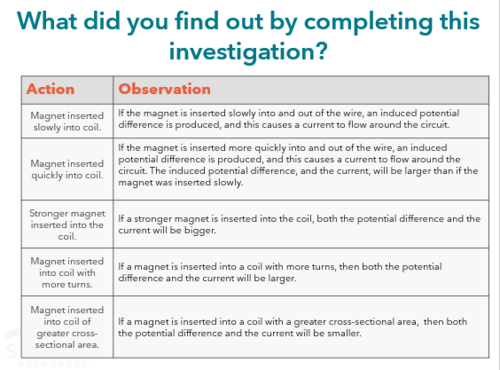
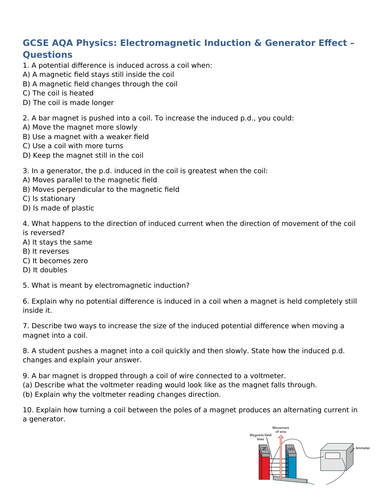
On the next slide, a diagram shows the apparatus set-up for a simple generator. Students will be provided with an investigation worksheet, which includes a method for making their own simple generator. Students can follow this method, carrying out a few simple tests which will allow them to investigate the role of a generator and the factors which affect it. After students have noted down their observations from this investigation, have a class discussion about the results . The following slide provides an outline of the results students hopefully found at the end of the investigation.
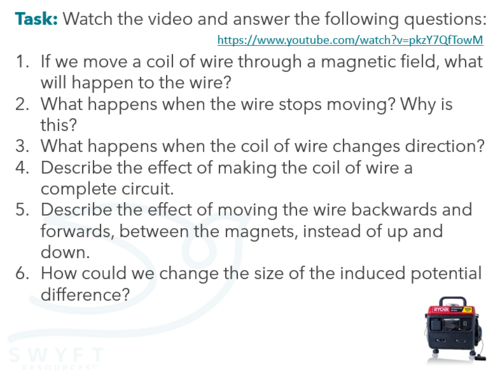
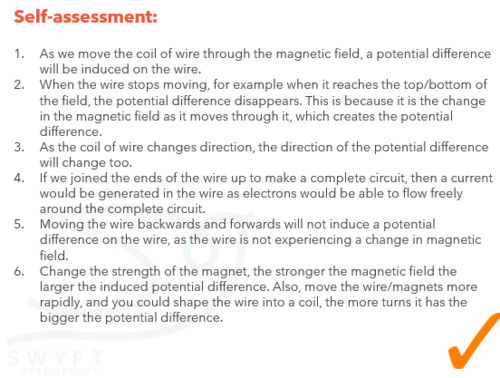
The next activity requires students to watch a video about the generator effect, whilst watching the video they should answer a set of questions which are provided. After they have completed the task, they can mark their work using the answers provided.
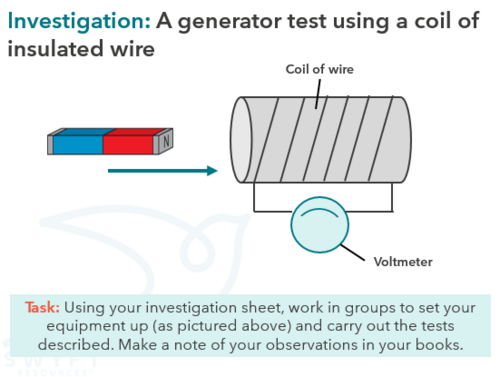
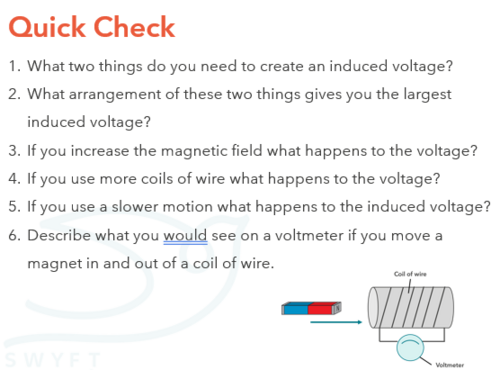
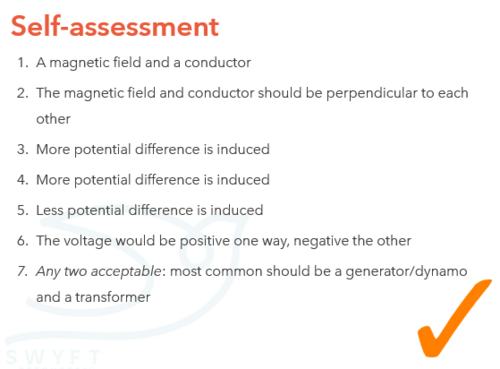
The last investigation involves students conducting a generator test using a coil of insulated wire. After completing each test, they should record the results from the voltmeter and note down their observations. The expected results for this investigation are outlined on the next slide. After this, students can complete a ‘quick check’ progress check, to assess their understanding of the lesson so far. The answers to this task are included so students can assess their work, once it is complete.
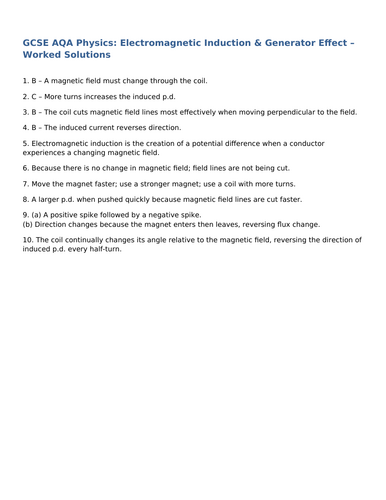
The last activity requires students to complete the worksheet on exam-style questions, the mark scheme for this task is included for students to self-assess or peer-assess their work.
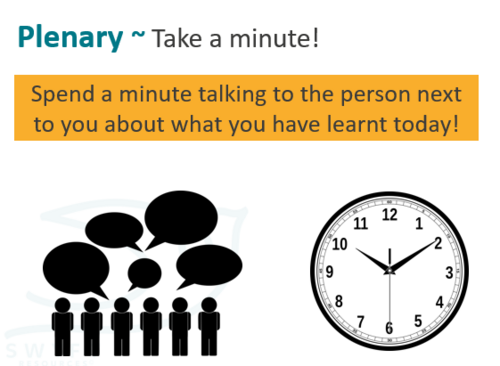
The plenary activity requires students to spend a minute talking to the person next to them about what they have learned this lesson.
All resources are included. Thanks for looking, if you have any questions please let me know at swyftresources@gmail.com.
Get this resource as part of a bundle and save up to 44%
A bundle is a package of resources grouped together to teach a particular topic, or a series of lessons, in one place.
Something went wrong, please try again later.
This resource hasn't been reviewed yet
To ensure quality for our reviews, only customers who have purchased this resource can review it
Report this resourceto let us know if it violates our terms and conditions.
Our customer service team will review your report and will be in touch.
£3.00