

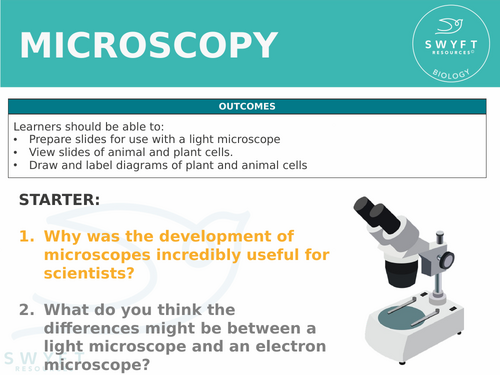

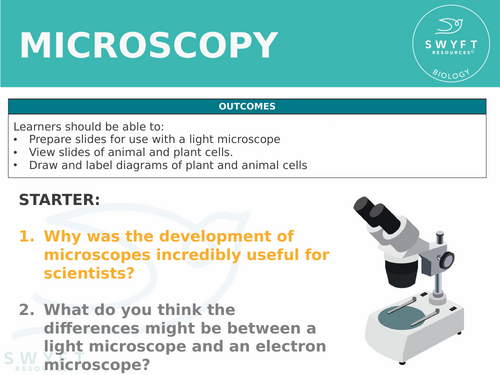
This is a lesson which meets specification points within the WJEC GCSE ‘The Sciences’ Double Award spec, specifically from the Unit 1 - Basis of Life (Biology).
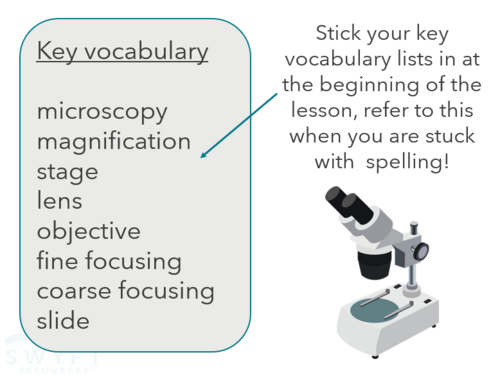
The lesson starts with an overview of the key vocabulary which students will be learning and using this lesson. Students can stick their key word lists into their books before the lesson begins.
For more resources designed for the NEW WJEC GCSE Science (Double Award) specifications please visit my shop: https://www.tes.com/teaching-resources/shop/SWiftScience
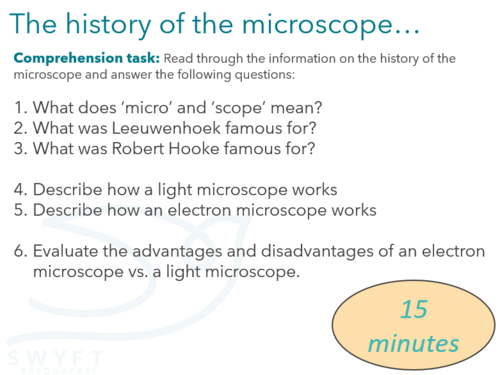
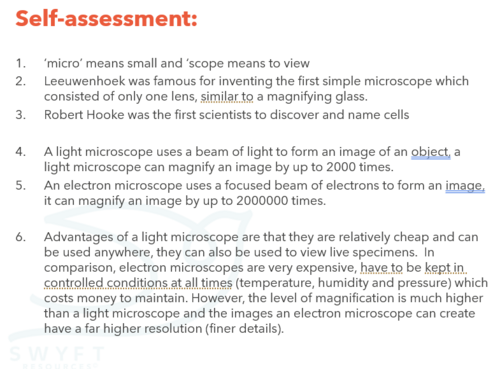
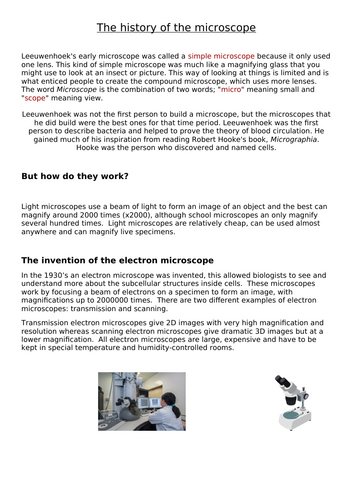
This lesson begins by pupils completing a comprehension task, they will need to read details on the history of the microscope and answer questions into their books. Once finished pupils will need to then self-assess their work using the answers provided in the PowerPoint presentation.
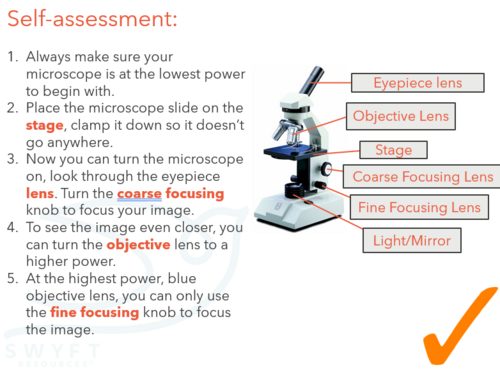
Next, students will watch a video which outlines the key features of a microscope, and how to use a microscope to focus an image. Students will watch the video, then complete a worksheet which will provide an overview of what they have just learned. This task can be assessed using the mark scheme provided.
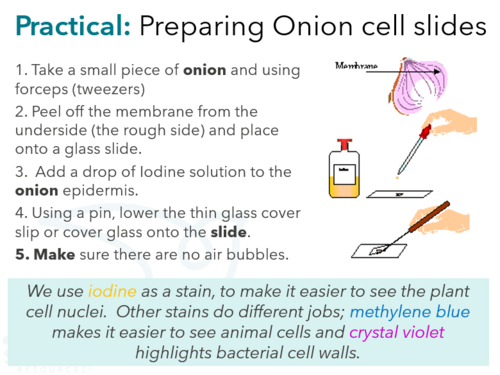
The next task is a practical activity, where students can put into practise what they have learned. They will be given a method which outlines how to take a plant cell from a piece of onion epidermic, stain it, and mount on a slide with a cover slip over the top. Students should observe the plant cells down the microscope, and draw what they see.
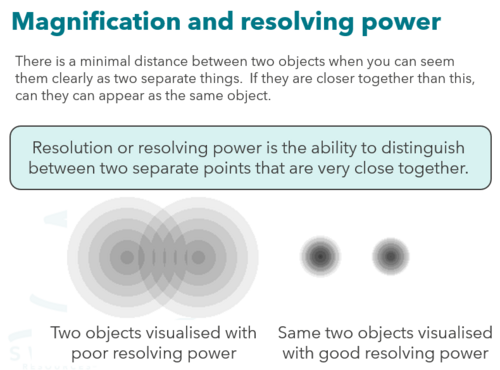
Pupils are then introduced to the idea of ‘resolution’ - the definition for which they need to know so pupils could write this down in their books.
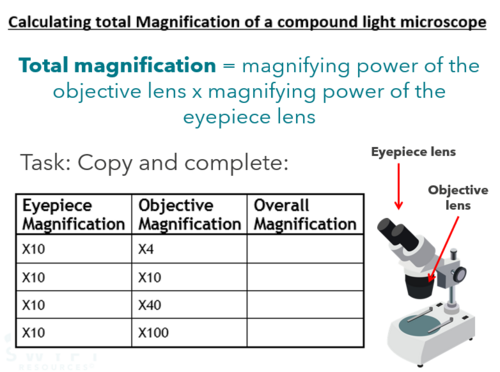
The next part of the lesson will focus more on maths skills related to microscopy, pupils will firstly need to calculate the overall magnification of a microscope using the objective lens and eyepiece lens magnifications. The next skill pupils will learn is to change units of measurement from cm > mm > um > nm.
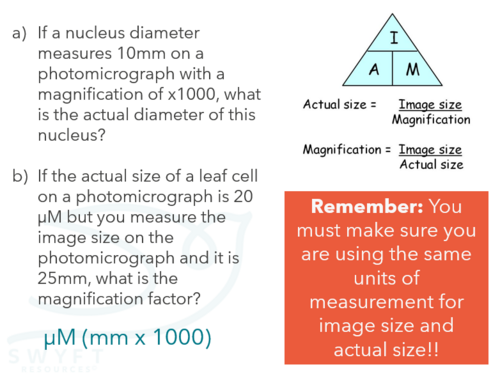
The next calculation pupils will need to know is how to calculate the actual size of a specimen being observed down a microscope. Pupils will be introduced to the calculation and then given a couple of example questions, pupils can attempt to have a go at these themselves. The following slide goes through step-by-step how you would calculate the answers to these questions.
The plenary is a ‘Silent 5’ task where pupils will need to answer questions based upon what they have learnt during the lesson.
Something went wrong, please try again later.
This resource hasn't been reviewed yet
To ensure quality for our reviews, only customers who have purchased this resource can review it
Report this resourceto let us know if it violates our terms and conditions.
Our customer service team will review your report and will be in touch.
£3.00