



This two-lesson resource was created for students following the Edexcel IGCSE English Language A (4EA1) exam route (Paper 2) and focuses on Alice Munro’s Night, using the June 2021 examination question as the basis for developing analytical reading and writing skills. Across two carefully sequenced lessons, students explore how Munro presents the effects of physical and mental illness through characterisation, language, structure, and narrative perspective.
Although designed for the examination route, the activities can easily be adapted for the coursework route (Paper 3). The lessons encourage thoughtful discussion of identity, family relationships, mental health, fear, and recovery, making them equally suitable for coursework-focused study.
Lesson 1 Sequence:
Starter – Which Is Hardest to Cope With? Students rank different physical and emotional challenges before discussing whether illness is always visible.
Context Introduction: Students learn about Alice Munro, the setting of rural Canada in the 1940s, and changing attitudes towards mental health.
First Reading: Students colour-code evidence relating to physical illness, mental illness, and the effects on the family.
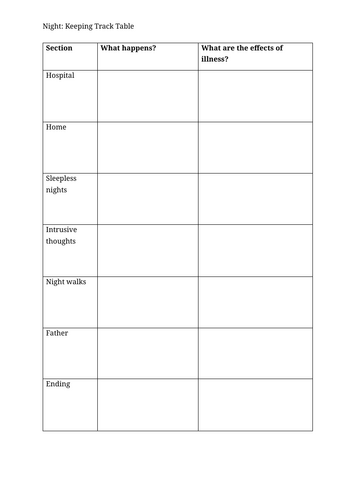
Keeping Track Activity: Students complete a structured overview of the extract, recording key events and the effects of illness across each stage of the narrative.
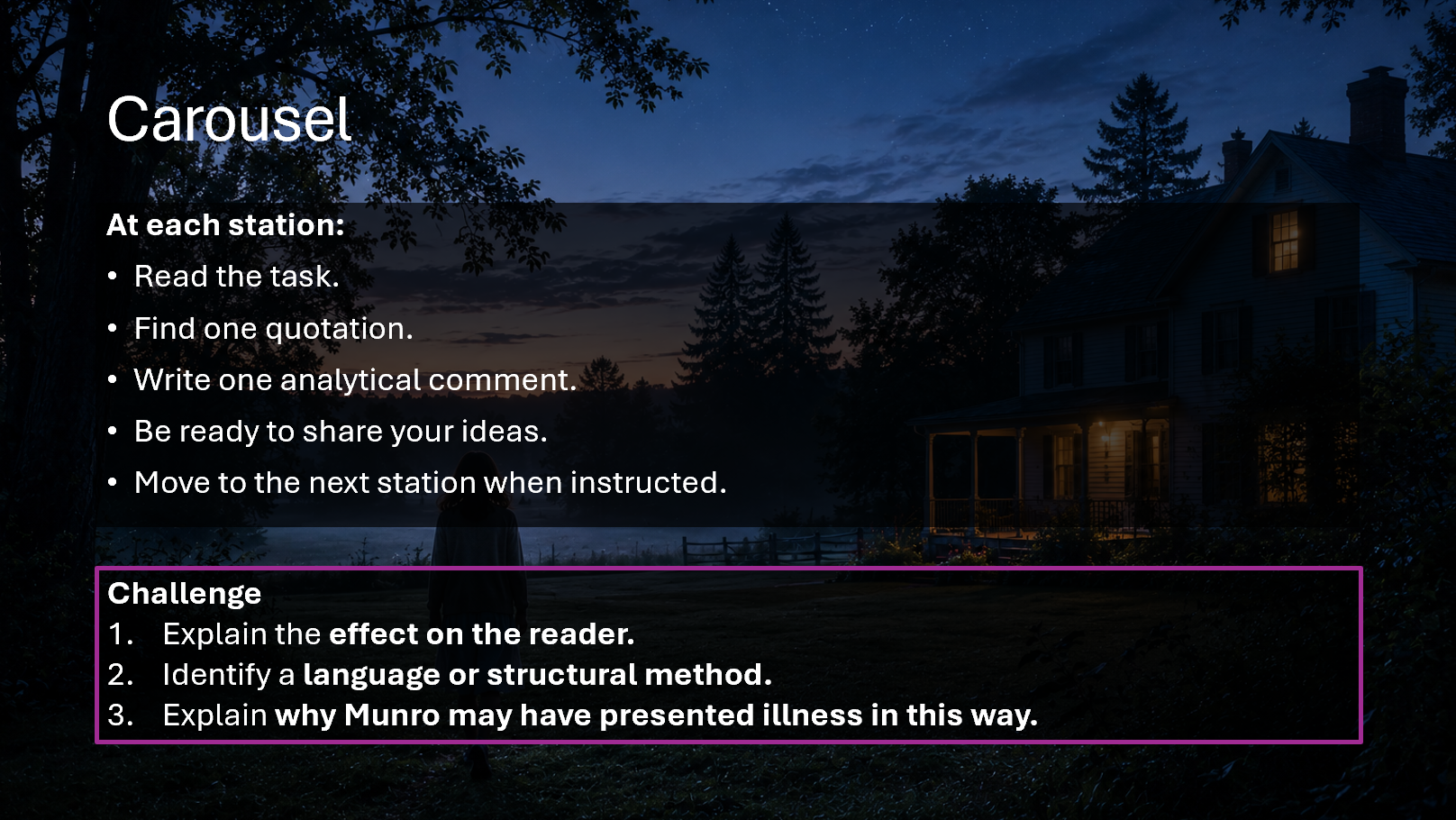
Carousel Analysis: Students rotate around analytical stations, gathering quotations, identifying writer’s methods, and exploring how Munro presents illness and its impact.
Plenary: Students summarise the narrator’s character in a single word, supporting their choice with evidence.
Lesson 2 Sequence:
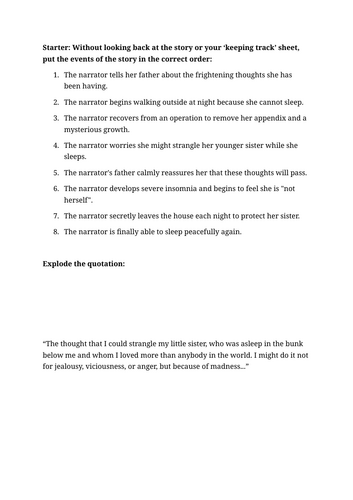
Starter Retrieval Task: Students reconstruct the sequence of events from memory before checking their understanding of the narrative.
Close Language Analysis: Students ‘explode’ one of the extract’s most significant quotations, analysing language, contrast, repetition, narration, and symbolism.
Exam Question Introduction: Students explore the June 2021 examination question and identify what examiners expect them to discuss.
Exemplar Paragraph Analysis: Students deconstruct a model response, identifying the features of effective analytical writing before improving it further.
Exam Practice: Students produce an analytical paragraph using structured success criteria and writing guidance.
Think Like an Examiner: Students consider how stronger responses move beyond identifying illness to analysing its wider effects on thoughts, behaviour, relationships, and identity.
Plenary – Opinion Line: Students debate whether the narrator’s father truly solves the problem, supporting their interpretations with evidence from the text.
Something went wrong, please try again later.
This resource hasn't been reviewed yet
To ensure quality for our reviews, only customers who have purchased this resource can review it
Report this resourceto let us know if it violates our terms and conditions.
Our customer service team will review your report and will be in touch.
£3.00