


What is NMR spectroscopy? Carbon NMR? How does carbon-13 NMR work? What is tetramethylsilane? What does the NMR spectrum for propan-1-ol show? All this and more covered in this comprehensive lesson with questions and answers! This is a Year 13 A level lesson for Edexcel International Unit 4 – WCH14, but it can also be used for all UK exam boards. All the slides in this lesson are fully animated and include answers to every mini plenary question and exam question. The breakdown of the slides (which are best opened on Microsoft PowerPoint) is as follows:
Slide 1 - Title and 5-minute starter. The starter is a grid of four questions entitled ‘last week, last lesson, today’s learning and future learning’. Use this generic slide for all your lessons by simply changing the questions and the answers each time.
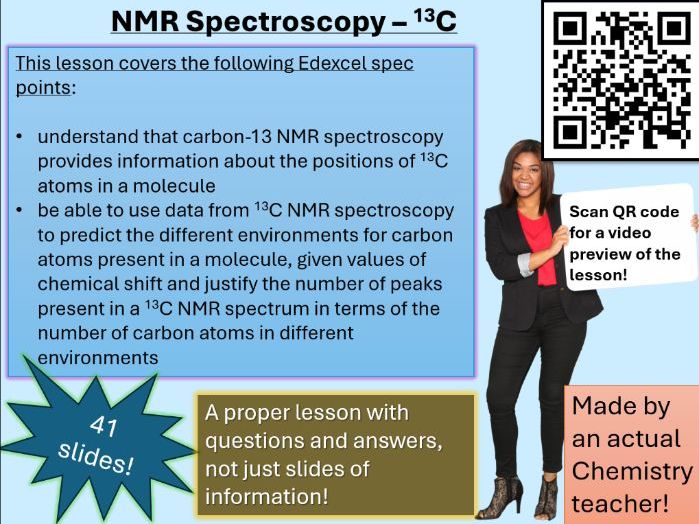
Slide 2 - Lesson objectives (see thumbnail image)
Slide 3 – introduction to what NMR is used for
Slide 4 – explanation of how NMR works
Slides 5 – 6: use this section to introduce students to a NMR spectrum and explain to them the wonders of tetramethylsilane (TMS)
Slide 7 – use this slide to teach about the solvent used for NMR (deuterated chloroform). This is not in the specification, but is still interesting
Slide 8 - learning pit stop questions to test students’ understanding so far. Answers animate on the screen when you click
Slides 9 – 10: use this section to teach students what a carbon-13 NMR spectrum shows (number of carbon environments and types of carbon)
Slide 11 – NMR spectra of propan-1-ol and propan-2-ol, so that students can see the how the carbon environments correspond to the peaks
Slides 12 – 14: chemical shift data for C-13 NMR identical to that which students will be given in the exam. Print slides 13 and 14 so that students can have a copy
Slides 15 – 21: use this section to teach students how to interpret NMR spectra, this time linking the peaks at different chemical shifts to the types of carbon
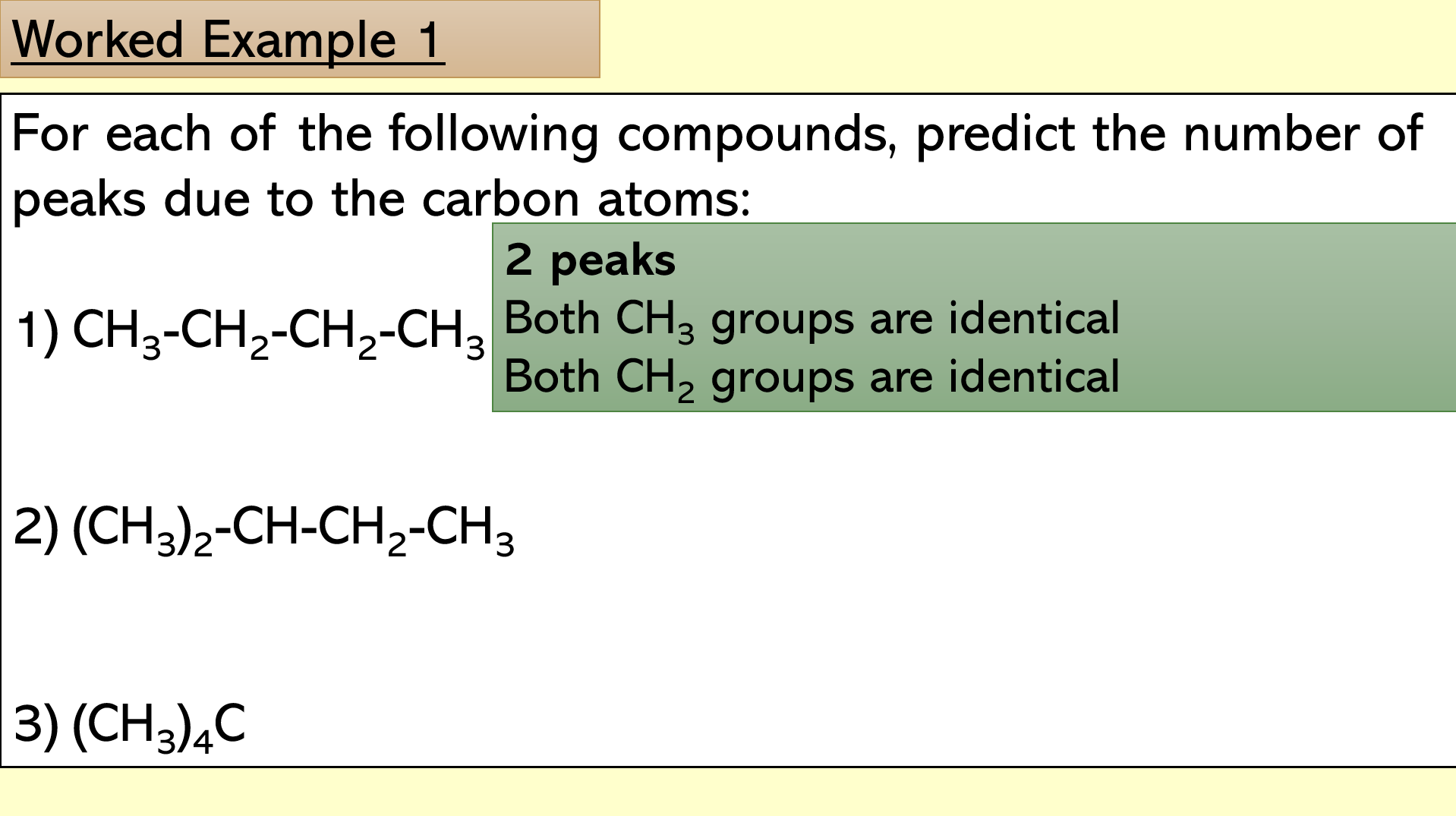
Slides 22 – 24: Worked example 1: students are presented with different compounds and must predict the number of peaks on an NMR spectrum due to carbon atoms. Answers with working out are included. Print slides 23 and 24, so that students have a copy of the question
Slides 25 – 27: Worked example 2: students must predict the number of peaks and chemical shift ranges in various compounds. Model this with your students using the included answers and working out to support yourself if needed
Slides 28 – 31: Worked example 3: this time students must put all the skills into action and deduce the structure of a compound
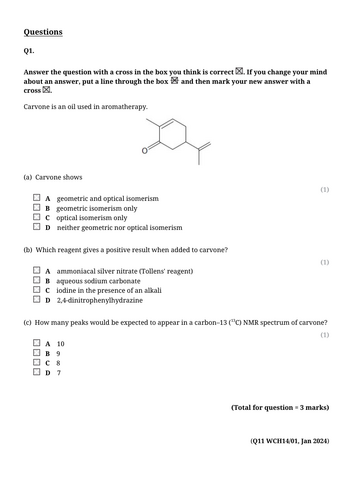
Slides 32 – 41: exam questions with mark scheme answers included with this resource
Please consider leaving a review! This really helps promote our store! Thanks!
Something went wrong, please try again later.
Excellent!
Report this resourceto let us know if it violates our terms and conditions.
Our customer service team will review your report and will be in touch.
£4.50