


Overview:
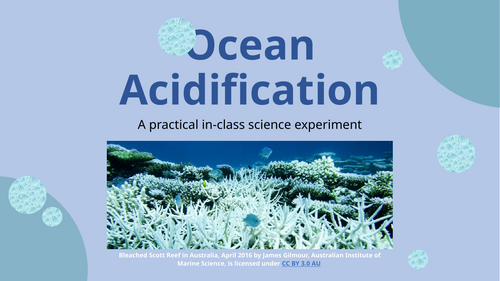
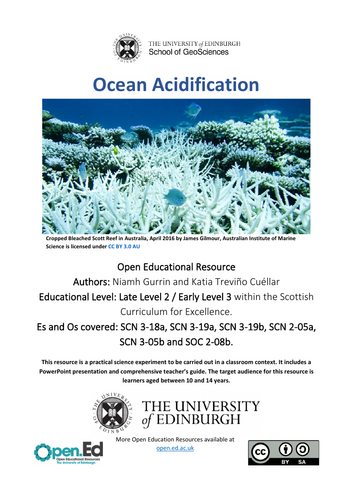
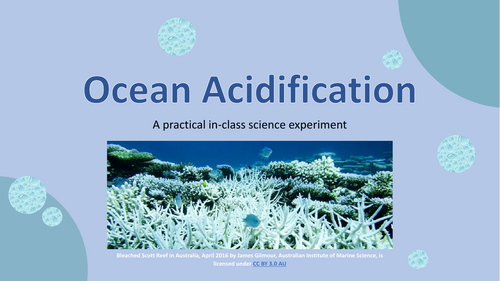
This resource introduces learners to the topic of ocean acidification through a practical classroom experiment that demonstrates the real-world consequences of rising atmospheric carbon dioxide on marine ecosystems, including coral bleaching and impacts on food webs. It introduces learners to acidic, neutral and alkali substances and teaches them how to measure pH and interpret the results. It comprises a PowerPoint presentation and complementary teacher’s lesson plan/guide. The activity is intended for small groups of around ten students, and can be adapted for learners aged approximately 10-14 (SCQF Level 2-3).
This resource was created as part of the NERC Edinburgh Environmental Days outreach and widening participation initiative. It has been created for use as an Open Educational Resource (OER) by the OER Service, within the University of Edinburgh’s Information Services Group. As an OER, teachers are welcome to make any changes to their resources according to their needs.
Learning outcomes:
Science – Materials: Chemical Changes
- SCN 3-18a: Having taken part in practical activities to compare the properties of acids and bases, I have demonstrated ways of measuring and adjusting pH and can describe the significance of pH in everyday life.
Benchmarks to support practitioners’ professional judgment: - SCN 3-19a: Through experimentation, I can identify indicators of chemical reactions having occurred. I can describe ways of controlling the rate of reactions and can relate my findings to the world around me.
- SCN 3-19b: I have helped to design and carry out practical activities to develop my understanding of chemical reactions involving the Earth’s materials. I can explain how we apply knowledge of these reactions in practical ways.
Science – Planet Earth: Processes of the planet
- SCN 2-05a: I can apply my knowledge of how water changes state to help me understand the processes involved in the water cycle in nature over time.
- SCN 3-05b: I can explain some of the processes which contribute to climate change and discuss the possible impact of atmospheric change on the survival of living things.
Social Studies – People, place and environment
- SOC 2-08a: I can discuss the environmental impact of human activity and suggest ways in which we can live in a more environmentally responsible way.
This resource was created by Niamh Gurrin and Katia Treviño Cuéllar, and adapted by Charlotte Ness.
Unless otherwise stated, all content in this package is available under a CC BY-SA 4.0 license.
Something went wrong, please try again later.
This resource hasn't been reviewed yet
To ensure quality for our reviews, only customers who have downloaded this resource can review it
Report this resourceto let us know if it violates our terms and conditions.
Our customer service team will review your report and will be in touch.
£0.00