pptx, 3.12 MB
pptx, 3.12 MB

A complete A-Level Media Studies lesson introducing mise-en-scène lighting, key terminology and exam-style analysis.

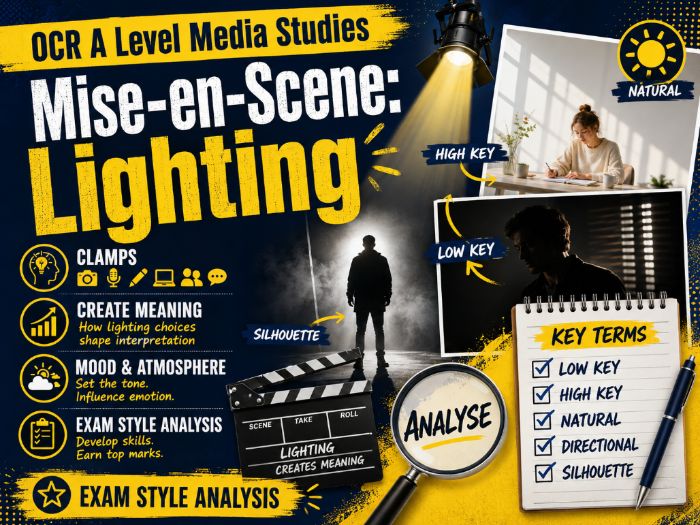
This fully editable PowerPoint (.pptx) lesson focuses on lighting as part of mise-en-scène, helping students understand how directors use lighting to create meaning, mood, genre and audience response.

The lesson introduces and develops key lighting terminology including low-key lighting, high-key lighting, natural lighting, directional lighting and silhouette. Students recap wider media language terminology before applying lighting analysis to an extract from Harry Potter and the Goblet of Fire, focusing on how lighting constructs tension, fear, danger, hope, symbolism and conflict.

The lesson includes retrieval practice, key definitions, image-based terminology tasks, scaffolded analysis tables, model answers, sentence starters, an exam-style response task and peer/self-assessment criteria. It is ideal as part of an opening Media Language / Media Basics sequence for OCR A-Level Media Studies students.

This lesson covers:

OCR A-Level Media Studies
Media language
Mise-en-scène
CLAMPS
Lighting
Low-key lighting
High-key lighting
Natural lighting
Directional lighting
Silhouette
Shadows and contrast
Connotation and meaning
Genre
Audience response
Action/adventure and fantasy genre
Extract analysis
Exam-style written response
PEE paragraph structure

What is included:

Fully editable PowerPoint (.pptx) lesson
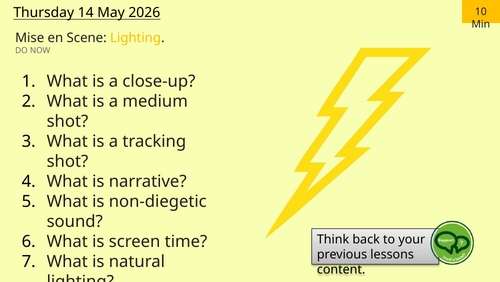
Do Now knowledge retrieval task
Teacher feedback/model answer slide
Recap of CLAMPS and mise-en-scène
Lesson objectives
Lighting terminology image-matching task
Feedback slide identifying lighting types
Mini plenary to assess lighting knowledge
Key definitions for lighting terminology
Printable lighting terminology table
Extract analysis task using Harry Potter and the Goblet of Fire
Scaffolded lighting analysis tables
Word banks for lighting effects and connotations
Teacher feedback slides with completed examples
Exam-style question on lighting and meaning
Sentence starters for analytical writing
Full model response
Peer/self-assessment criteria
WWW and EBI reflection task
Key word plenary on wider media terms

This resource can be used as:

A full A-Level lesson on mise-en-scène lighting
A media language introduction lesson
A Media Basics lesson for Year 12
A lesson on connotation and visual meaning
A film extract analysis lesson
A GCSE-to-A-Level transition lesson
A revision lesson on lighting terminology
A scaffolded exam-style writing lesson

This resource is provided as a fully editable PowerPoint (.pptx) file.

This resource is independently created and is not endorsed by OCR.

Get this resource as part of a bundle and save up to 33%

A bundle is a package of resources grouped together to teach a particular topic, or a series of lessons, in one place.

Bundle

OCR A Level Media Basics Bundle

A complete OCR A-Level Media Studies introductory bundle covering media basics, media language, representation, stereotypes, camerawork, mise-en-scène and key theory. This bundle contains 8 fully editable PowerPoint (.pptx) lessons designed for students beginning OCR A-Level Media Studies. The lessons introduce students to the foundations of Media Studies, including key terminology, media forms, audience, representation, stereotypes, mise-en-scène, camerawork, narrative theory and character theory. The bundle is ideal for the opening weeks of Year 12, GCSE-to-A-Level transition, early course induction, revision or intervention. Lessons include retrieval practice, discussion tasks, terminology activities, printable worksheets/resources, model answers, sentence starters and scaffolded exam-style writing tasks. The sequence builds students’ confidence with the essential analytical vocabulary needed for OCR A-Level Media Studies before moving into set texts. Suggested teaching order Lesson 1: OCR A-Level Media Studies Introduction Introduces students to the course, classroom expectations, media forms, audiences, representation, stereotypes, anti-stereotypes, CAGES and trailer analysis. This works best as the first lesson because it gives students a broad overview of the subject and establishes key routines. Lesson 2: Camerawork Analysis Introduces key camera shots, angles, framing and connotations. Students explore how camerawork shapes audience response, power, vulnerability, fear and meaning. This should come early because camerawork is one of the core building blocks of media language. Lesson 3: Mise-en-Scène: Lighting Develops students’ understanding of mise-en-scène through lighting terminology, including low-key lighting, high-key lighting, natural lighting, directional lighting and silhouette. Students apply this to film extract analysis. Lesson 4: Mise-en-Scène: Acting Continues the CLAMPS/media language sequence by focusing on acting, including facial expression, gesture, body language, eye contact and movement. Students apply acting terminology to extract analysis and exam-style writing. Lesson 5: Todorov Narrative Theory Introduces narrative structure through Todorov’s five stages: equilibrium, disruption, recognition, attempt to repair and new equilibrium. Students apply the theory to music video and film examples. Lesson 6: Propp’s Character Theory Builds on narrative by introducing Proppian character roles, including hero, villain, donor, dispatcher, helper, princess/prize and false hero. Students apply character theory to crime drama examples including Vigil and The Avengers. Lesson 7: Female Stereotypes Introduces gender representation with a focus on female stereotypes, anti-stereotypes, CAGES, “The New Woman” and media language analysis. Students analyse examples from Wonder Woman, Stranger Things, Lupin, The Hunger Games and Wednesday. Lesson 8: Male Stereotypes Completes the introductory representation sequence by focusing on masculinity, male stereotypes, anti-stereotypes, “The New Man” and generational masculinity. Students analyse examples from Stranger Things, The Lord of the Rings and Breaking Bad. What is included? 8 fully editable PowerPoint (.pptx) lessons Introductory OCR A-Level Media Studies lesson Camerawork analysis lesson Mise-en-scène lighting lesson Mise-en-scène acting lesson Todorov narrative theory lesson Propp character theory lesson Female stereotypes and representation lesson Male stereotypes and representation lesson Printable worksheet/resource slides Camerawork resource document and analysis task Retrieval practice tasks Key terminology slides Teacher feedback/model answer slides Sentence starters Word banks Analytical writing frames Exam-style questions Model responses Peer/self-assessment criteria Plenary and reflection tasks Key topics covered OCR A-Level Media Studies Media Studies introduction Media basics Media language Representation Audience CAGES Stereotypes Anti-stereotypes Gender representation Male representation Female representation The New Man The New Woman Mise-en-scène CLAMPS Lighting Acting Camerawork Camera shots Camera angles Connotation Denotation Narrative Todorov Propp Character theory Audience response Film analysis Music video analysis Extract analysis Exam-style writing This bundle can be used as: An opening OCR A-Level Media Studies unit A Year 12 induction sequence A Media Basics teaching pack A Media Language introduction bundle A Representation introduction bundle A GCSE-to-A-Level transition unit A revision or intervention pack A theory introduction sequence A set-text preparation unit before moving into OCR texts This bundle includes fully editable PowerPoint (.pptx) lessons and supporting printable/resource materials. This resource is independently created and is not endorsed by OCR.

£29.99

Reviews

Something went wrong, please try again later.

This resource hasn't been reviewed yet

To ensure quality for our reviews, only customers who have purchased this resource can review it

Report this resourceto let us know if it violates our terms and conditions.
Our customer service team will review your report and will be in touch.