


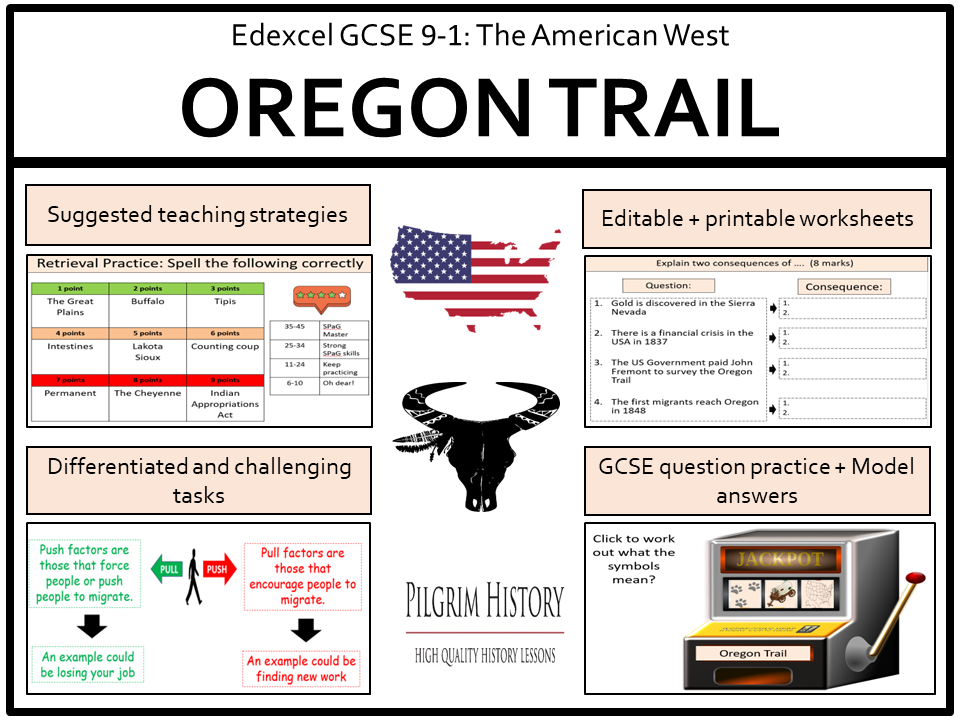
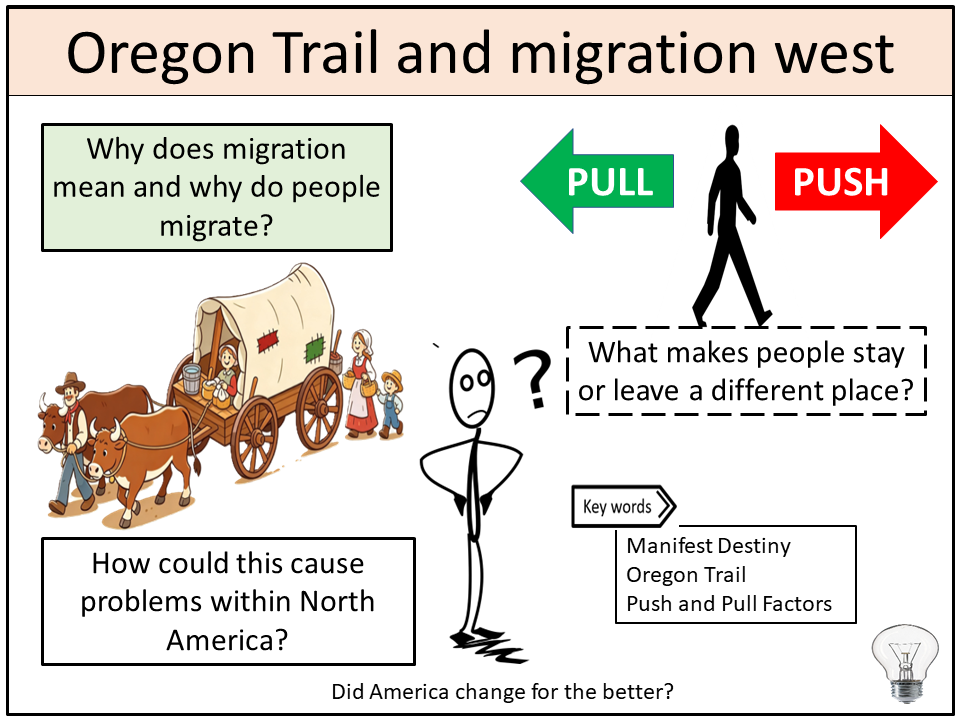
The aim of this lesson is to examine the push and pull factors which encouraged American migration west between c.1835 and 1895.
Students are introduced to the Oregon Trail and explore how the US Government encouraged westward migration by providing $30,000 for an expedition led by John C. Frémont to map the route and report on the opportunities and possibilities of travelling west.
An excellent accompanying video provides a contrasting view, showing the much harsher realities faced by settlers travelling to the American West. Students are encouraged to consider whether the journey was really as exciting and achievable as the Government’s promotion suggested.
Students investigate a range of scenarios and decide whether each represents a push or pull factor. For an additional challenge, they then identify whether the factors were mainly social, political or economic, helping them understand the different reasons behind westward expansion.
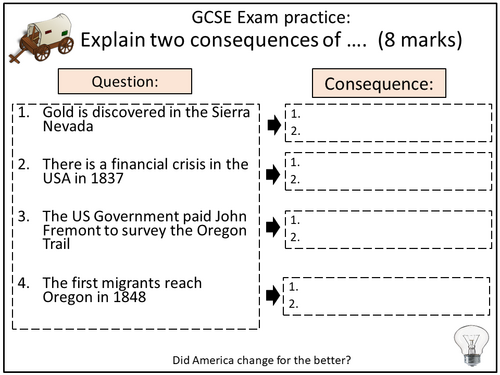
There is follow-up GCSE exam practice using the 8-mark ‘Explain two consequences’ question, with helpful hints and a model answer provided to support students in developing their exam technique.
The resource is differentiated and includes suggested teaching strategies. Retrieval practice using the spelling of key words is also included to reinforce important historical vocabulary.
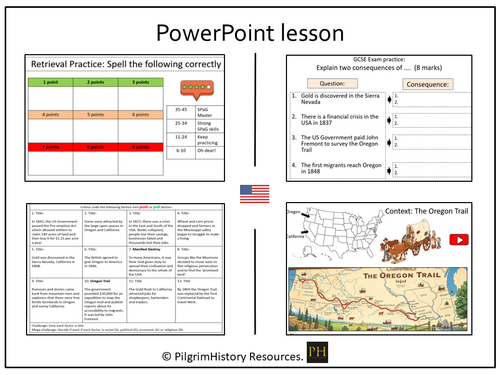
It comes in PowerPoint format which can be amended and changed to suit.
Something went wrong, please try again later.
This resource hasn't been reviewed yet
To ensure quality for our reviews, only customers who have purchased this resource can review it
Report this resourceto let us know if it violates our terms and conditions.
Our customer service team will review your report and will be in touch.
£3.00