Pearson BTEC Applied Science Unit 5 Chemistry A2 Bundle 15 PowerPoints
Resource Bundle



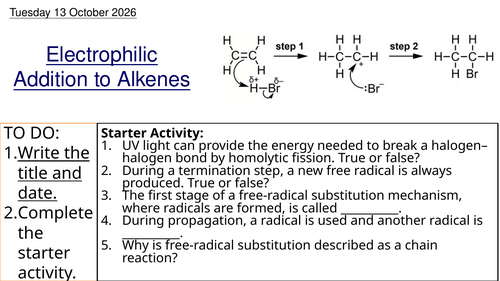
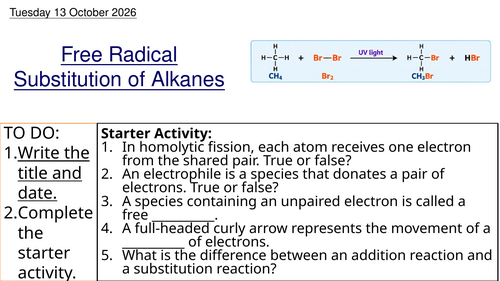
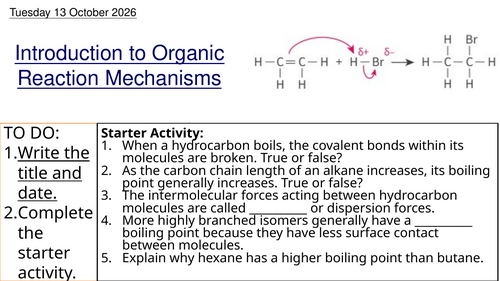
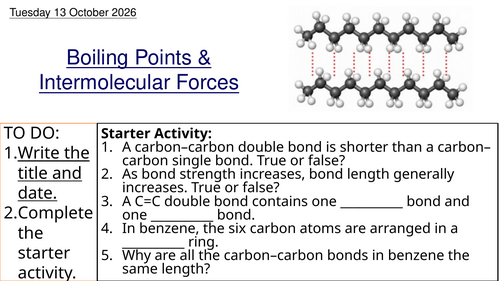
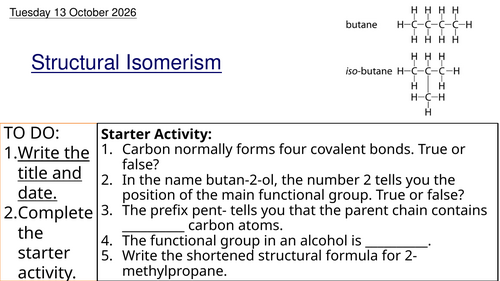
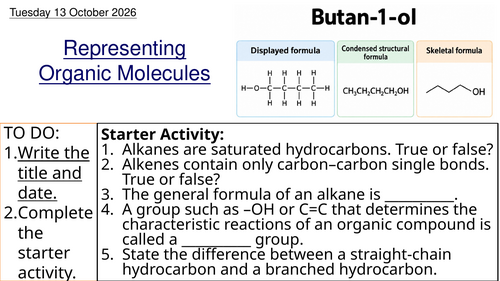
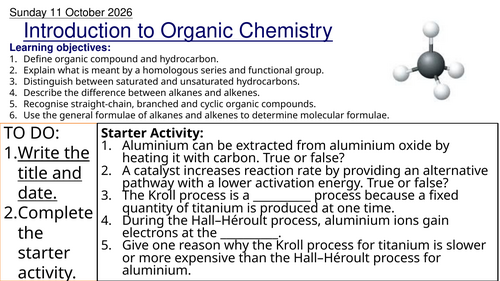
A2 Structures, reactions and properties of commercially important organic compounds.
This Pearson BTEC Applied Science Unit 5 Chemistry A2 bundle contains 15 fully editable PowerPoint lessons covering organic chemistry, mechanisms, reactions, bonding and properties. It provides a complete teaching sequence for the A2 organic chemistry content, progressing from fundamental terminology and molecular representation through to reaction mechanisms, addition polymerisation, hydration and combustion.
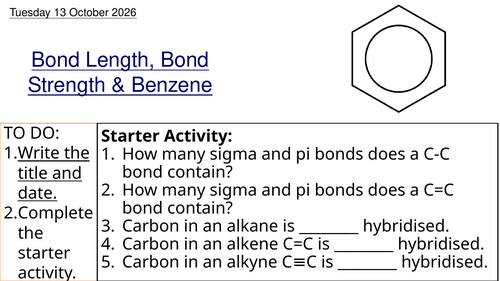
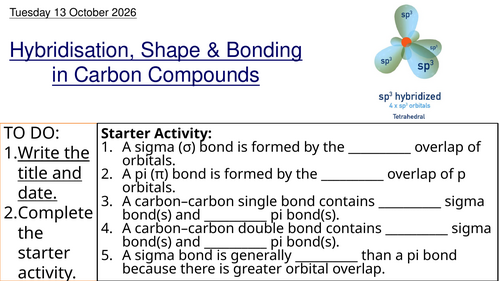
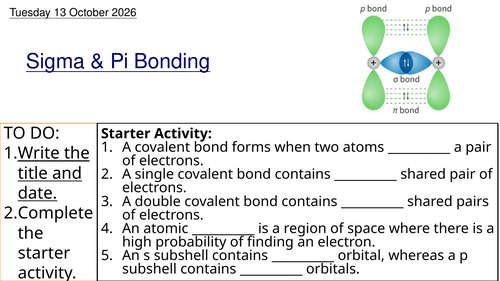
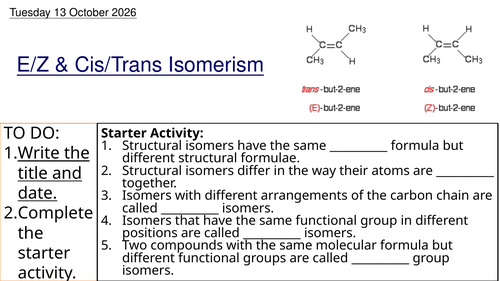
Organic chemistry is the study of carbon-containing compounds, their structures, properties and reactions. The bundle begins with introductory organic chemistry, IUPAC nomenclature, molecular representations, structural isomerism and E/Z and cis/trans isomerism. Students then develop their understanding of bonding through sigma and pi bonds, hybridisation, molecular shape, bond length and bond strength, including the delocalised bonding found in benzene.
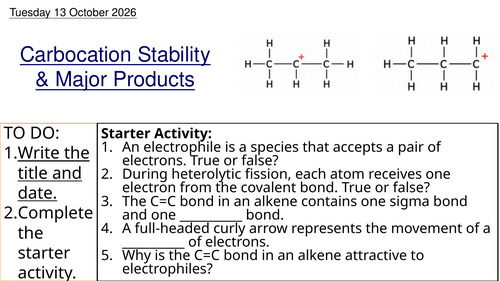
Later lessons connect structure to physical properties through boiling points and intermolecular forces before introducing organic reaction mechanisms. Students study homolytic and heterolytic fission, free radicals, electrophiles, carbocations and curly-arrow notation, followed by detailed lessons on free-radical substitution of alkanes and electrophilic addition to alkenes. Carbocation stability is used to explain major and minor products in reactions involving asymmetric alkenes.
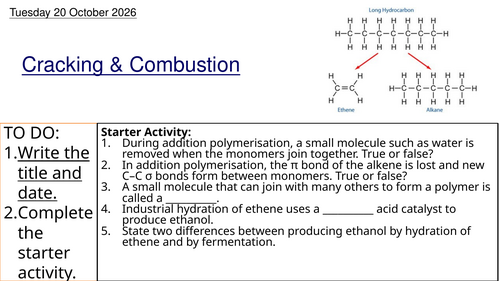
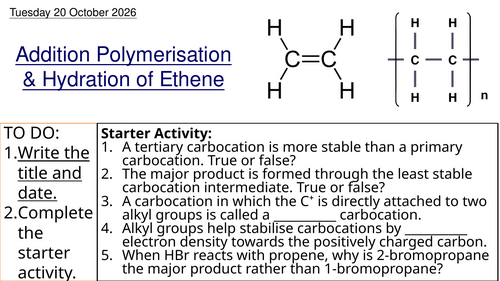
The final lessons cover addition polymerisation, hydration of ethene, cracking and combustion, allowing students to apply their knowledge to important industrial and chemical processes.
This bundle contains 15 fully editable PowerPoint (.pptx) lessons, each designed with learning objectives, key terminology, retrieval starters, structured teaching content, worked examples, student activities, answer slides and check-your-understanding questions. Updated in October 2026, the resources are suitable for classroom teaching, revision, cover work or independent study for Pearson BTEC Applied Science Unit 5 Chemistry – A2.
Something went wrong, please try again later.
This resource hasn't been reviewed yet
To ensure quality for our reviews, only customers who have purchased this resource can review it
Report this resourceto let us know if it violates our terms and conditions.
Our customer service team will review your report and will be in touch.