


SEO Title
AQA GCSE Psychology | Perception, Depth Cues & Visual Illusions | 20 Revision Visuals
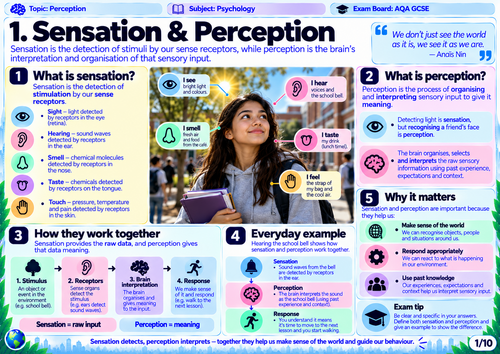
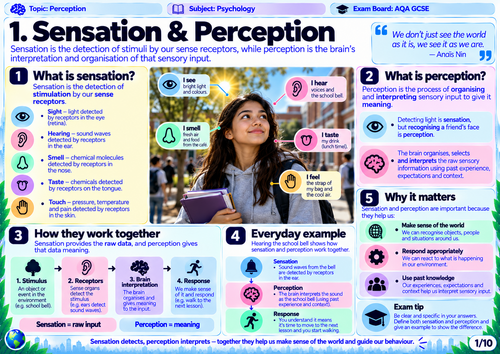
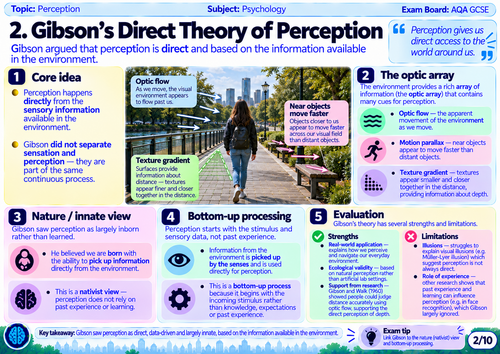
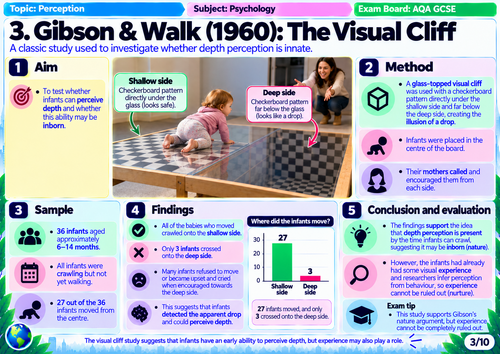
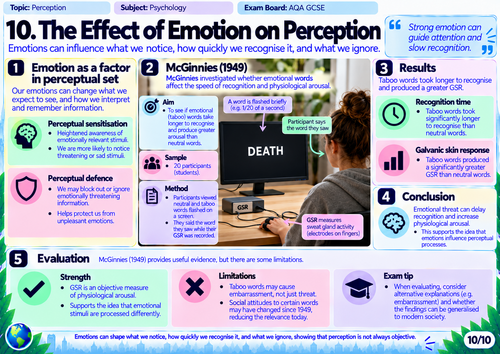
DescriptionA comprehensive set of 20 colourful revision visuals covering Perception for AQA GCSE Psychology (8182), Paper 1: Cognition and Behaviour.
Designed for classroom teaching, independent revision and exam preparation, this resource uses accessible explanations, diagrams and psychological examples to help students understand how we interpret sensory information.
Topics covered:
- Sensation versus perception
- How sensory information is interpreted
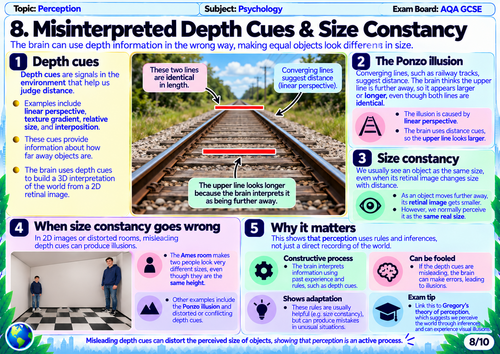
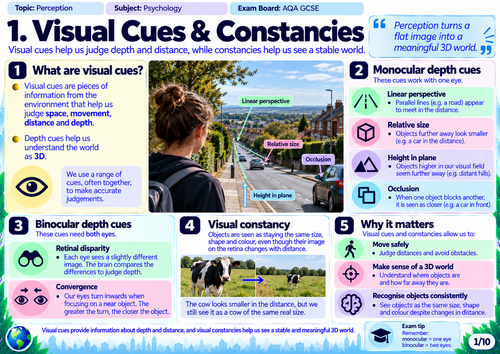
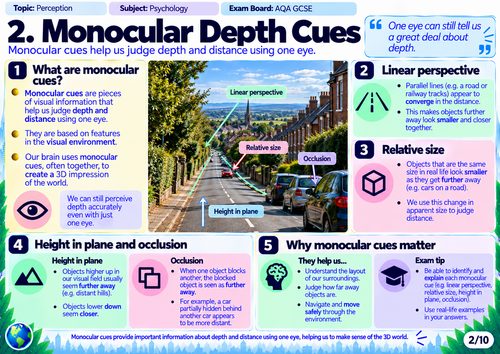
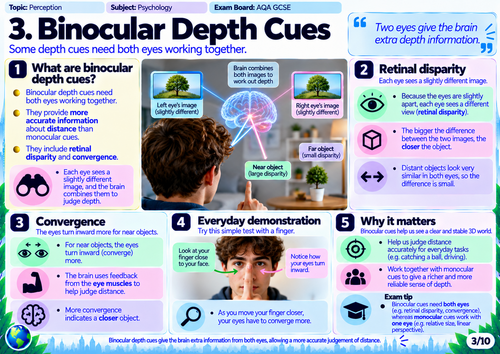
- Monocular and binocular depth cues
- Retinal disparity and convergence
- Relative size and linear perspective
- Occlusion and height in plane
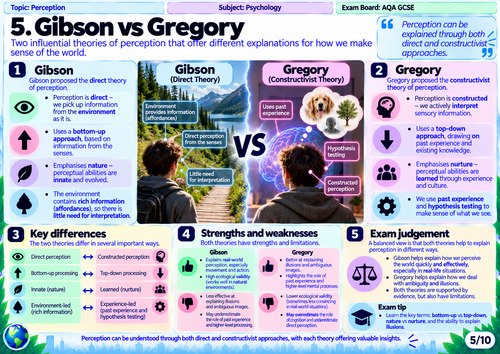
- Gibson’s direct theory of perception
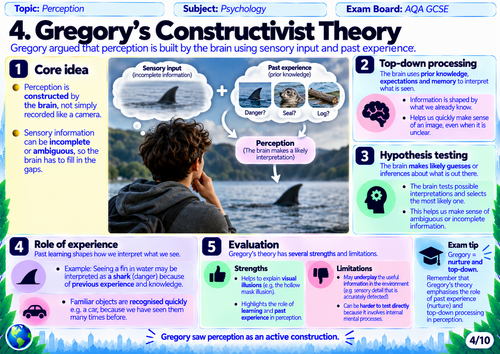
- Gregory’s constructivist theory
- Nature versus nurture
- Bottom-up and top-down processing
- Strengths and limitations of explanations
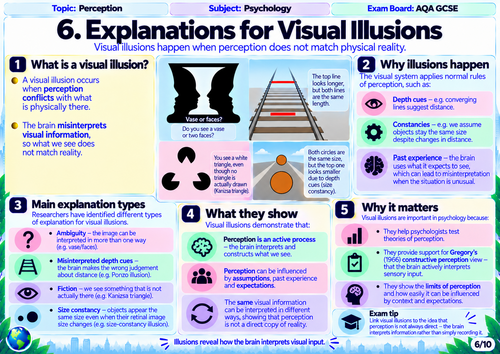
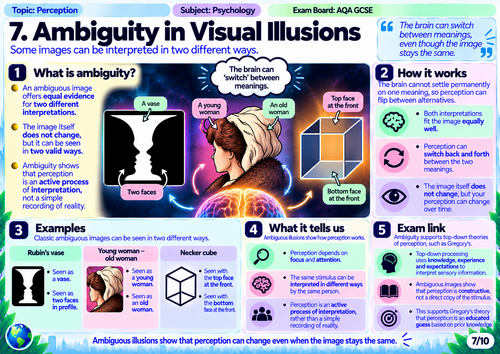
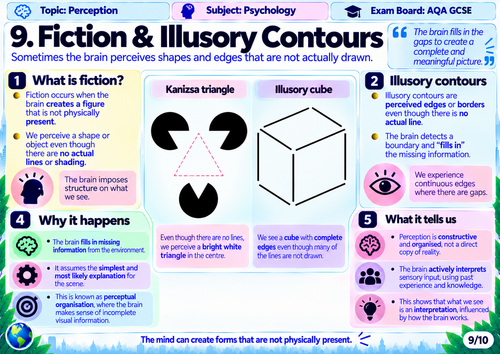
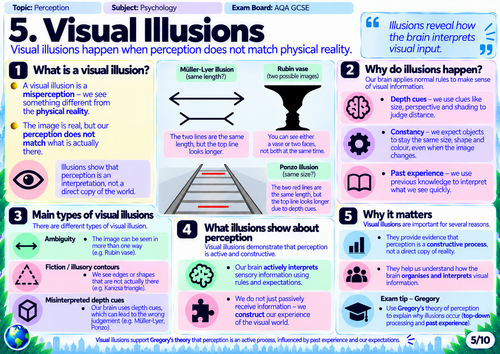
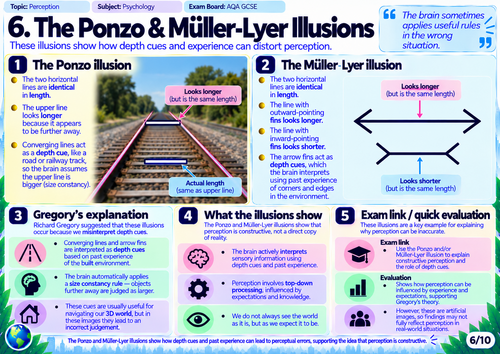
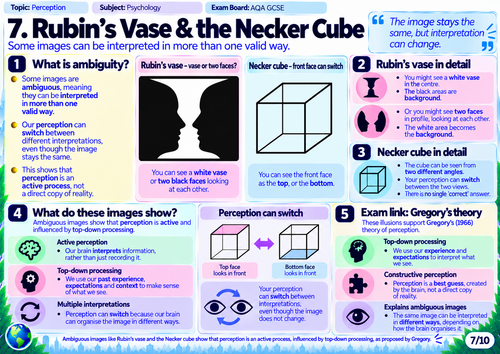
- Visual illusions and perceptual ambiguity
- Rubin’s vase and the Necker cube
- Kanizsa triangle and illusory contours
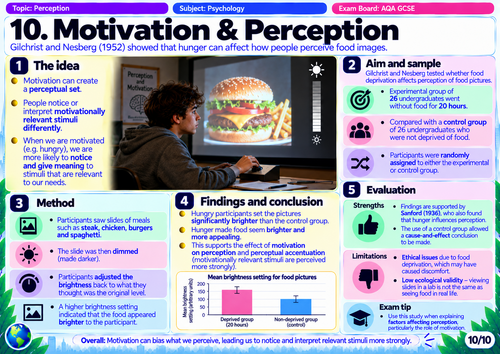
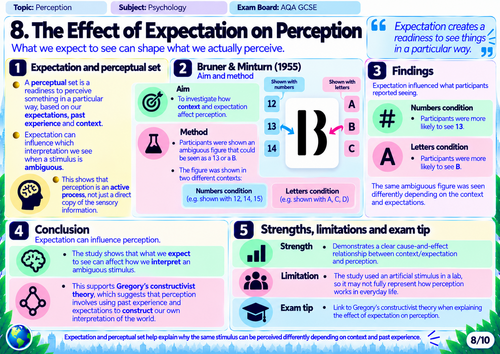
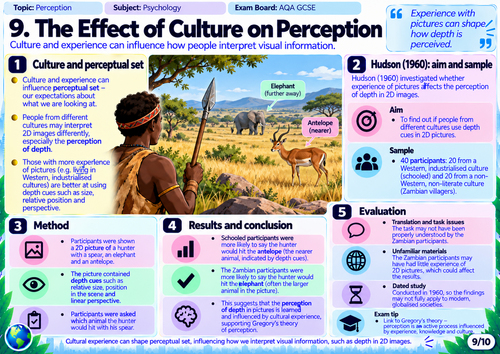
- The role of experience and expectations
- Application and evaluation of key theories
What’s included:
- 20 illustrated revision visuals
- Clear psychological explanations
- Depth perception diagrams
- Visual illusion examples
- Theory comparisons
- Strengths and weaknesses
- Key terminology and revision guidance
Ideal for Years 10–11, AQA GCSE Psychology lessons, Paper 1 revision, retrieval practice, homework, intervention and independent study.
SEO KeywordsAQA GCSE Psychology, AQA 8182, perception psychology, GCSE perception revision, sensation and perception, depth cues, monocular depth cues, binocular depth cues, retinal disparity, convergence, Gibson direct theory, Gregory constructivist theory, top down processing, bottom up processing, visual illusions, Rubin’s vase, Necker cube, Kanizsa triangle, psychology revision mats, Paper 1 Cognition and Behaviour
Copyright© 2026 Coffee Owed. All rights reserved.
This independently created educational resource supports AQA GCSE Psychology (8182).
It is not produced, approved or endorsed by AQA. Qualification names and references to psychological theories are used solely for educational identification.
All original explanations, visual summaries and designs remain the creator’s intellectual property. Third-party images and other materials remain subject to their respective rights and licences.
Short footer: © 2026 Coffee Owed. Independent AQA GCSE Psychology resource. Not affiliated with or endorsed by AQA.
Something went wrong, please try again later.
This resource hasn't been reviewed yet
To ensure quality for our reviews, only customers who have purchased this resource can review it
Report this resourceto let us know if it violates our terms and conditions.
Our customer service team will review your report and will be in touch.
£8.99