


pH curves and titration curves, including pH curves for diprotic acids. What is equivalence point and end point? Ka from pH curves? Choosing an indicator for a titration? All this and more covered in this comprehensive lesson with questions and answers! This is a Year 13 A level lesson for Edexcel International Unit 4 – WCH14, but it can also be used for all UK exam boards. All the slides in this lesson are fully animated and include answers to every mini plenary question and exam question. The breakdown of the slides (which are best opened on Microsoft PowerPoint) is as follows:
Slide 1 - Title and 5-minute starter. The starter is a grid of four questions entitled ‘last week, last lesson, today’s learning and future learning’. Use this generic slide for all your lessons by simply changing the questions and the answers each time.
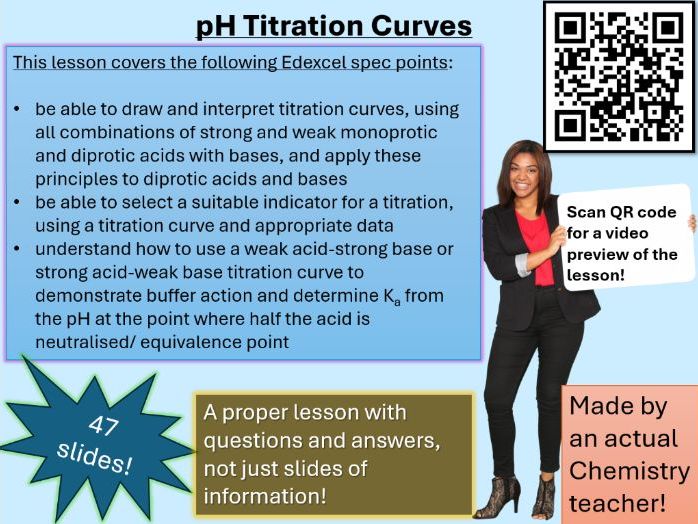
Slide 2 - Lesson objectives (see thumbnail image)
Slide 3 – definitions of end point and equivalence point for explicit teaching of vocabulary. This will help EAL learners
Slide 4 – this slide explores what pH will be at equivalence point
Slides 5 – 12: this section explores how pH changes when an acid is added to a base. All combinations (strong acid with weak base, etc.) along with their pH curves and full explanations are included. Slides 7 – 8 are hidden, so that you can print the graphs for your students
Slides 13 – 20: learning pit stop to help students embed their learning so far. Answers are included on subsequent slides
Slides 21 – 22: use these slides to teach students about pH curves for diprotic acids. This includes what a diprotic acid is and reactions/equations to show how they dissociate
Slides 23 – 26: learning pit stop to help students embed their learning about diprotic acids so far. Answers are included on subsequent slides
Slides 27 – 28: use these slides to introduce students to indicators as weak acids
Slides 29 – 32: this section to explain the pH when an indicator just changes colour
Slides 33 – 37: this section helps students to understand how to choose an appropriate indicator for a titration
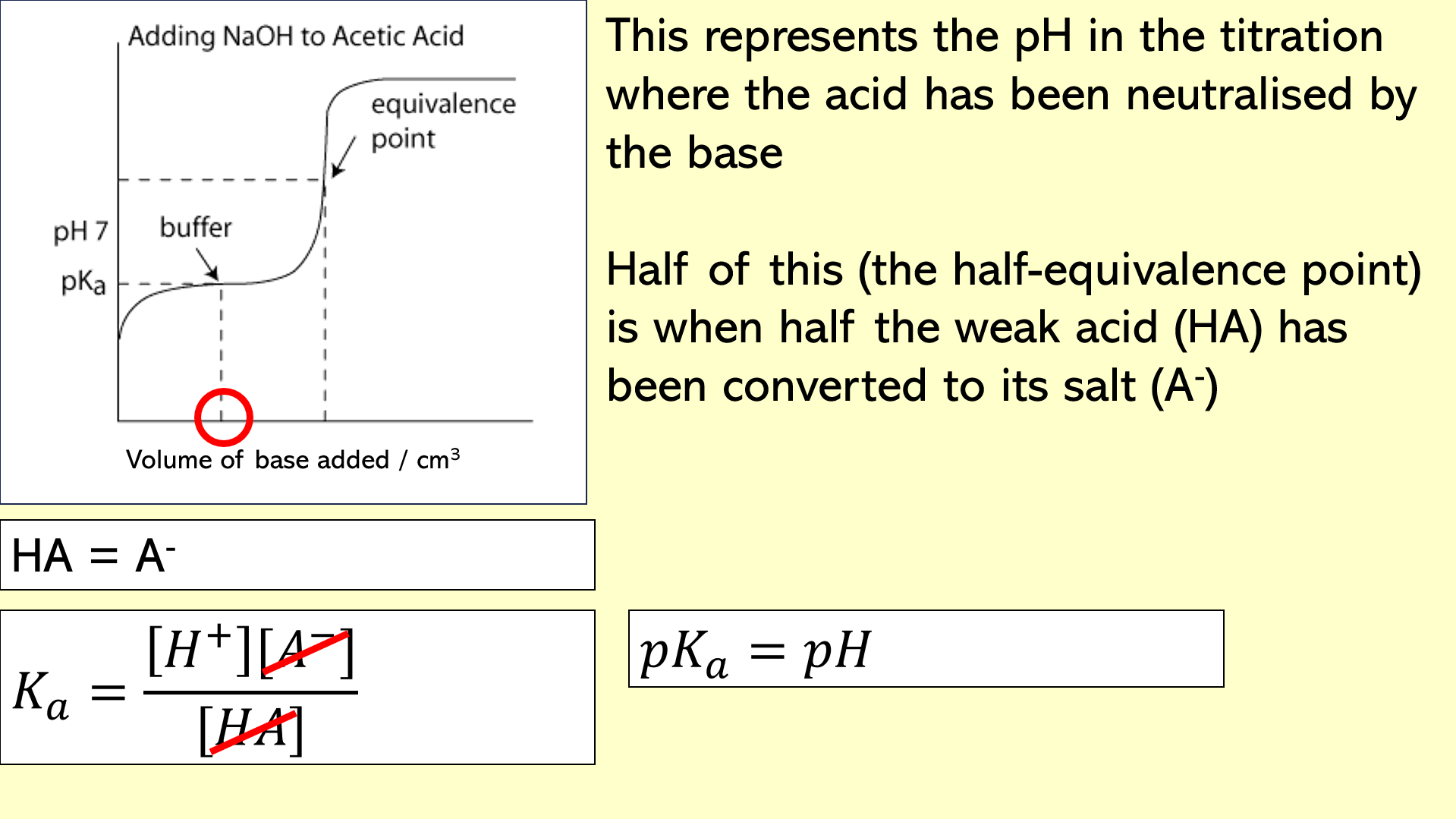
Slides 38 – 40: use these slides to teach students how to find the Ka from a pH curve, using the half-equivalence point method
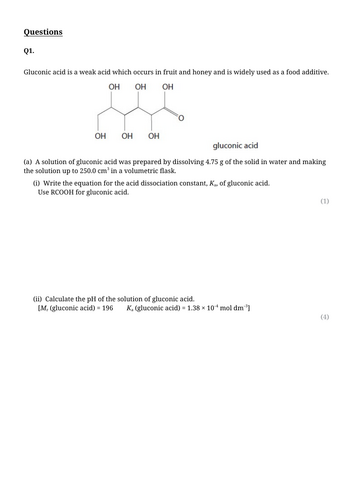
Slides 41 – 47: Exam questions with mark scheme answers (included with the resource)
Please consider leaving a review! This really helps promote our store! Thanks!
Something went wrong, please try again later.
This resource hasn't been reviewed yet
To ensure quality for our reviews, only customers who have purchased this resource can review it
Report this resourceto let us know if it violates our terms and conditions.
Our customer service team will review your report and will be in touch.
£4.50