


Primary Pitch and Volume STEM Challenge
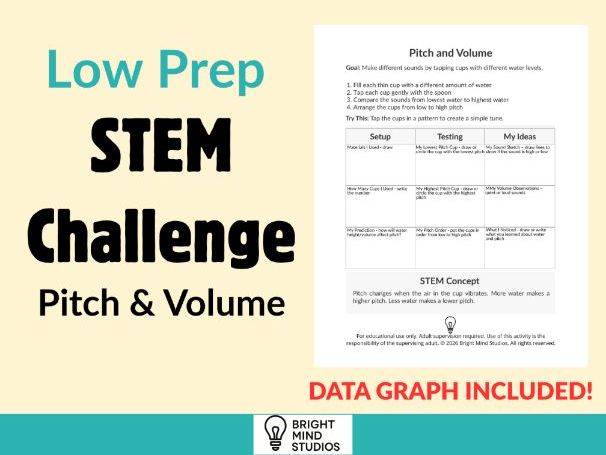
A hands‑on STEM challenge where learners explore pitch and volume by creating and testing sounds using cups filled with different amounts of water. Learners investigate how vibrations and water levels affect sound while experimenting with ways to change and compare what they hear.
The activity encourages curiosity, careful listening, and simple problem‑solving as learners explore how sound changes and identify patterns in pitch.
Learners tap cups with different water levels, compare the sounds they hear, and arrange them in order from low to high pitch. This low‑prep activity works well in primary classrooms, STEM stations, or small‑group learning, and supports both independent and guided exploration.
WHAT’S INCLUDED:
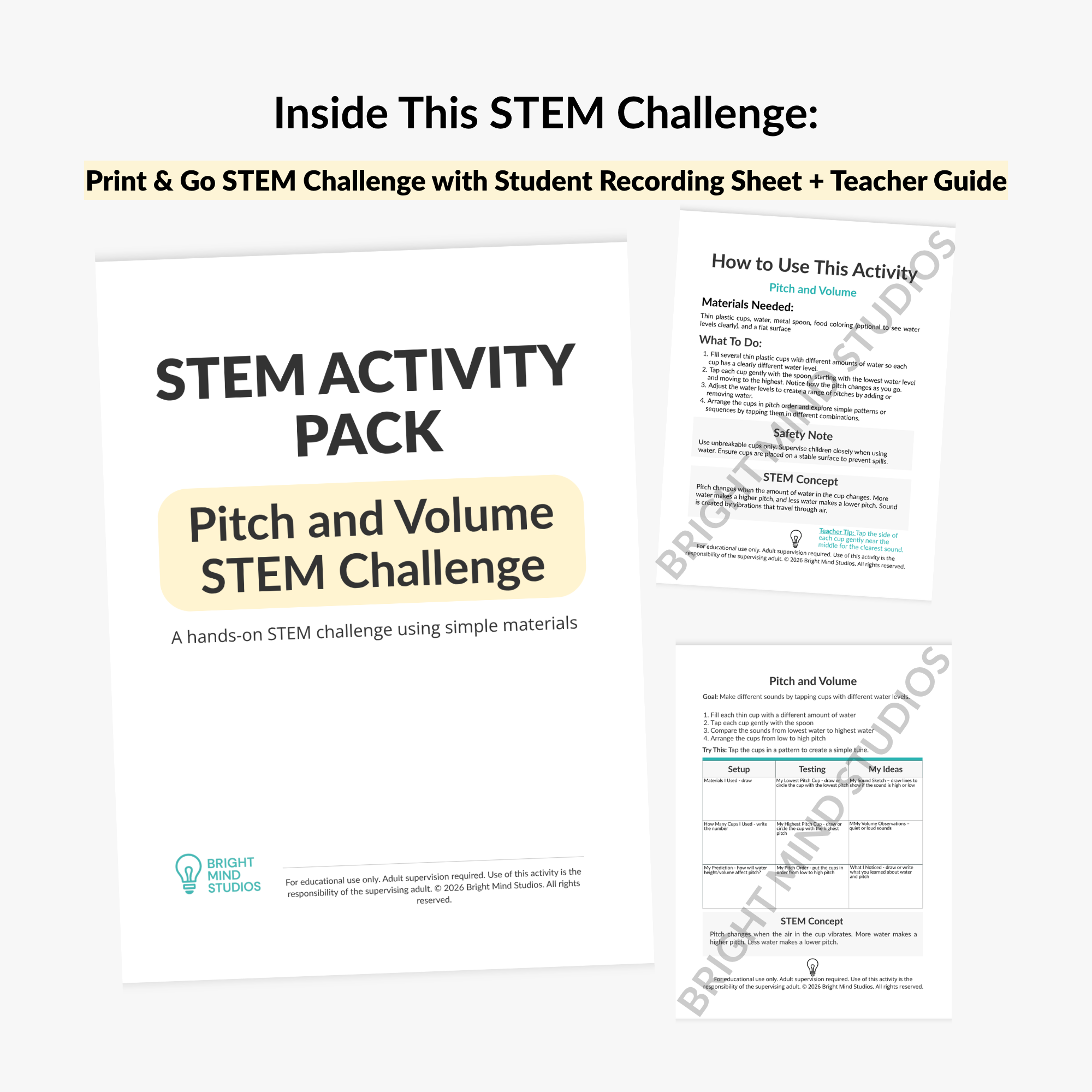
• 3‑page STEM Challenge set: Cover Page, Instructions Page, Activity Page
• Built‑in recording table for observations and comparisons
• Space for sketches, predictions, and simple reflections
• Clear, step‑by‑step directions for classroom use
• Printable PDF (A4/Letter compatible)
SKILLS DEVELOPED:
• Observing and comparing sounds
• Understanding pitch and volume
• Predicting and testing ideas
• Recording simple results
• Listening and sensory exploration
HOW IT WORKS:
Learners fill cups with different amounts of water and tap each one gently to explore how the sound changes. They compare sounds from low to high pitch and record their observations.
Learners then organise the cups in pitch order and explore simple patterns or sound sequences. They use the activity page to draw, label, and reflect on what they notice about sound and vibration.
The challenge scales naturally: younger learners focus on listening and comparing sounds, while older learners explore patterns, sequencing, and simple explanations of how vibration affects pitch.
LEARNING CONCEPTS:
• Sound and vibration
• Pitch (high and low sounds)
• Volume (loud and quiet sounds)
• Testing and observing changes
Curriculum Links: Supports early science learning related to sound, vibrations, and simple investigations of how sound is made.
STEM VOCABULARY:
pitch, volume, sound, vibration, high, low, loud, quiet
DIFFERENTIATION:
Suitable for KS1 learners and can extend into KS2 through deeper discussion, pattern creation, and comparison of sound changes.
PRINTING & PREP:
• Print pages single‑sided
• Provide plastic cups, water, and metal spoons
• Optional food colouring to make water levels easier to see
• Use a stable surface and supervise learners as needed
AGE RANGE:
Suitable for ages 5–11 (Primary)
Aligned for KS1 learners with natural extension options for KS2
Supports ESL learners with simple language and hands‑on tasks
FILE DETAILS:
PDF format (non‑editable). Instant digital download.
TERMS OF USE:
This resource is for personal and single classroom use only. It may not be shared, distributed, or used commercially.
Something went wrong, please try again later.
This resource hasn't been reviewed yet
To ensure quality for our reviews, only customers who have purchased this resource can review it
Report this resourceto let us know if it violates our terms and conditions.
Our customer service team will review your report and will be in touch.
$3.99