

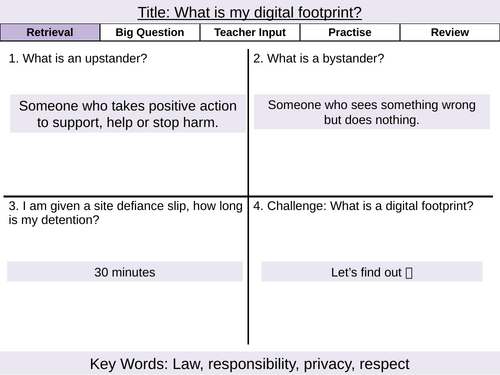

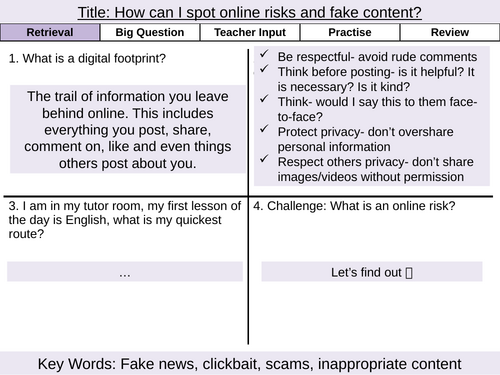
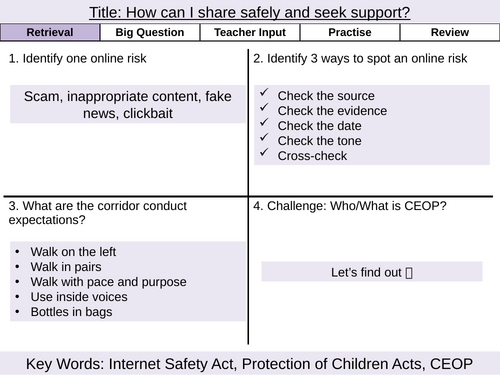
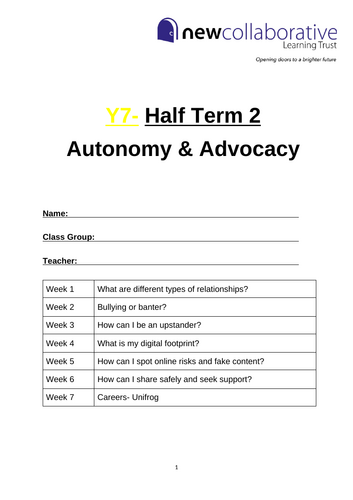
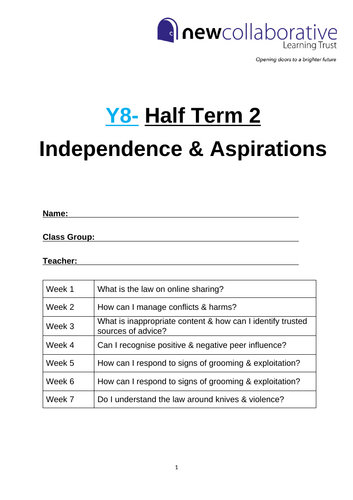
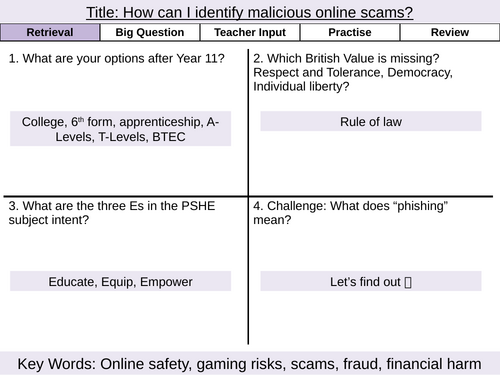
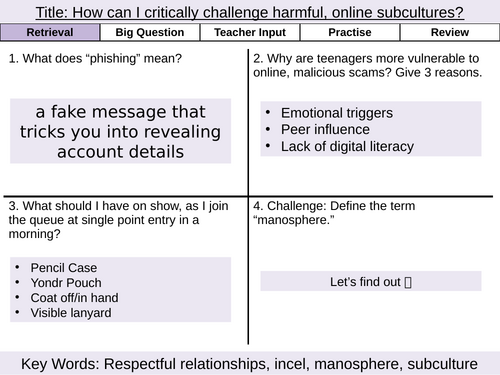
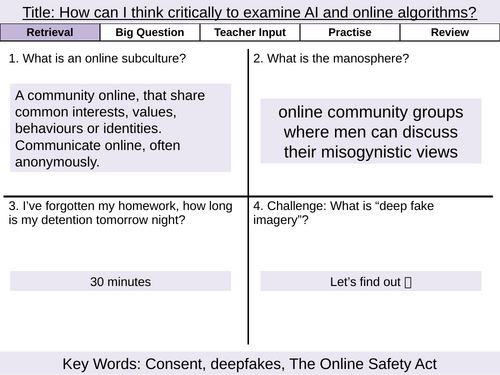
Newly planned for 2025-2027, incorporating the new RSHE policy. This is a bundle of spiralled lessons to deliver online safety. Details for each lesson is included below. Lessons are 60 minutes in length, include a retrieval grid, and pages from the booklet that the lessons are usually in.
Year 7
Lesson 1: What is my digital footprint? (LO: Explain what my digital footprint is, identify ways my online actions can create a permanent record, explain how to present myself positively online.)
Lesson 2: How can I spot online risks and fake content? (LO: Recognise what an online risk is, identify online risks, explain how to spot fake content online). Includes fake news, clickbait, scams and inappropriate content
Lesson 3: How can I share safely and seek support? (LO: Identify age-appropriate rules regarding sharing images online, explain what the Internet Safety Act involves, Explain how to share safely). Includes Protection of Children Acts, CEOP, Social Media apps.
Year 8.
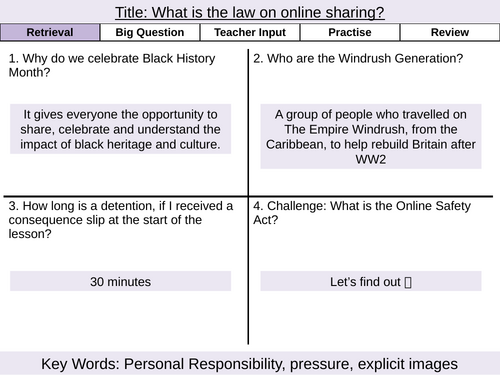
Lesson 1: What is the law on online sharing? (LO: Explain the legal risks of sharing explicit images, recognise unsafe practices online, explain how to stay safe online and seek support if needed). Includes AI, ChatGPT, Deepfakes, Online Safety Act
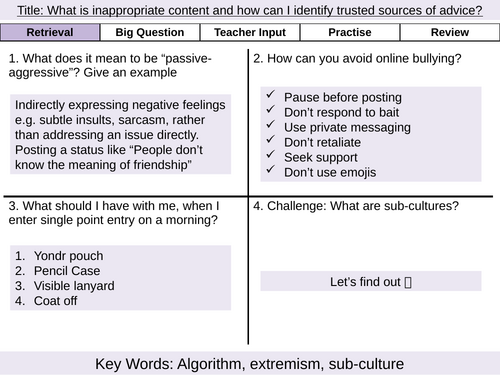
Lesson 2: What is an inappropriate content and how can I identify trusted sources of advice? (LO: Recognise how algorithms can push content, recognise incel subculture and why it can be dangerous, develop skills to identify trusted sources of advice)
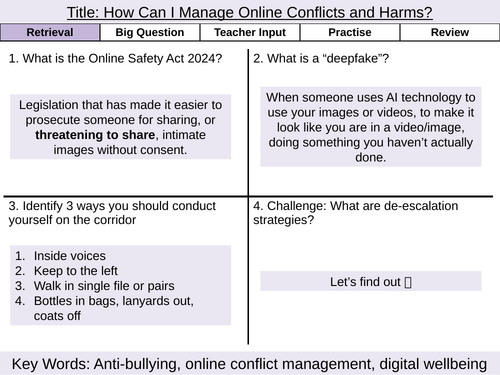
Lesson 3: How can I manage online conflicts and harms? (LO: Recognise how online conflicts can escalate quickly, identify harmful online behaviours, understand the real-world impact of online actions).
Year 9
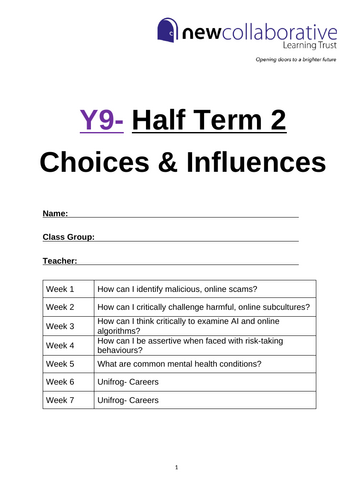
Lesson 1: How can I identify malicious online scams? (LO Explain what online scams are, identify common types of online scams, recognise the risks of online game monetisation and gaming addiction)
Lesson 2: How can I critically challenge harmful, online subcultures? (LO: Identify and explain what online subcultures are, understand how certain influencers have gained prominence, critically evaluate harmful narratives.) Covers Andrew Tate and the manosphere with an emphasis on hate language
Lesson 3: How can I think critically to examine AI and online algorithms? (LO: explain what AI and algorithms are, understand the risks and legal implications of creating, sharing or being involved in the creation of this content, recognise the emotional and social impact of deepfakes.)
Something went wrong, please try again later.
This resource hasn't been reviewed yet
To ensure quality for our reviews, only customers who have purchased this resource can review it
Report this resourceto let us know if it violates our terms and conditions.
Our customer service team will review your report and will be in touch.
£20.00