


This powerful, discussion‑driven lesson helps students dive into some of the most fascinating claims in religious belief: visions, miracles and spiritual encounters. Blending philosophy, psychology and real‑world case studies, this session encourages pupils to think critically about whether religious experiences can genuinely count as evidence for God — or whether alternative explanations make more sense.
With engaging in‑lesson tasks, peer‑talk opportunities, and a structured worksheet, this resource gives you everything needed for a smooth, high‑impact lesson that sparks curiosity and confident debate.
Lesson Objectives- Define visions and miracles — Understand key types of religious experience and how believers interpret them.
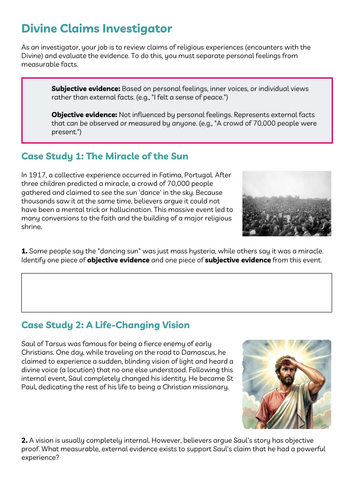
- Analyse case studies — Explore famous individual and group experiences, comparing similarities and differences.
- Evaluate personal testimony — Assess whether someone’s personal account can be considered reliable evidence for God.
- Discuss scientific explanations — Examine psychological and neurological theories that explain spiritual or mystical feelings.
- Ready‑to‑teach PowerPoint with clear modelling and visual prompts
- Peer‑talk moments to build confidence and deepen reasoning
- Worksheet included for structured analysis and written evaluation
- Engaging tasks exploring belief, scepticism and scientific perspectives
- Ideal for KS3 RE, Philosophy or Critical Thinking
Some visuals in this resource were made with AI to help bring ideas to life and support student understanding.
Something went wrong, please try again later.
This resource hasn't been reviewed yet
To ensure quality for our reviews, only customers who have purchased this resource can review it
Report this resourceto let us know if it violates our terms and conditions.
Our customer service team will review your report and will be in touch.
£2.00