


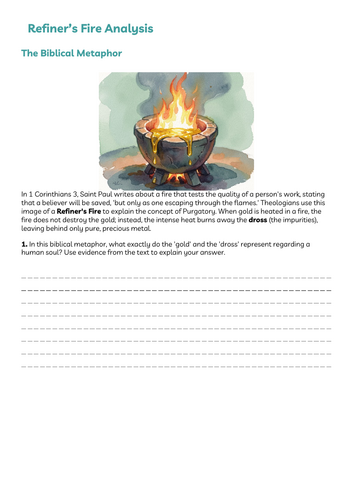
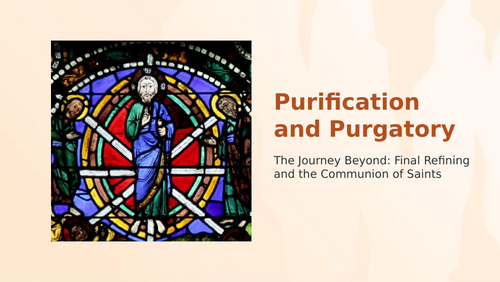
This resource provides a balanced theological and historical examination of Purgatory, focusing on the concept of “holy longing” and the interconnectedness of the Church across the threshold of death. It clarifies Purgatory not as a place of punishment, but as a transitional state of preparation for the Beatific Vision.
Success Criteria- Define Purgatory: Define Purgatory as a state of final purification for those who die in God’s grace but still require the removal of the “temporal consequences” of sin.
- Examine Historical Evidence: Investigate the ancient tradition of prayers for the dead, tracing evidence from the second century (catacomb inscriptions) and the intertestamental period (2 Maccabees).
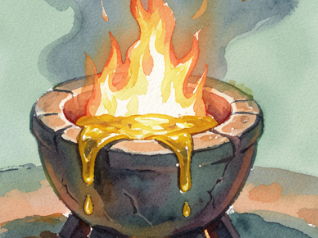
- Analyse Biblical Imagery: Discuss the scriptural metaphors of the “refining fire” (1 Corinthians 3:15) and the process of being made “pure as gold,” evaluating how these symbols communicate spiritual transformation.
- Explore the ‘Poor Souls’: Explore the relationship between the living and the “Church Suffering,” focusing on the duty of charity through prayer, almsgiving, and the offering of the Mass.
- Summarise the Communion of Saints: Summarise how the entire Communion of Saints (Militant, Suffering, and Triumphant) acts as a support system, ensuring that no member of the Body of Christ is left behind.
- Justice vs. Mercy: How does the concept of Purgatory attempt to reconcile God’s perfect justice (which demands purity) with His perfect mercy (which offers a way to achieve it)?
- The Power of Memory: Why has the practice of “praying for the dead” remained one of the most persistent human impulses, even in cultures that do not officially recognise Purgatory?
- Transformation vs. Penalty: Is the “fire” of Purgatory something that causes pain, or is it the intense heat of God’s love burning away everything that isn’t like Him?
This lesson is vital for dispelling the “Third Place” myth—the idea that Purgatory is a middle ground between Heaven and Hell. Instead, it frames Purgatory as the “Antechamber of Heaven,” focusing on the hope and certainty of eventual salvation. It provides an excellent opportunity to discuss the concept of metanoia (repentance) as an ongoing process.
Some visuals in this resource were made with AI to help bring ideas to life and support student understanding.
Something went wrong, please try again later.
This resource hasn't been reviewed yet
To ensure quality for our reviews, only customers who have purchased this resource can review it
Report this resourceto let us know if it violates our terms and conditions.
Our customer service team will review your report and will be in touch.
£2.00