


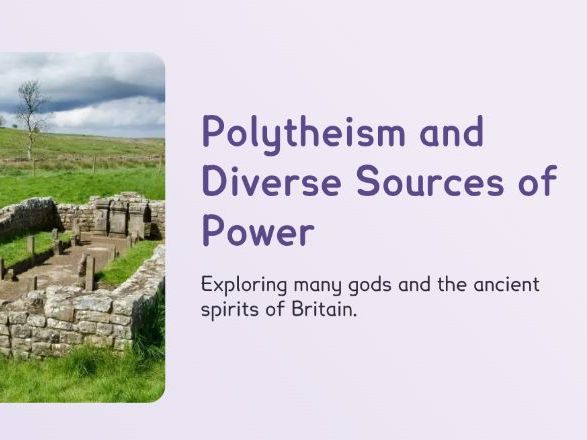
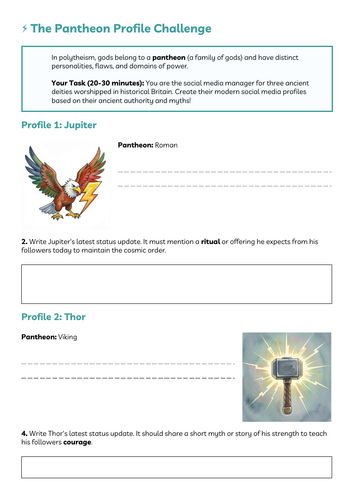
This lesson introduces students to polytheism — the belief in many gods — and explores how ancient societies in Britain made sense of the world before the rise of monotheistic religions. Pupils begin by reviewing Islamic authority and the Five Pillars to contrast monotheistic structure with polytheistic systems. They then define polytheism and the idea of a pantheon, explore how Romans, Vikings and Saxons worshipped in Britain, and investigate why rituals, myths and seasonal festivals were essential for social order. Through stories, artefacts and comparison tasks, students build a clear understanding of how belief shaped early communities.
Lesson Objectives- Review Islamic authority and the Five Pillars to contrast monotheism with ancient polytheistic systems.
- Define polytheism and the concept of a ‘pantheon’ including gods, goddesses and divine families.
- Explore how Romans, Vikings, and Saxons worshipped in Britain through temples, shrines, festivals and mythology.
- Understand why rituals and myths were vital to social order by examining how religion explained nature, authority and community roles.
This lesson is story‑rich, comparative, and perfect for developing Year 7 understanding of belief systems, helping pupils see how ancient religions shaped identity, culture and community long before monotheism arrived.
Some visuals in this resource were made with AI to help bring ideas to life and support student understanding.
Something went wrong, please try again later.
This resource hasn't been reviewed yet
To ensure quality for our reviews, only customers who have purchased this resource can review it
Report this resourceto let us know if it violates our terms and conditions.
Our customer service team will review your report and will be in touch.
£2.00