


How did one assassination lead to a world war?
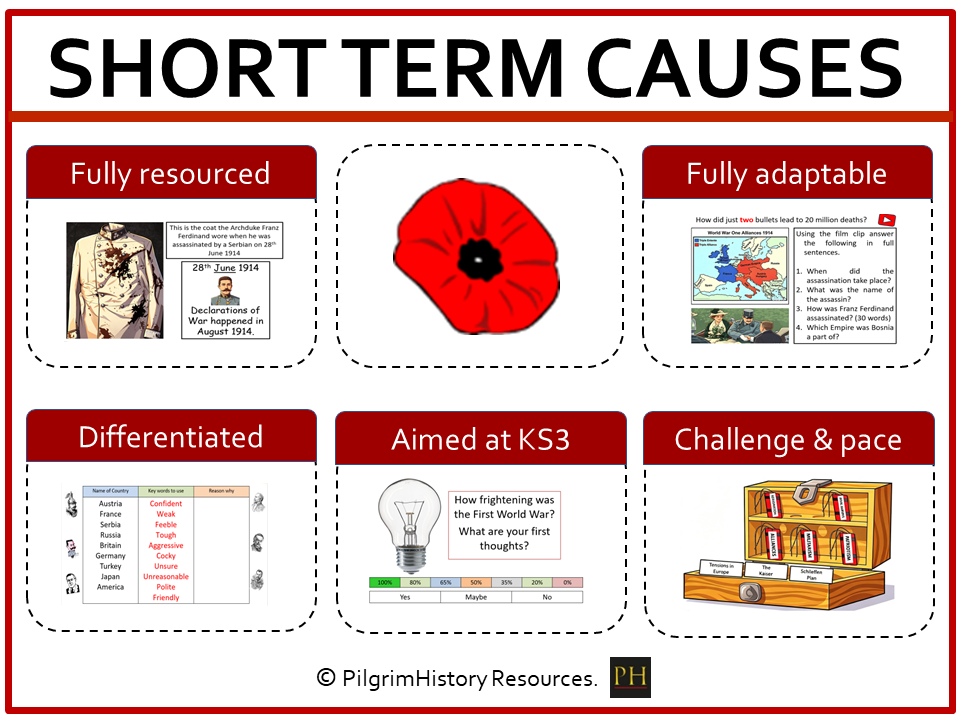
This enquiry-based lesson investigates how the assassination of Archduke Franz Ferdinand in Sarajevo became the spark that plunged Europe into the First World War.
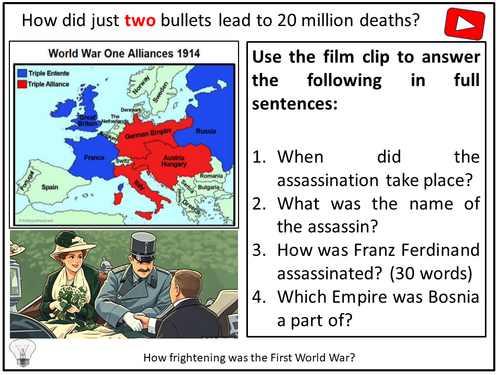
Students explore the dramatic events of 28th June 1914 and analyse why tensions escalated so quickly during the July Crisis. Using video evidence and source-based activities, students examine the motives behind the assassination and the speed at which European powers mobilised for war.
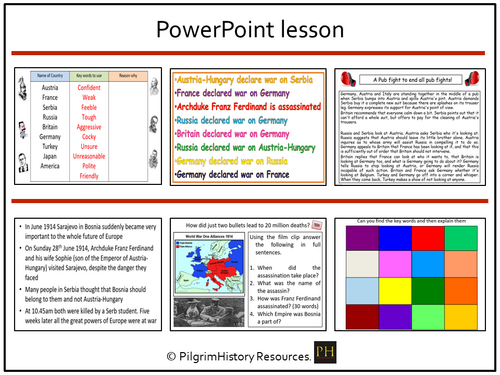
To help students understand the chain reaction that followed, the lesson cleverly compares the outbreak of war to a “bar brawl” analogy, enabling students to identify responsibility, alliances and escalating tensions in an accessible and memorable way.
Activities include sequencing the key events of the July Crisis, analysing the actions and personalities of the major powers including Germany, France and Austria-Hungary, chronological and cause-and-consequence tasks, discussion and analytical activities linked to responsibility for war and a fun and engaging “Catchphrase” plenary complete with music to reinforce key terminology
The lesson also features:
An enquiry question revisited throughout the lesson
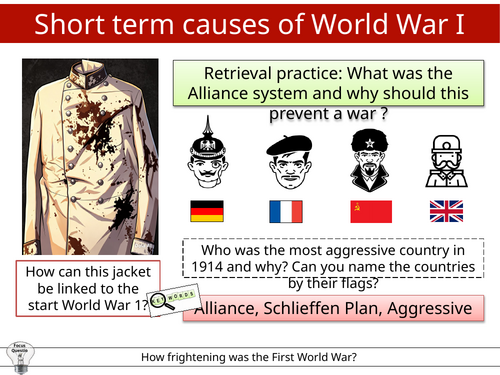
Retrieval practice activities
Differentiated resources to support all learners
Suggested teaching strategies
Fully editable PowerPoint format
Any reviews would be gratefully received
Something went wrong, please try again later.
This resource hasn't been reviewed yet
To ensure quality for our reviews, only customers who have purchased this resource can review it
Report this resourceto let us know if it violates our terms and conditions.
Our customer service team will review your report and will be in touch.
£3.00