


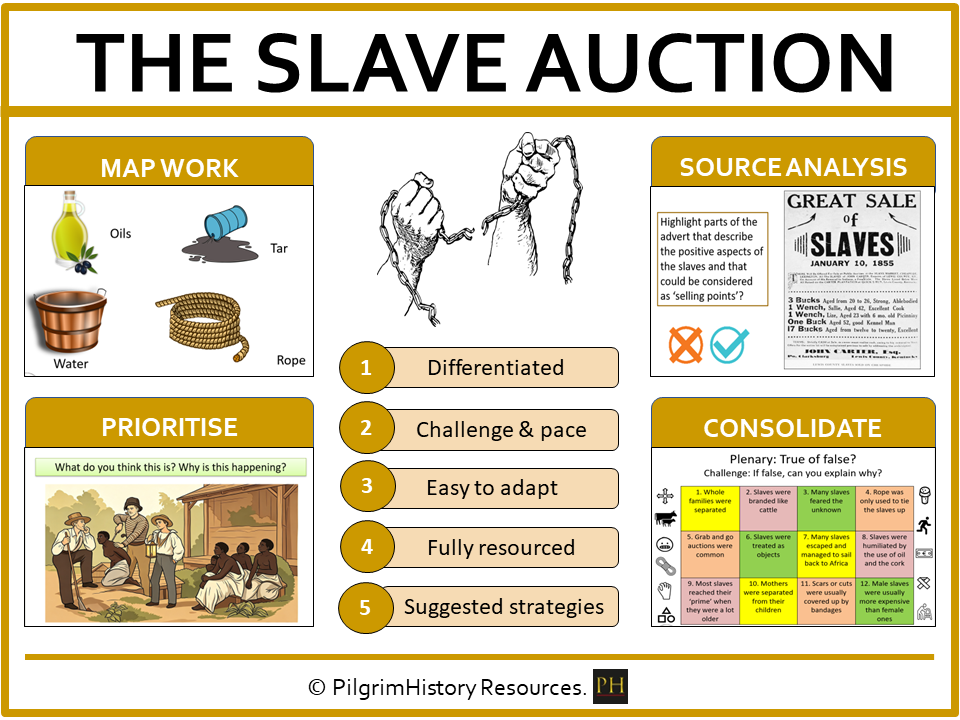
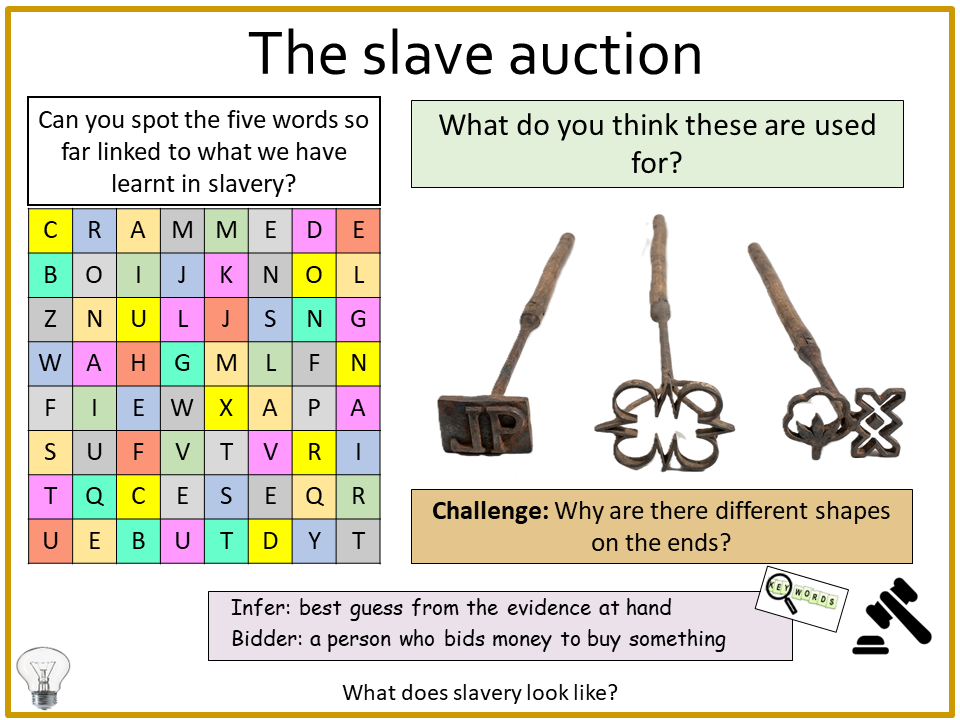
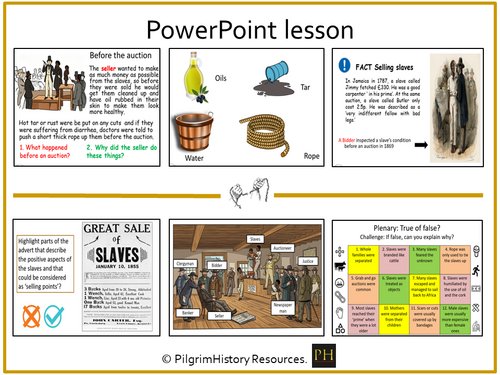
The aim of this lesson is to analyse what happened at a slave auction and the experiences of enslaved people who were prepared, displayed and sold.
The lesson ask a series of key questions: What happened at a slave auction? How were enslaved people prepared? Who attended the auctions? Who was chosen and why?
These questions are used to introduce students to the different stages of the auction process, from branding and advertisements through to the auction itself.
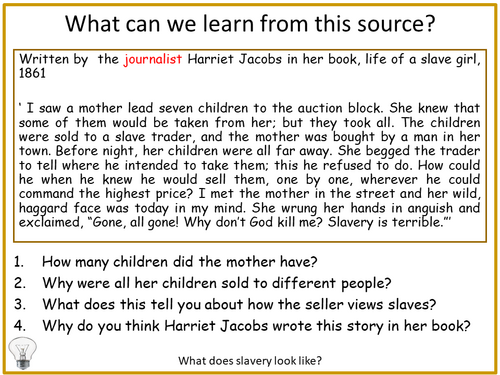
Students explore the experiences of enslaved people and consider the emotional impact of families and individuals being separated and sold. They also investigate why enslaved people were sold at different prices and are challenged to decide who might have been considered more valuable by buyers, using evidence to justify their choices.
The lesson concludes with a true or false quiz to check students’ understanding of what they have learned, including an opportunity to identify and prioritise the worst aspects of the slave auction process.
The lesson is fully enquiry based, with a key question introduced using a lightbulb enquiry at the beginning and revisited at the end, allowing students to demonstrate how their thinking and understanding have developed.
Included in this lesson:
Fully editable PowerPoint lesson
Slave auctions
The preparation and sale of enslaved people
Slave auction advertisements
Who attended slave auctions
Why enslaved people were sold at different prices
Source-based activities
Evaluating the experiences of enslaved people
True or false retrieval quiz
Prioritising the worst aspects of slave auctions
Suggested teaching strategies
Differentiated materials
Please leave a review, which would be gratefully received.
Something went wrong, please try again later.
This resource hasn't been reviewed yet
To ensure quality for our reviews, only customers who have purchased this resource can review it
Report this resourceto let us know if it violates our terms and conditions.
Our customer service team will review your report and will be in touch.
£3.00