


A ready-to-teach lesson on how cybercriminals target people instead of code. Pupils learn to recognise phishing, smishing, shouldering and blagging, and plan practical defences. They then design their own phishing scam and write a defence plan to beat it.
DESCRIPTION
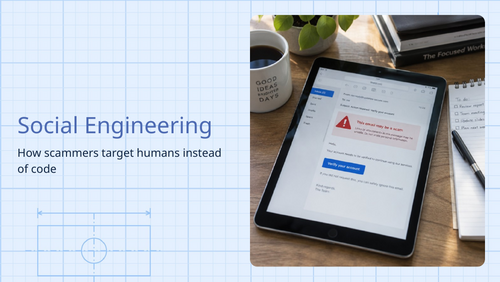
Pupils start with a hook: how a harmless online quiz can reveal the answers to password security questions. They then explore why humans are the weakest link in security and how attackers exploit trust, urgency and curiosity. They learn the key techniques (phishing, smishing, shouldering and blagging), follow the “scam chain” from gathering information to capturing data, and analyse a realistic fake delivery text. The lesson ends with a digital defence toolkit and a creative mini-project.
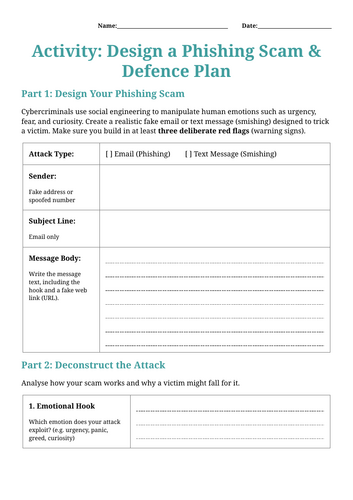
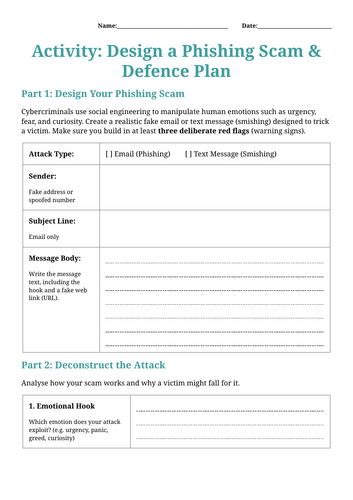
In the Design a Phishing Scam & Defence Plan worksheet, pupils build their own fictional scam with deliberate red flags. They then explain the emotional hook behind it and write three defence checks: inspect, verify and respond. A model answer is included.
WHAT’S INCLUDED
Social Engineering PowerPoint (22 slides) with interactive knowledge checks
Design a Phishing Scam & Defence Plan worksheet (editable Word document)
Model answers
LEARNING OBJECTIVES
Identify human error as a primary security risk to digital systems
Recognise common attacks, including phishing, shouldering and blagging
Design clear strategies to protect personal information and customer data
Something went wrong, please try again later.
This resource hasn't been reviewed yet
To ensure quality for our reviews, only customers who have purchased this resource can review it
Report this resourceto let us know if it violates our terms and conditions.
Our customer service team will review your report and will be in touch.
£3.00