



Sorting algorithms practice for AQA A Level Computer Science (7517): twenty
different worksheets on bubble sort and merge sort, each with a complete
answer key.
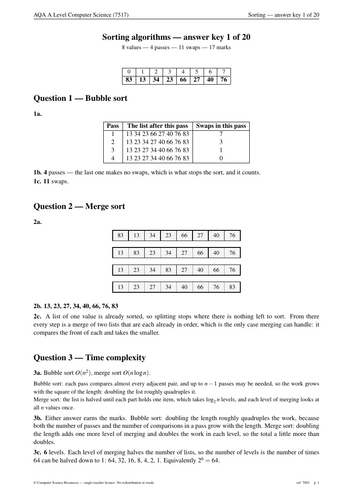
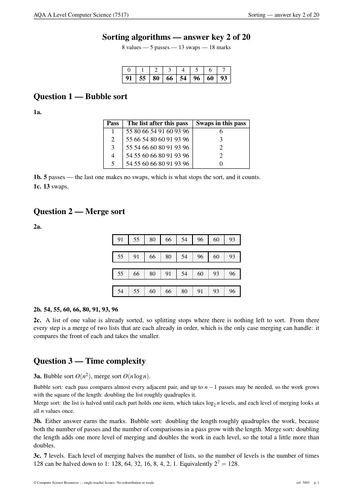
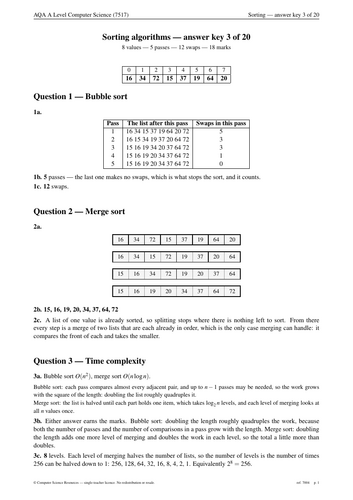
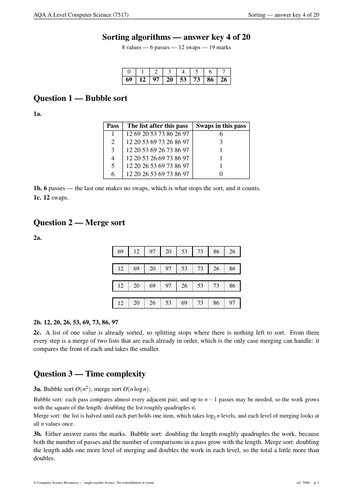
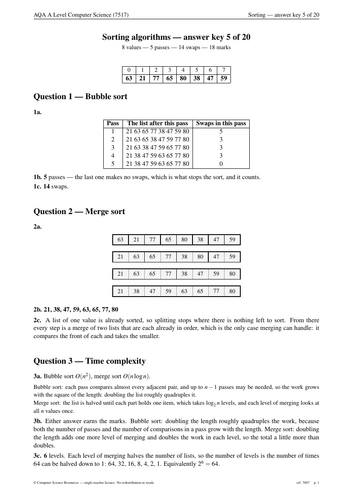
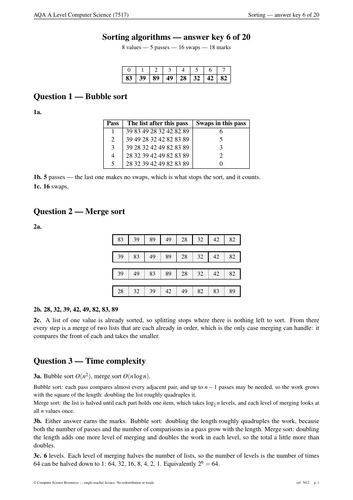
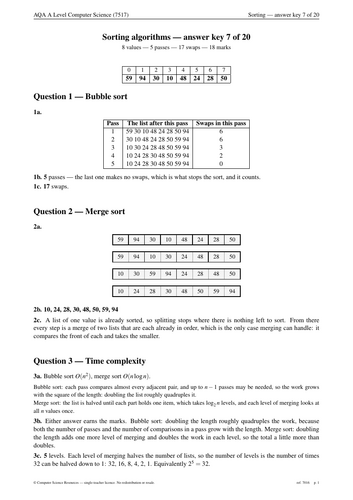
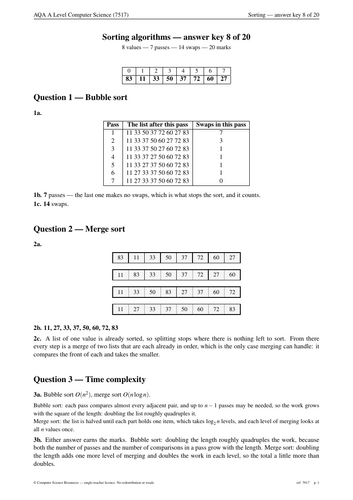
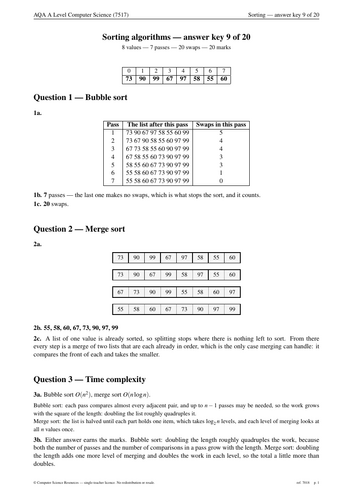
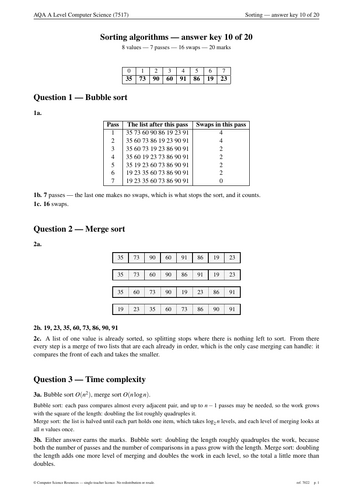
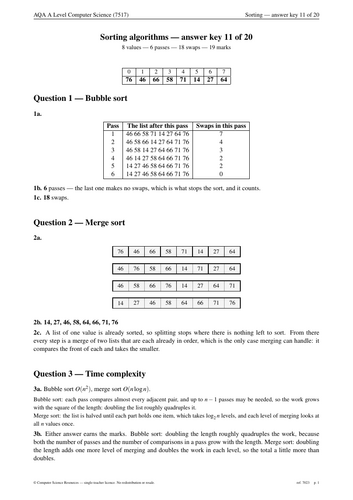
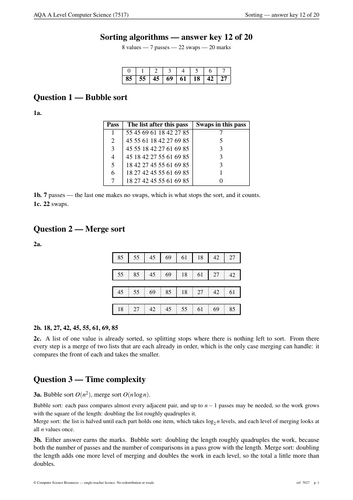
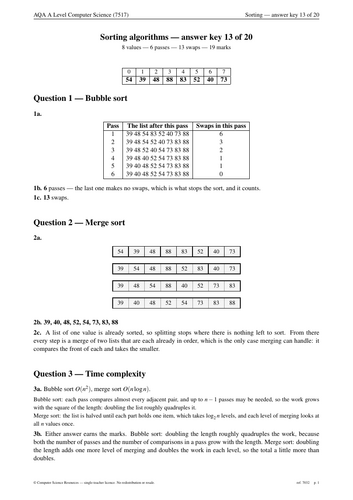
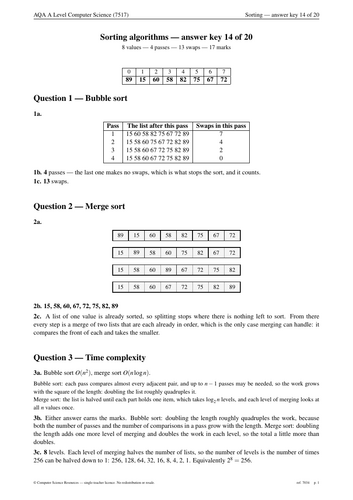
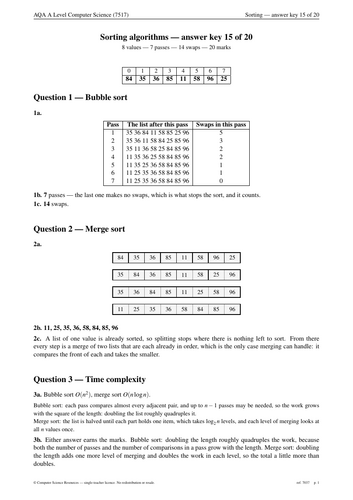
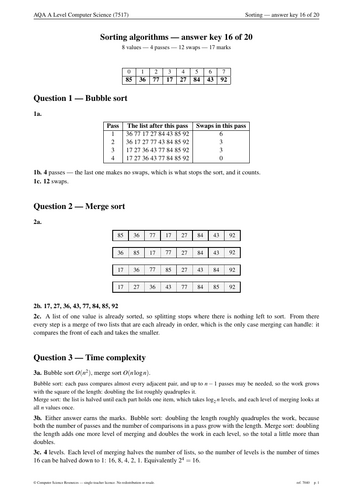
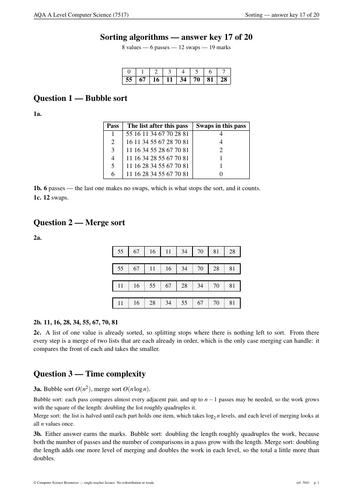
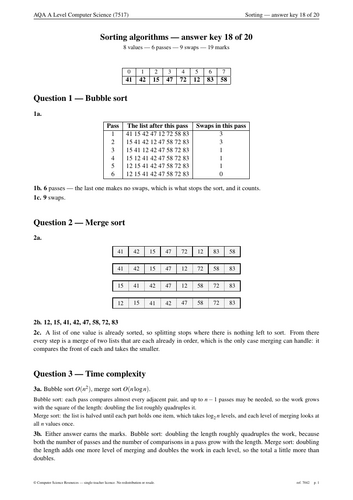
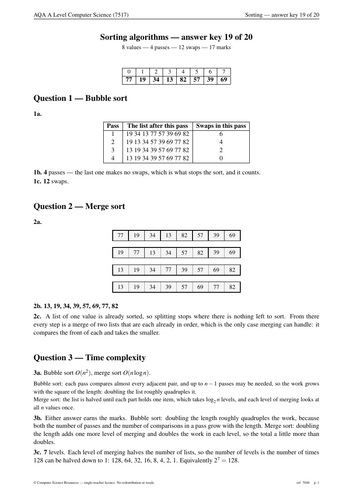
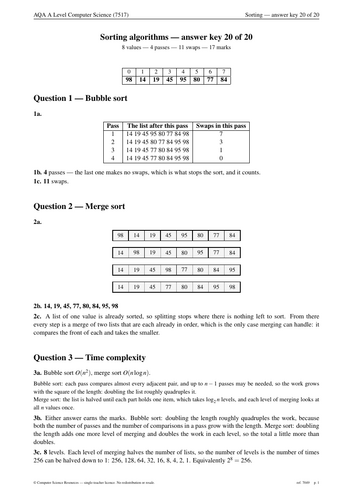
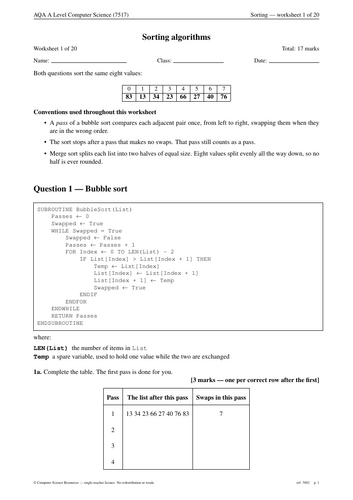
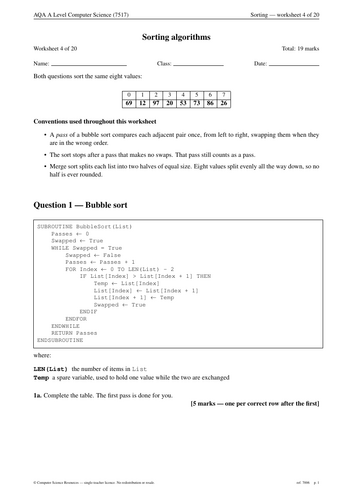
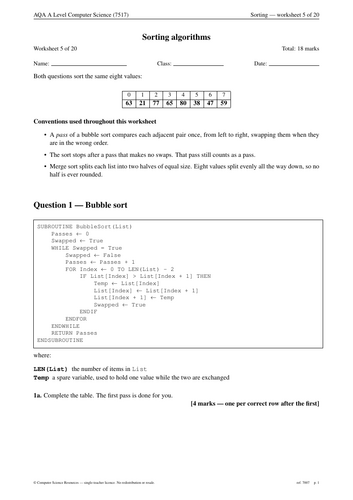
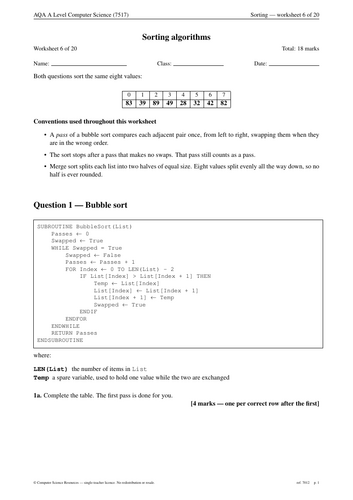
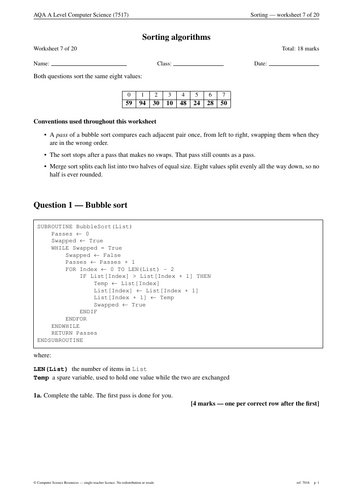
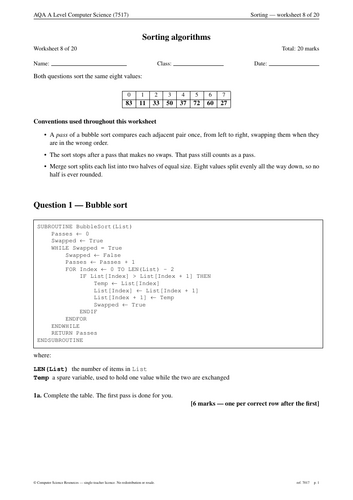
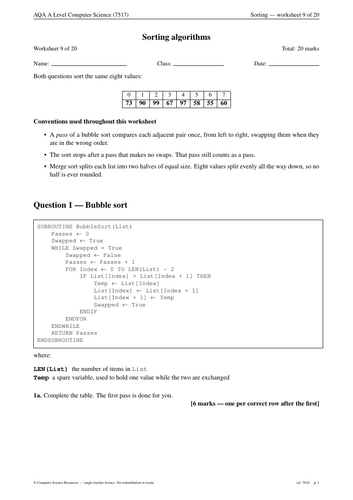
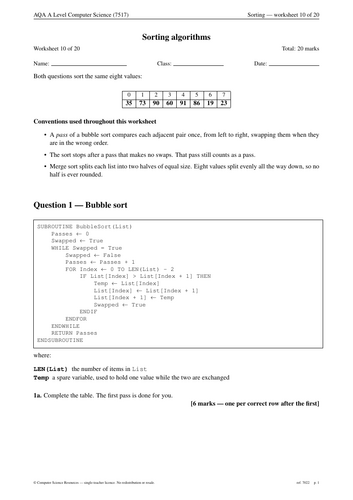
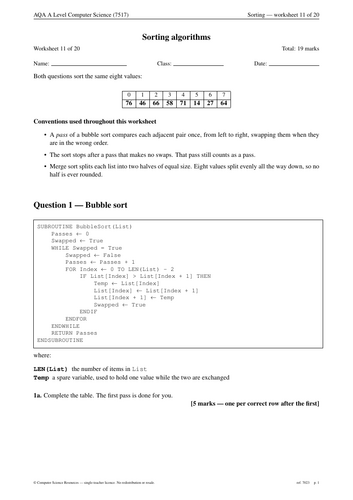
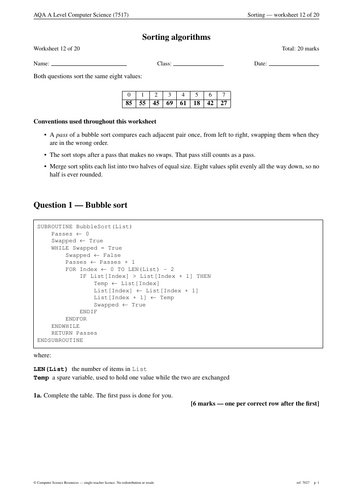
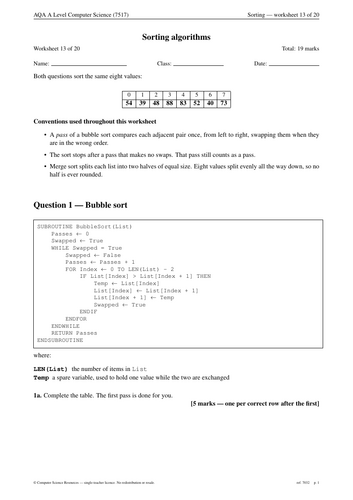
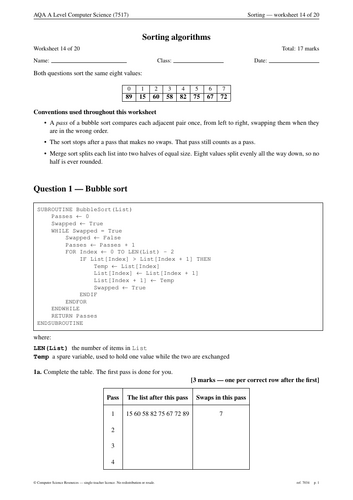
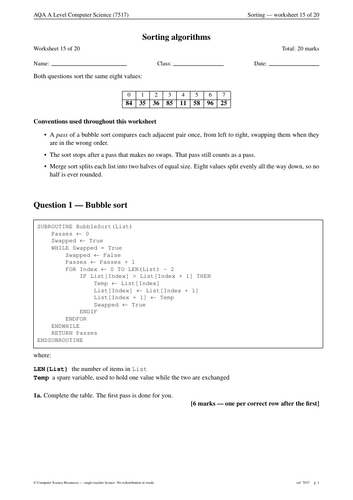
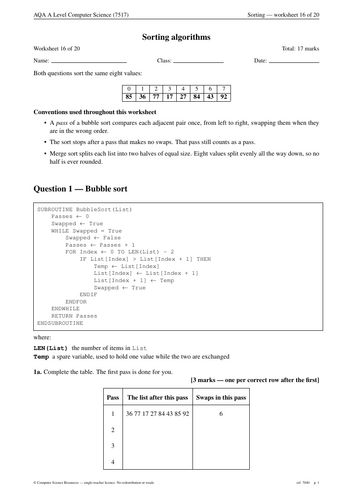
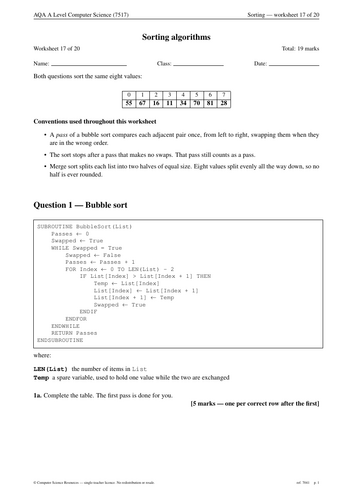
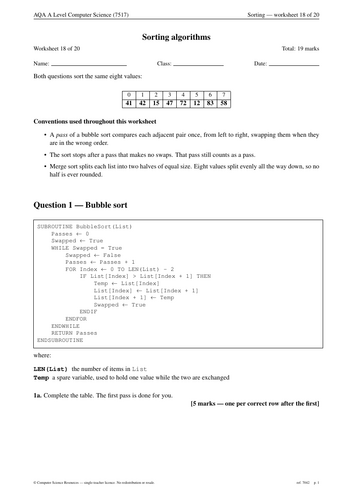
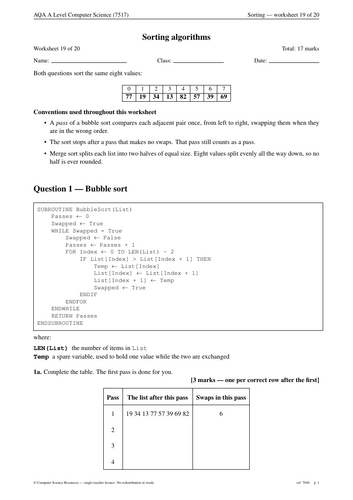
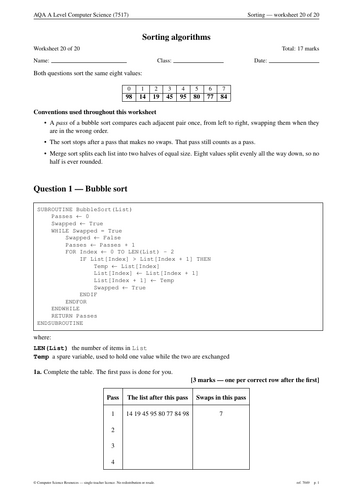
Every sheet sorts the same eight values twice. The bubble sort is traced pass
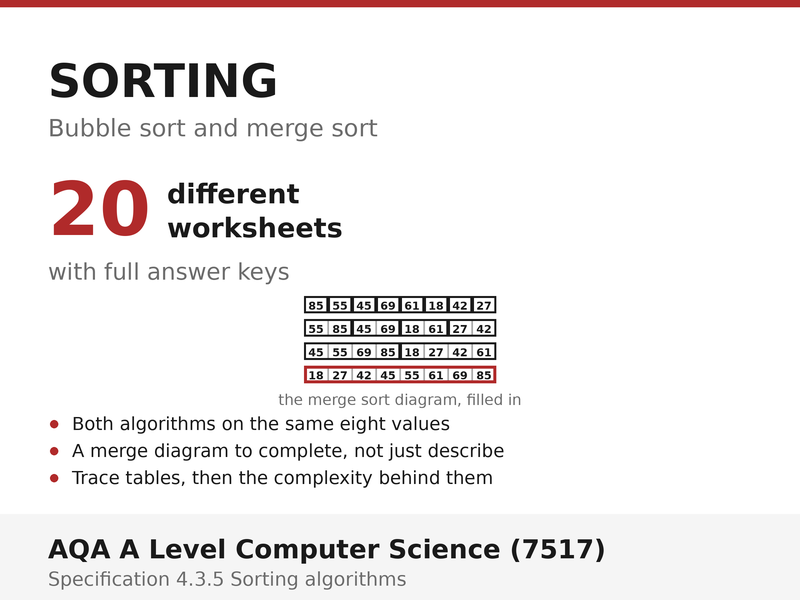
by pass, and the merge sort is a diagram the student completes: the list comes
already split down to single values, and the three rows of merging are the
question. A student finishes the sheet having counted, say, seven passes and
twenty-two swaps one way against three levels of merging the other - and
question 3 then asks them to explain the gap.
WHAT YOU GET
- 20 worksheets, 3 pages each, numbered 01 to 20
- 20 matching answer keys
- A contents table giving the number of passes, the number of swaps and the
mark total of every sheet, so you can pick a four-pass list for a starter or
a seven-pass one for a full lesson
WHAT IS ON EVERY SHEET
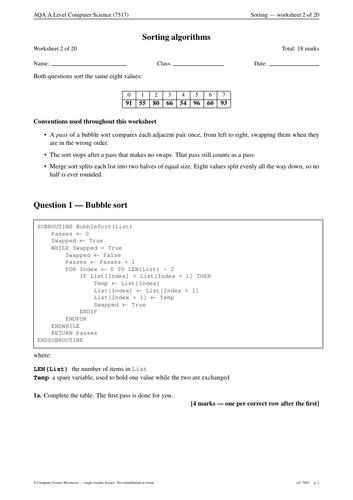
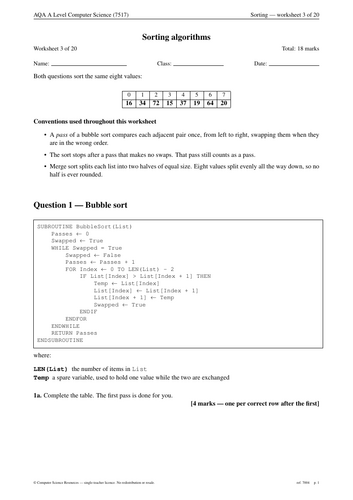
Question 1 gives the bubble sort in pseudocode and a table to complete, one
row per pass, showing the list after that pass and the number of swaps in it.
The first pass is done for the student. Question 2 is the merge sort diagram,
with boxes sized to write in. Question 3 asks for the time complexity of both
algorithms, for what that complexity means for a list twice as long, and for
the number of levels of merging a much larger list would need.
Sheets run from 17 to 20 marks, depending on how many passes the list happens
to need.
TWO CONVENTIONS, HANDLED TWO DIFFERENT WAYS
Textbooks disagree on whether a bubble sort stops as soon as a pass makes no
swaps or always runs the same number of passes. The two produce exactly the
same list after every pass, so the trace table suits both; they differ only in
how many passes get counted, and the stopping rule is printed in the
pseudocode on the worksheet, so that question is answerable from the sheet.
These worksheets never ask for the number of comparisons a bubble sort makes,
because that one genuinely does depend on the version taught. They ask for the
number of swaps, which does not: it is the number of pairs that started out in
the wrong order, whatever route the algorithm takes.
For merge sort, each list is eight values long, so every split is even and the
question of which half gets the odd item never arises.
WRITTEN FOR AQA
The specification asks students to “know and be able to trace and analyse the
time complexity of the bubble sort algorithm” and the same for merge sort -
AQA 7517, section 4.3.5, printed in the header of every page. The pseudocode
follows AQA’s own written conventions: the arrow for assignment, FOR … TO,
LEN for the length of an array, and arrays indexed from 0.
FORMAT
PDF, A4, print-ready. Twenty genuinely different versions, so you already have
a fresh sheet for every class, every resit and every homework.
Licensed for the purchasing teacher and their own classes.
Something went wrong, please try again later.
This resource hasn't been reviewed yet
To ensure quality for our reviews, only customers who have purchased this resource can review it
Report this resourceto let us know if it violates our terms and conditions.
Our customer service team will review your report and will be in touch.
£6.00