

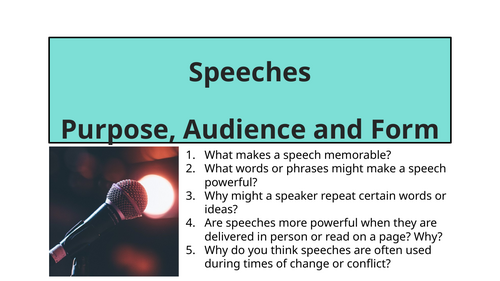

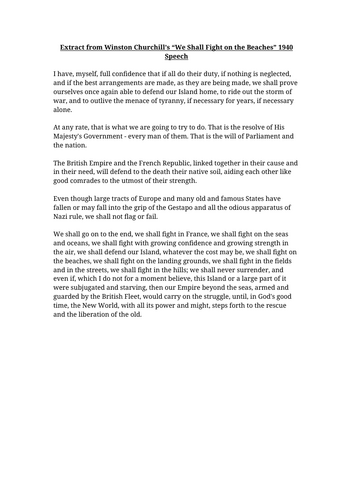
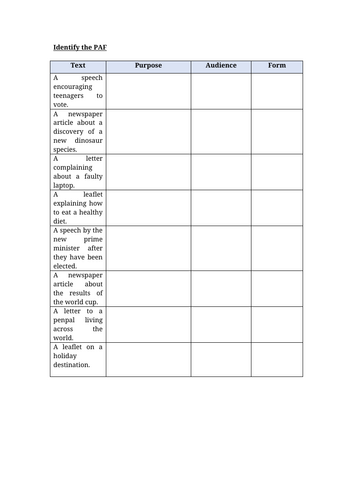
KS3 lesson - A lesson on Purpose, Audience and Form using an extract from Winston Churchill’s “We Shall Fight on the Beaches” 1940 Speech. A variety of resources, including key contextual information, examining Purpose, Audience and Form, questions on the extract, a quotation from the extract annotated with questions and answers, a model paragraph, and more.
Get this resource as part of a bundle and save up to 72%
A bundle is a package of resources grouped together to teach a particular topic, or a series of lessons, in one place.
Bundle
KS3 Speeches SOW
A comprehensive KS3 unit exploring the power of speeches, rhetoric and persuasive communication through a wide range of influential real world speeches. Students encounter political, social, environmental and historical speeches while developing the skills needed to understand, analyse and craft their own persuasive writing. The unit begins by establishing the key features of speeches before progressively developing students’ understanding of the power of speeches and explores how speakers use language and persuasive techniques to influence their audiences. Speeches include: an extract from Sojourner Truth’s Ain't I A Woman?, extracts from Winston Churchill’s We Shall Fight on the Beaches and Blood, Toil, Tears and Sweat, Keir Starmer’s First Address as Prime Minister, Sir David Attenborough’s The Garden of Eden is No More and Address to the UN Security Council, Greta Thunberg’s World Economic Forum Address, an extract from Tony Blair’s 2003 House of Commons Iraq Debate, Abraham Lincoln’s Gettysburg Address, Emma Watson’s UN HeForShe Speech, Jameela Jamil’s GLAMOUR Women of the Year Awards Speech, an extract from Frederick Douglass’s What to the Slave Is the Fourth of July?, and an extract from Nelson Mandela’s Rivonia Trial Statement. Students have the opportunity to apply the techniques they have explored, with two creative writing lessons inspired by Sir David Attenborough's and Greta Thunberg’s environmental activism. **Students develop their ability to:** Understand the purpose and conventions of speeches Identify and consider different audiences Explore how form influences a speaker’s choices Analyse the structure and organisation of speeches Recognise and analyse rhetorical techniques Identify and summarise key ideas Analyse language choices and their effects Explore perspective and how speakers present ideas Understand how speakers influence, persuade and engage audiences Compare the perspectives and methods of different speakers Apply techniques from real world speeches to their own writing Write effectively for different purposes and audiences Develop persuasive and creative writing skills **What's Included?** A comprehensive sequence of ready to teach lessons A wide range of influential real world speeches Contextual information for each speech Reading and comprehension questions Retrieval and recall activities Language analysis activities Rhetorical technique activities Perspective and comparison tasks Annotated quotations Model answers and model paragraphs Worksheets Creative and persuasive writing activities Assessment preparation and assessment tasks Reflection and plenary activities A speeches homework sheet of 24 homework tasks of varying difficulties. Pupils are to choose one task each week to complete that matches their confidence and ability. The SOW also includes 2 assessment activities: one reading assessment and two creative writing lessons that could be used as a creative writing assessment. **Please note that four speeches have not been included due to copyright, however a link to each is provided in the notes on the first slide of the lessons where these speeches are required.**
£14.00
Bundle
KS3 Speeches Mini Sow
A KS3 7 lesson mini scheme of work introducing students to the key features and skills needed to understand, analyse and write effective speeches. Using a range of influential real world speeches, students progressively explore purpose, audience, form, structure, rhetoric, summary and language, before applying their knowledge in an assessment focused on creating urgency. **The seven lessons include:** Introduction to Speeches - Sojourner Truth Purpose, Audience and Form - Winston Churchill, We Shall Fight on the Beaches Structure of a Speech - Keir Starmer's First Address as Prime Minister Rhetoric - Sir David Attenborough, The Garden of Eden is No More Summary - Sir David Attenborough, The Garden of Eden is No More Language Techniques - Sir David Attenborough's Address to the UN Security Council Assessment Prep & Assessment: Creating Urgency – Greta Thunberg's World Economic Forum Address **Students develop their ability to:** Understand the purpose of speeches Identify and consider different audiences Explore how form influences a speaker's choices Analyse the structure and organisation of speeches Recognise and analyse rhetorical techniques Identify and summarise key ideas Analyse language choices Understand how speakers influence and engage audiences This opening sequence provides a clear foundation before students move on to explore and apply these skills in greater depth. **Please note that two speeches have not been included due to copyright, however a link to each is provided in the notes on the first slide of the lessons where these speeches are required.**
£7.00
Something went wrong, please try again later.
This resource hasn't been reviewed yet
To ensure quality for our reviews, only customers who have purchased this resource can review it
Report this resourceto let us know if it violates our terms and conditions.
Our customer service team will review your report and will be in touch.
£2.50