


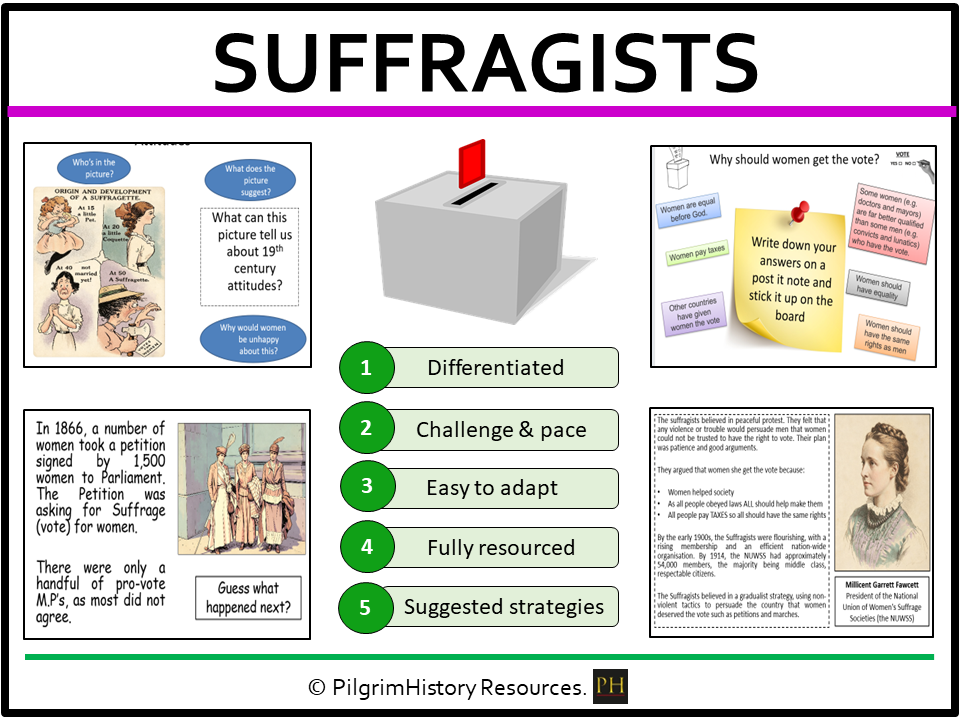
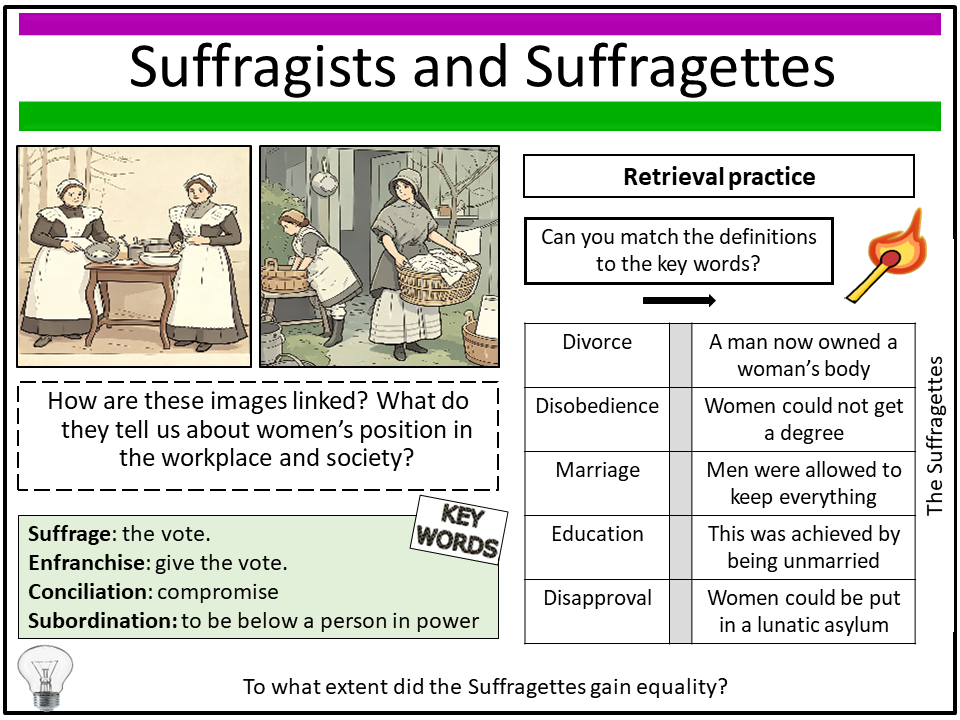
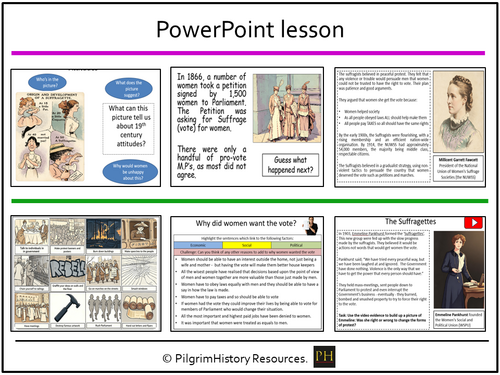
The aim of this lesson is to analyse the differences and similarities between the Suffragists and Suffragettes and consider how far their methods helped women achieve the vote.
Students begin by exploring why women wanted the vote and the different ways in which they believed political change could be achieved. They then examine the main differences between the two groups, while also recognising the important similarities in their aims.
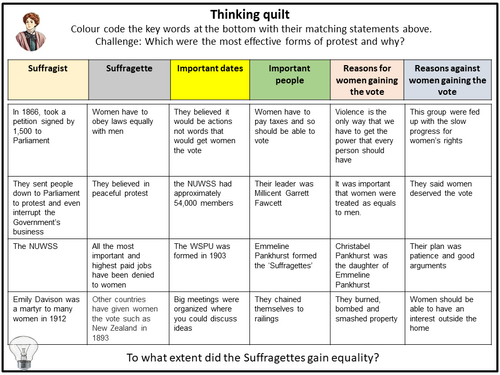
The lesson then moves on to the different methods used by the Suffragists and Suffragettes. Students analyse a range of methods and consider how effective each one was. Using a thinking quilt, they are encouraged to question, prioritise and justify their ideas rather than simply identify the different methods used.
The thinking quilt also provides an opportunity to test pupils’ understanding by linking together key people, dates, events, methods and definitions from the lesson.
A differentiated plenary checks pupils’ understanding and allows them to return to the key ideas explored throughout the lesson.
The lesson is enquiry based, with a key question introduced through a lightbulb activity at the start and revisited at the end to show progress in learning and encourage pupils to develop their own judgement.
The resource includes suggested teaching strategies, retrieval practice, differentiated materials and a range of classroom activities.
It comes in PowerPoint format which is editable and can be changed to suit individual classes.
Something went wrong, please try again later.
This resource hasn't been reviewed yet
To ensure quality for our reviews, only customers who have purchased this resource can review it
Report this resourceto let us know if it violates our terms and conditions.
Our customer service team will review your report and will be in touch.
£3.50