


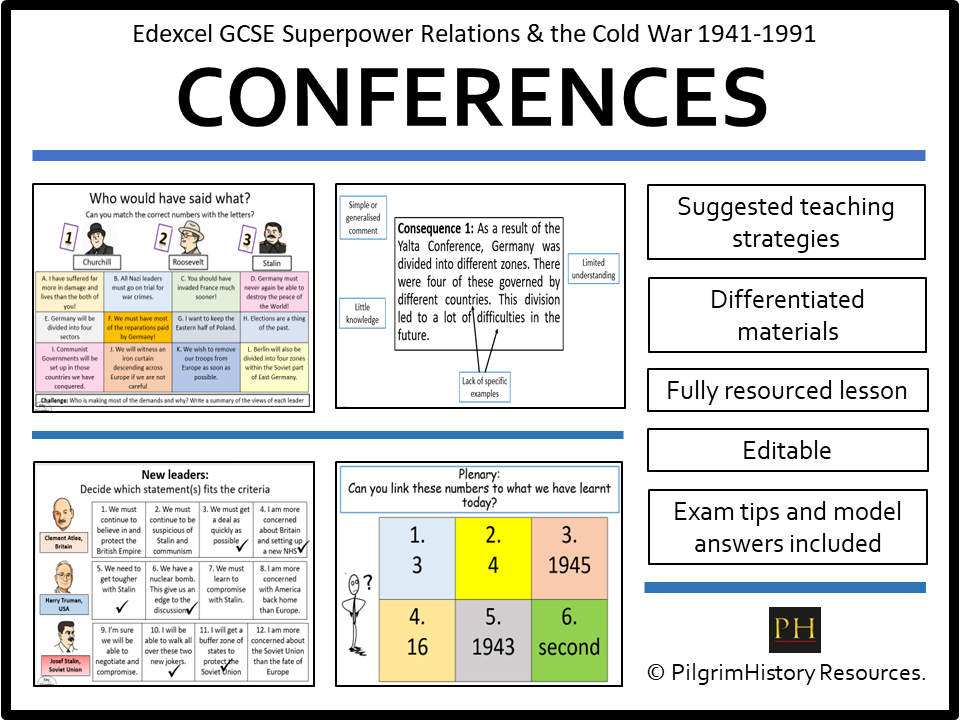
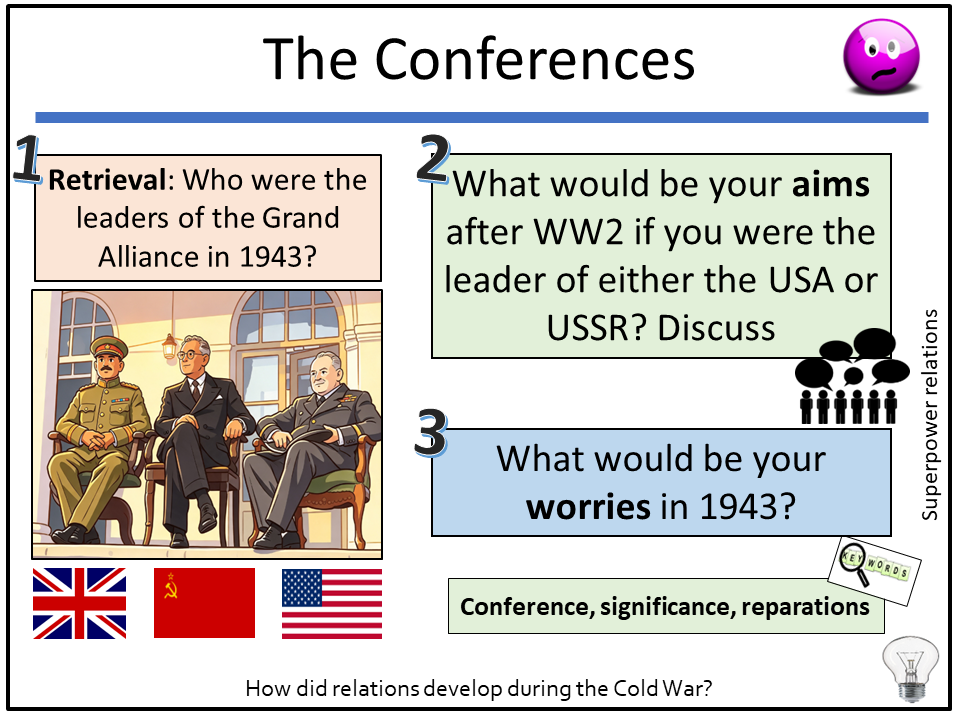
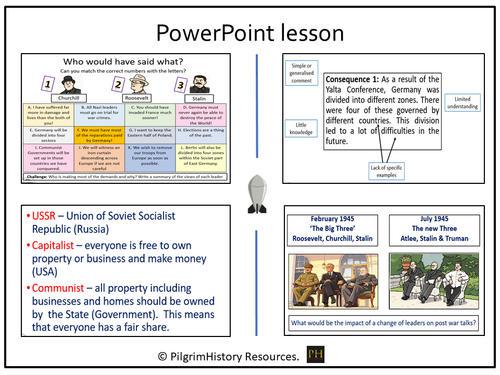
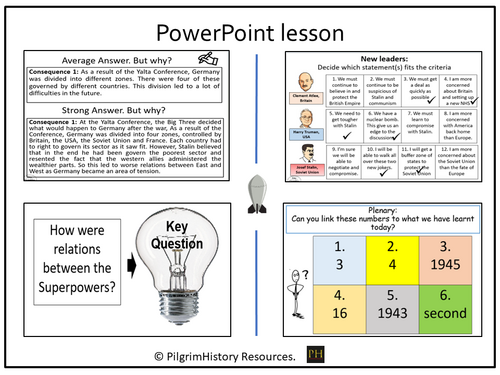
The aim of this lesson is to examine the Tehran, Yalta and Potsdam Conferences and evaluate how far they affected relations between the USA, the Soviet Union and Britain at the end of the Second World War.
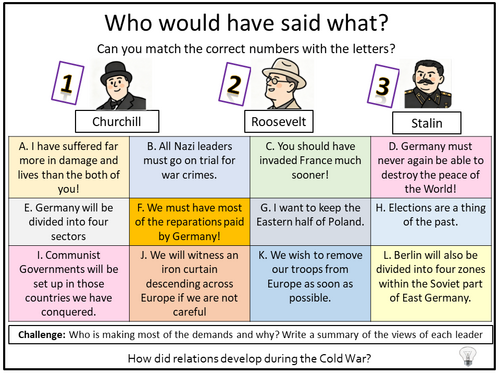
Students begin with a retrieval practice activity in which they identify who said what between Stalin, Roosevelt and Churchill, revisiting their knowledge of the leaders and their attitudes towards one another.
They then investigate the key agreements made at the three conferences, considering how far the superpowers agreed on the future of Europe and Germany. Students explore the impact of the change in leadership in Britain and the USA between Tehran and Potsdam and how this contributed to changing relations with Stalin.
The plenary uses a numbers activity to consolidate students’ knowledge of the conferences and their outcomes.
The lesson also includes GCSE exam practice, with differentiated model answers for students to compare and assess. They use the exam board mark scheme to explain the differences between the answers and understand what is needed to achieve higher marks.
The lesson is enquiry based, with a key question using a lightbulb posed at the start and revisited throughout this and subsequent lessons to show the progress of learning.
The resource includes retrieval practice, suggested teaching strategies, differentiated materials and GCSE question practice on the conferences.
It also comes in PowerPoint format if there is a wish to adapt and change.
Any reviews would be gratefully received.
Something went wrong, please try again later.
This resource hasn't been reviewed yet
To ensure quality for our reviews, only customers who have purchased this resource can review it
Report this resourceto let us know if it violates our terms and conditions.
Our customer service team will review your report and will be in touch.
£3.50