






AQA A-Level Psychology | Duration: Approx. 3 hours, depending on student pace and class discussion.
What’s Included:
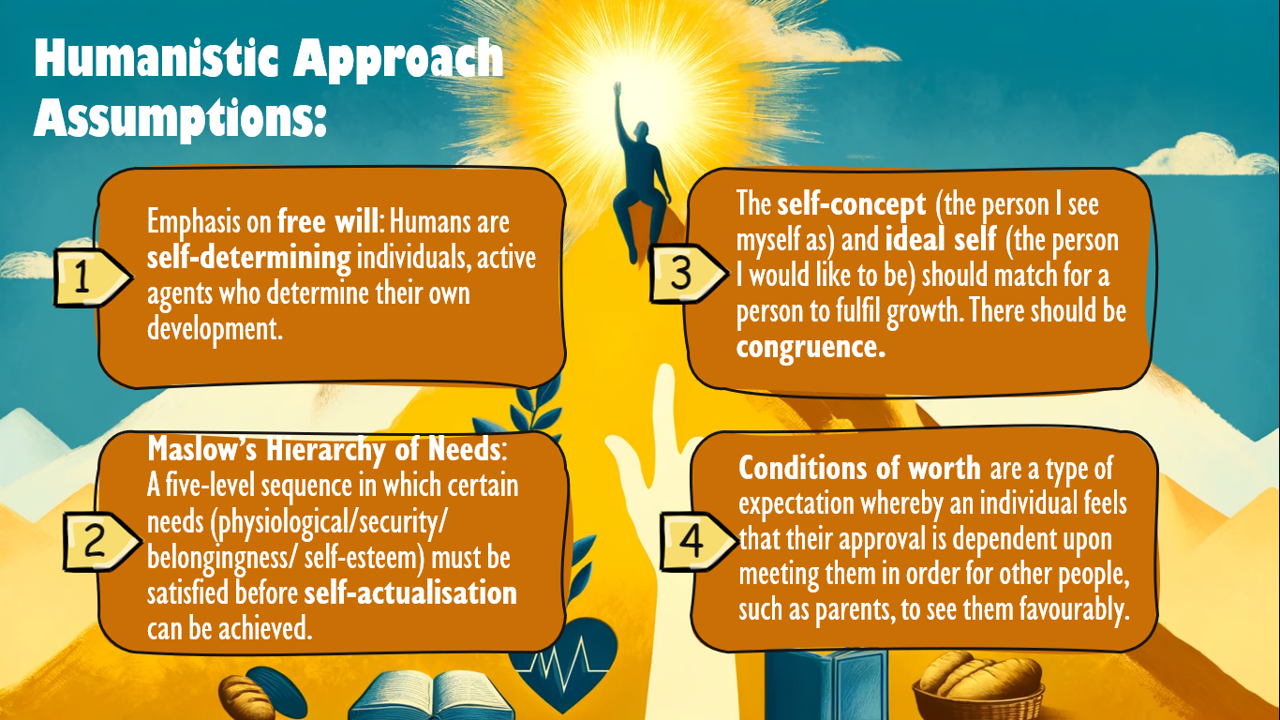
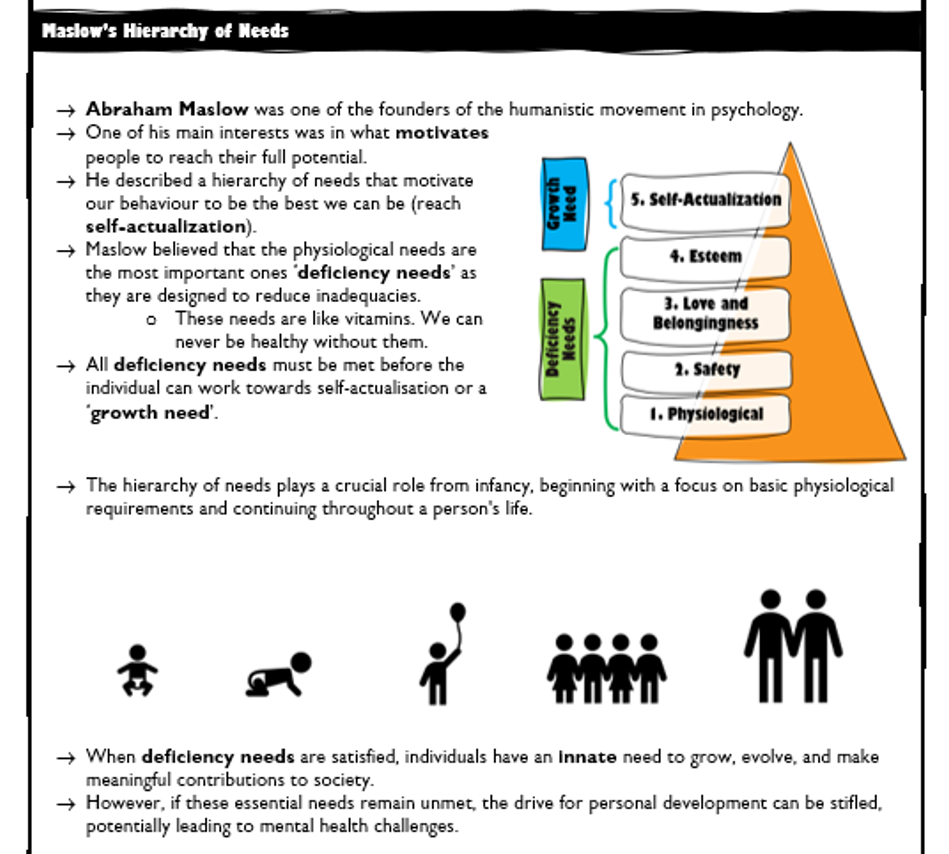
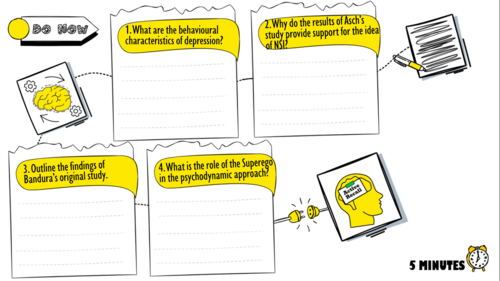
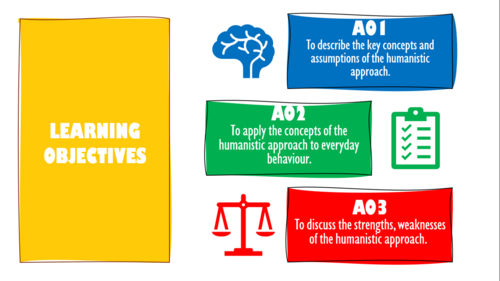
- 55-slide PowerPoint – interactive, visually engaging, and structured to build understanding and exam technique step-by-step
- 11-page printable handout – includes full lesson notes, built-in tasks, and answer spaces (no separate book needed)
- Model answers – provided for all exam questions and PEEL paragraphs to support marking, modelling, or peer/self-assessment.
- Embedded video clip – a short extract of Carl Rogers himself discussing Rogerian therapy. Hearing Rogers explain his approach in his own words helps bring the theory to life and supports students in making real-world links to counselling psychology.
• Note: I do not own the rights to the video. It is publicly available and used here purely for educational purposes.
Task Breakdown – 7 Activities in Total:
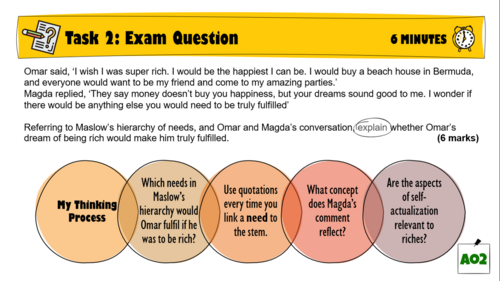
3 Scaffolded Exam Questions
• 6-mark AO2 question on Maslow and self-actualization
• 4-mark AO2 question on conditions of worth
• 8-mark question combining self-actualisation and congruence (AO1 + AO3)
• Each exam question includes a built-in scaffold in the form of guiding questions that prompt students to identify the relevant theory, apply it to the scenario, and structure their response clearly — making mark scheme expectations explicit.
2 Comprehension Tasks
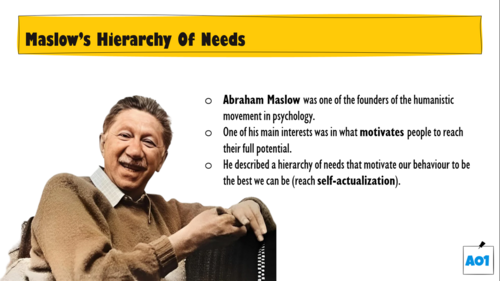
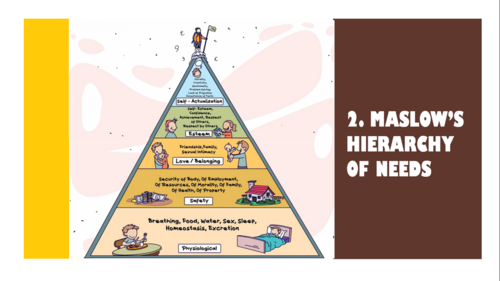
• Scenario-based application of Maslow’s hierarchy
• Cloze (fill-in-the-gap) activity to reinforce terminology and consolidate understanding.
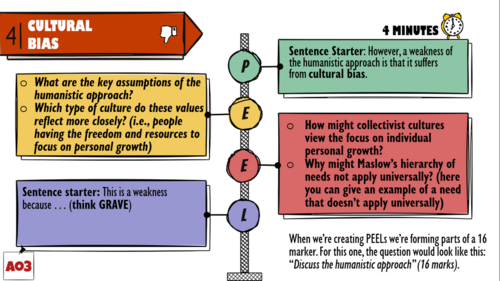
2 PEEL Paragraph Writing Tasks
• Structured AO3 scaffolding using the PEEL format:
• Scaffold in the form of guiding questions are included at each step of the PEEL to ensure even lower-confidence students can construct a clear, exam-worthy AO3 paragraph.
**Description: **
This fully resourced, no-prep lesson pack on the Humanistic Approach is designed to help students not just understand the content — but apply and evaluate it in a meaningful, exam-focused way.
When I began my teacher training, I was surprised by how much time students were spending simply copying down notes. This often came at the expense of class discussion, deeper understanding, and essential exam practice. I decided this wouldn’t happen in my lessons.
In this lesson, all key content is clearly written on the slides and mirrored in the student handout. This allows students to listen, engage, and reflect without worrying about transcription. The extra time is used for discussion, questioning and structured exam skill-building.
Every lesson I design includes a minimum of two embedded exam questions, so students practise writing in an exam-style format regularly — not just at the end of a topic. This gives them the chance to use key vocabulary actively, build confidence, and retain concepts through application, not just exposure.
Many of my students have reported they reuse the handout at home — to revise, complete homework, or write their own notes.
Something went wrong, please try again later.
This resource hasn't been reviewed yet
To ensure quality for our reviews, only customers who have purchased this resource can review it
Report this resourceto let us know if it violates our terms and conditions.
Our customer service team will review your report and will be in touch.
£8.00