


This lesson resource was created to support students studying The Necklace by Guy de Maupassant as part of the Edexcel IGCSE English Language A (4EA1) qualification. Using the January 2023 examination question as a framework, the lesson develops students’ ability to analyse characterisation, language, structure, and writer’s methods while preparing them for examination-style responses.
Students explore the complex character of Madame Loisel, considering whether she is primarily responsible for her own downfall or deserving of sympathy. Alongside close textual analysis, the lesson encourages students to engage with key themes such as ambition, materialism, social status, appearance versus reality, and personal responsibility.
Designed with the exam route in mind, the resource can easily be used or adapted for a coursework question.
Lesson Sequence:
- Starter – Rich or Happy? Students debate whether wealth or happiness is more important, introducing the central ideas of the story.
- Context Introduction: Students learn about Guy de Maupassant, his interest in irony and twist endings, and the themes that underpin The Necklace.
- First Reading: Students track Madame Loisel’s desires, attitudes, reactions to wealth, and moments of character development throughout the story.
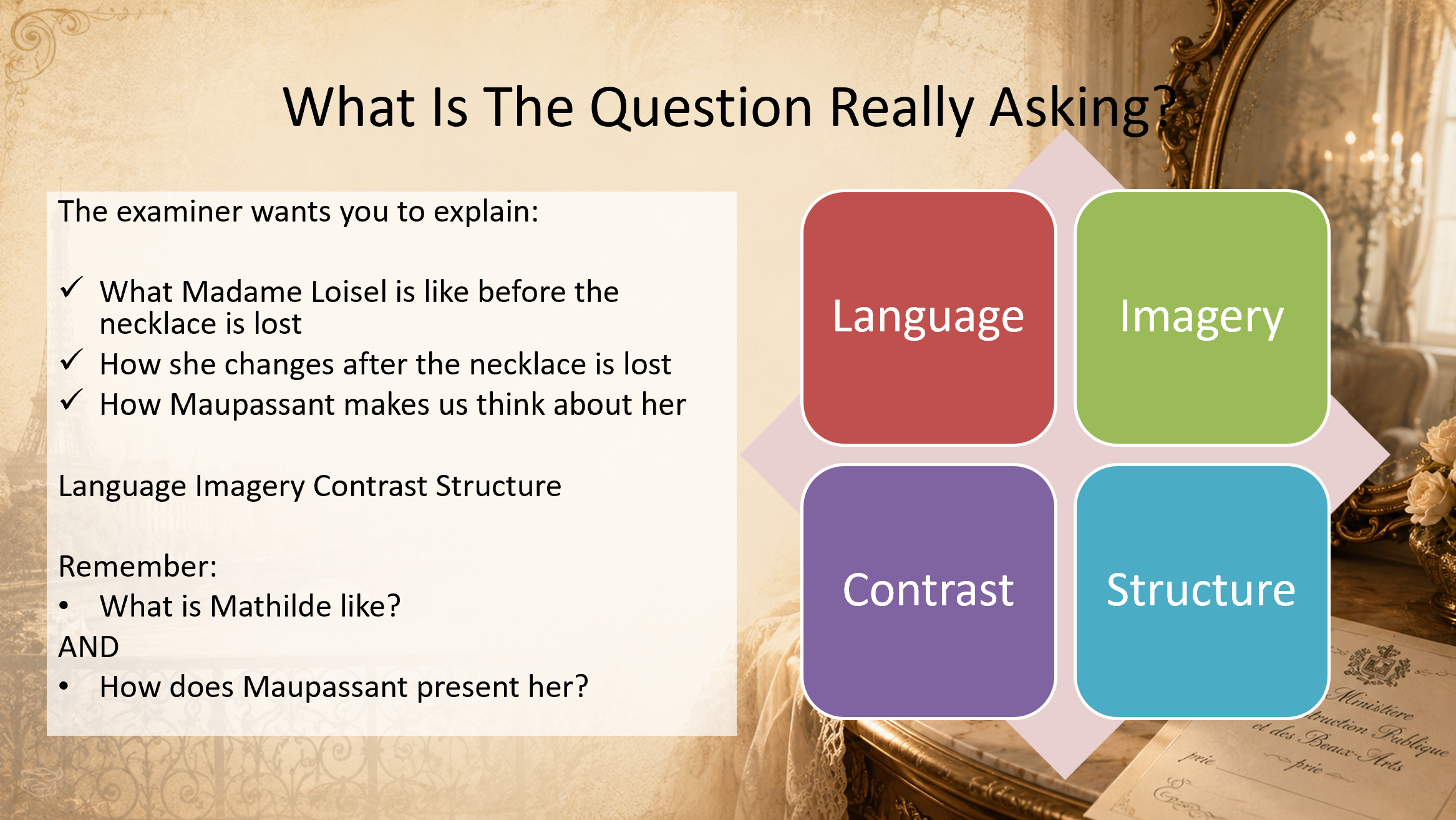
- Exam Question Introduction: Students explore the January 2023 examination question and identify exactly what they are being asked to analyse.
- Understanding the Question: Students break down the assessment focus, considering both what Madame Loisel is like and how Maupassant presents her.
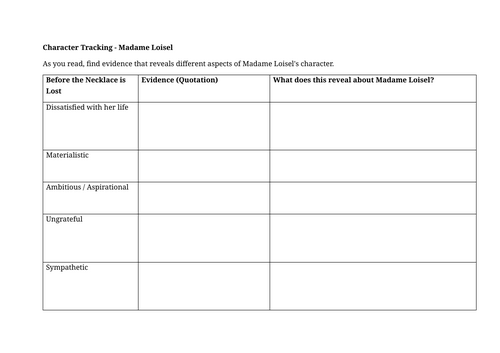
- Character Tracking Activity: Students complete a detailed evidence grid (provided), gathering quotations and interpretations of Madame Loisel before and after the loss of the necklace.
- Structure Analysis: Students examine key events in the narrative and evaluate why Maupassant places them where he does, considering their impact on both character and reader.
- Ending Analysis: Students explore the famous final revelation and discuss how it changes our understanding of Madame Loisel and the story’s message.
- Exemplar Paragraph: Students deconstruct a model response to identify the features of successful analytical writing.
- Exam Practice: Students produce their own response to the examination question using structured success criteria.
- Plenary Debate: Students position themselves on a spectrum between “Victim” and “Responsible”, defending their interpretation with evidence from the text.
Something went wrong, please try again later.
This resource hasn't been reviewed yet
To ensure quality for our reviews, only customers who have purchased this resource can review it
Report this resourceto let us know if it violates our terms and conditions.
Our customer service team will review your report and will be in touch.
£3.00